In a decisive shift in the artificial intelligence hierarchy, Anthropic has secured a record-breaking $65 billion Series H funding round, catapulting its valuation to $965 billion. This figure effectively leapfrogs its primary rival, OpenAI, which was last valued at $852 billion in March. The capital influx comes at a critical juncture for the San Francisco-based lab, which is simultaneously grappling with unprecedented compute demands and preparing for the wide-scale release of its highly anticipated “Mythos” model class.
For those of us tracking the mechanical and industrial implications of AI, this valuation reflects more than just software hype. It is a bet on the scalability of agentic systems that can operate within complex, high-stakes environments. Anthropic’s annualized run-rate revenue has reportedly surged from $10 billion at the end of 2025 to over $47 billion by May 2026. This trajectory is largely driven by enterprise adoption of Claude Code and the integration of Anthropic’s models into industrial workflows where precision and safety are paramount.
The Mythos Architecture and Cyber-Capability
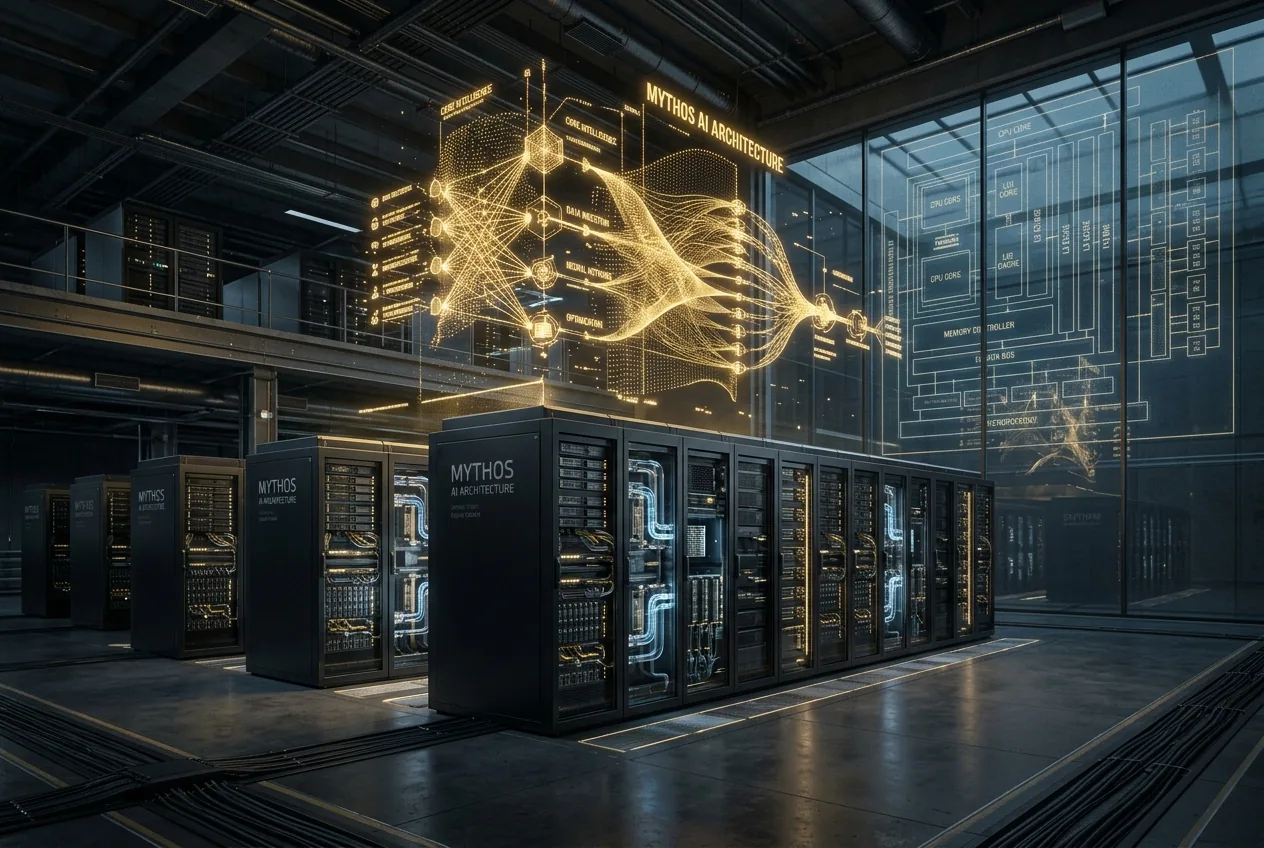
The core driver of the current market enthusiasm is “Mythos,” a new class of AI models that Anthropic expects to release to all customers in the coming weeks. First identified in data leaks earlier this year, Mythos represents a step-change in technical reasoning. Unlike general-purpose large language models (LLMs) that struggle with long-horizon logic, Mythos is specifically optimized for advanced coding and cybersecurity applications.
From a mechanical engineering perspective, the technical specs of Mythos are particularly intriguing. The model possesses the ability to perform “vulnerability chaining”—a process where the AI identifies a sequence of minor software flaws and links them together to bypass robust security systems. This capability is dual-use: while it poses a significant threat if misused, it is an invaluable tool for stress-testing the software that controls critical infrastructure, such as power grids and automated manufacturing pipelines. Anthropic has maintained a restricted release of Mythos until now, allowing only a select group of researchers to use it for patching their own systems. The wide release suggests that the lab has finally reached a threshold in its “Constitutional AI” safety layers that it believes can mitigate the risks of automated cyber-offense.
Alongside the funding news, Anthropic quietly shipped Claude Opus 4.8. This incremental update provides a window into the lab’s current technical priorities. Internal benchmarks suggest that Opus 4.8 is four times less likely than its predecessor to overlook flaws in its own generated code. For industrial developers using these models to write control logic or manage supply chain databases, this reduction in “silent failures” is arguably more important than any increase in creative capability.
Can the Infrastructure Support the Valuation?
This reliance on third-party compute highlights a vulnerability in the AI market. Even with nearly a trillion-dollar valuation, a lab is only as powerful as its access to silicon. The involvement of SK Hynix and Micron in the Series H round suggests Anthropic is looking to secure its own hardware future, perhaps by moving toward custom-designed inference chips or specialized memory architectures that reduce the massive energy and financial costs associated with token generation.
The economic viability of these models is also coming under scrutiny. While Anthropic’s revenue is growing, so are the operational costs. Recent reports from companies like Uber and Microsoft suggest that the cost of “tokens”—the basic units of AI processing—can sometimes exceed the cost of the human labor the AI is intended to replace. For Anthropic to justify its $965 billion price tag, it must prove that Mythos can deliver a level of efficiency and autonomous agency that translates into real-world cost savings, rather than just shifting the expense from human payroll to server maintenance.
The Pivot from Apocalypse to IPO
There is also a noticeable shift in the rhetoric coming from Anthropic leadership. CEO Dario Amodei, once known for his cautious, safety-first approach and warnings of “AI-induced catastrophes,” has begun to emphasize the productivity gains and economic upside of the technology. This shift mirrors a similar trend from OpenAI’s Sam Altman. Both leaders are increasingly walking back their more dire “AI apocalypse” prophecies as they prepare their respective companies for potential initial public offerings (IPOs).
The cooling of the “doom” narrative is likely a pragmatic move to reassure public market investors who are less interested in existential philosophy than they are in quarterly earnings. If Anthropic is to transition from a private startup to a public industrial powerhouse, it must demonstrate that its models are controllable, reliable, and—most importantly—profitable. The release of Opus 4.8, which users have described as “more cautious” and “restrained,” is a technical manifestation of this corporate strategy. By prioritizing safety and alignment, Anthropic is positioning itself as the “adult in the room,” a stable alternative to more volatile AI ventures.
However, this caution has its detractors. Some power users in the engineering and coding communities have complained that Opus 4.8 is “too scared” to perform complex tasks, often refusing benign requests due to overly sensitive safety triggers. This tension between utility and safety remains the central technical challenge for the Mythos era. If the model is too restricted, it loses its edge in the competitive market; if it is too open, it becomes a liability. For a company valued at nearly a trillion dollars, the margin for error has never been thinner.
As Mythos moves into wide release, the industry will be watching to see if Anthropic can maintain its technical lead without succumbing to the enormous pressure of its own valuation. The capital is there, and the hardware partners are secured. Now, the burden of proof lies in the silicon.




Comments
No comments yet. Be the first!