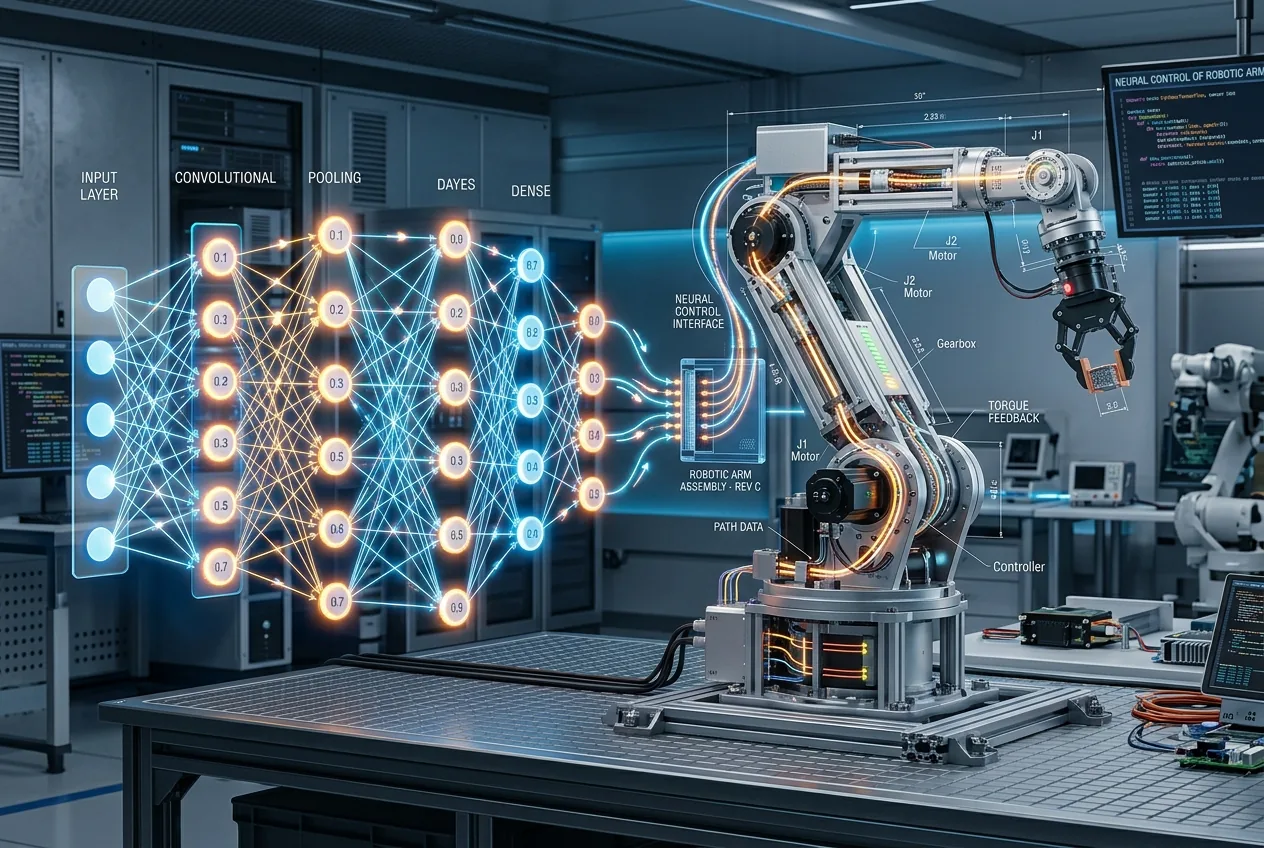
The trajectory of large-scale artificial intelligence is shifting from linguistic mastery toward physical competence. While the initial wave of generative AI focused on the nuances of human syntax, the next frontier—epitomized by the emerging technical specifications of Google’s Gemini 3—is the mastery of the physical world. For industry observers and mechanical engineers, the recent discourse surrounding Google’s 'AGI Masterplan' represents more than just a marketing pivot; it signifies a fundamental change in how neural networks process spatial dynamics, mass, and perhaps most controversially, the simulation of gravitational constraints.
To understand the leap from Gemini 1.5 to the anticipated Gemini 3, one must look past the consumer-facing chatbot interfaces and examine the underlying infrastructure. The integration of Google DeepMind’s research into a unified 'AGI' roadmap has prioritized the development of World Models. Unlike traditional Large Language Models (LLMs) that predict the next token in a string of text, a World Model attempts to predict the next state of a physical environment. This shift is critical for the long-term viability of robotics, autonomous manufacturing, and high-fidelity industrial simulations.
The Architecture of Physical Reasoning
At the core of the Gemini 3 development cycle is the concept of 'physics-informed neural networks' (PINNs). In the engineering sector, we have long used finite element analysis (FEA) and computational fluid dynamics (CFD) to model how systems react to stress, heat, and gravity. Historically, these were deterministic calculations. Gemini 3 represents Google’s attempt to bake these physical priors directly into the latent space of the model. When viral reports surface regarding 'antigravity' or the 'activation' of new physical paradigms within AI, they are often a misinterpreted reflection of the model’s ability to simulate environments where standard Newtonian constraints are either applied, modified, or optimized in a synthetic 'sandbox'.
From a mechanical perspective, this is a move toward 'Zero-Shot Physics.' If a model can internalize the laws of motion, it can theoretically design a robotic actuator or a structural beam without needing to iterate through thousands of traditional simulations. The 'AGI Masterplan' leaked or discussed in various technical circles suggests that Gemini 3 is being trained on a massive dataset of synthetic physical interactions. By observing millions of hours of physics engine data—such as MuJoCo or NVIDIA’s Isaac Sim—the model learns the 'gravity' of objects, not through equations, but through visual and temporal pattern recognition.
Hardware Constraints and the TPU v6 Evolution
As a journalist focused on the 'how' and 'why' of industrial tech, I find the hardware layer of the Gemini 3 rollout more telling than the software claims. Training a model that can handle multimodal physical reasoning requires an unprecedented level of compute density. Google’s reliance on its proprietary Tensor Processing Units (TPUs) has reached a critical juncture. The transition to TPU v6 (and the optimized utilization of TPU v5p clusters) is designed specifically to handle the sparse MoE (Mixture of Experts) architecture that Gemini 3 utilizes.
The technical challenge here is memory bandwidth. When an AI model attempts to process 'antigravity' simulations or complex multi-body dynamics, it isn't just crunching numbers; it is moving massive amounts of spatial data across high-speed interconnects. The 'Masterplan' involves a vertically integrated stack where the hardware is specifically tuned for the 'attention' mechanisms required to track objects in 3D space over time. This is why the Gemini 3 drop is being framed as a breakthrough in AGI—it is the first time the hardware and the software are natively speaking the language of the physical world rather than just the dictionary.
Does Gemini 3 Actually Simulate New Physics?
There has been significant speculation regarding the 'Mirko Frezza' leaks and the claims of 'activating antigravity.' Stripping away the sensationalism, we find a very real technical query: Can an AI model discover shortcuts in physics that human engineers have missed? In the realm of materials science and aerospace, 'antigravity' is often used as a hyperbolic term for extreme mass-reduction or novel propulsion efficiencies. If Gemini 3 is capable of optimizing structural topologies to a degree that makes traditional components feel 'weightless' by comparison, it effectively changes the gravity of the economic equation in manufacturing.
Furthermore, the 'AGI' designation implies a model that can generalize. For Gemini 3, this means taking a principle learned in a simulated vacuum and applying it to a pressurized industrial environment. This level of cross-domain physical reasoning is what separates a specialized engineering tool from a general-purpose physical intelligence. For those of us in the robotics sector, the prospect of a model that 'understands' torque, friction, and gravity at an intuitive level is the holy grail. It moves us away from hard-coded robotics and toward 'Natural Robotics' where the machine learns to navigate the warehouse floor with the same spatial awareness as a biological organism.
The Economic Reality of the AGI Masterplan
The 'masterplan' involves the democratization of high-end mechanical expertise. Usually, understanding the nuances of vibrational analysis or gravitational load distribution requires a specialized degree. Gemini 3 aims to bridge this gap, acting as a 'technical co-pilot' that can translate complex physical phenomena into actionable engineering steps. This is the 'AGI' that matters: not a chatbot that writes poetry, but a system that can optimize a logistics network or a power grid by understanding the fundamental physics of the assets involved.
The Integration of Robotics Transformer (RT) Series
We must also consider how Gemini 3 interacts with the RT-2 (Robotics Transformer) framework. In previous iterations, the connection between the high-level 'brain' (the LLM) and the low-level 'muscles' (the robotic controller) was disjointed. The goal for Gemini 3 is a unified model where the perception of the environment and the execution of the motor command happen within the same neural architecture. This 'End-to-End' physical intelligence is where the claims of 'shocking' breakthroughs likely originate. When a robot can manipulate an object it has never seen before, accounting for its weight and center of gravity in real-time, it appears almost magical to the uninitiated.
From a pragmatic engineering standpoint, this is achieved through 'Visual-Motor Tuning.' Gemini 3 isn't just looking at images; it is calculating vectors. The 'antigravity' buzzwords likely refer to the model’s ability to perform 'inverse dynamics'—calculating the forces needed to achieve a certain motion—with such precision that it can compensate for external forces with near-perfect efficiency. This has massive implications for the drone industry and orbital satellite maintenance, where gravitational fluctuations are a constant variable.
The Path Forward: From Simulation to Reality
The transition from Gemini 1.5’s massive context window to Gemini 3’s physical reasoning represents the closing of the gap between the digital and the analog. As we move forward, the metric for AI success will no longer be 'human-like conversation' but 'physical-world reliability.' The 'AGI Masterplan' is a roadmap toward a system that can be trusted to operate in high-stakes industrial environments where the laws of physics are the only guardrails that matter.




Comments
No comments yet. Be the first!