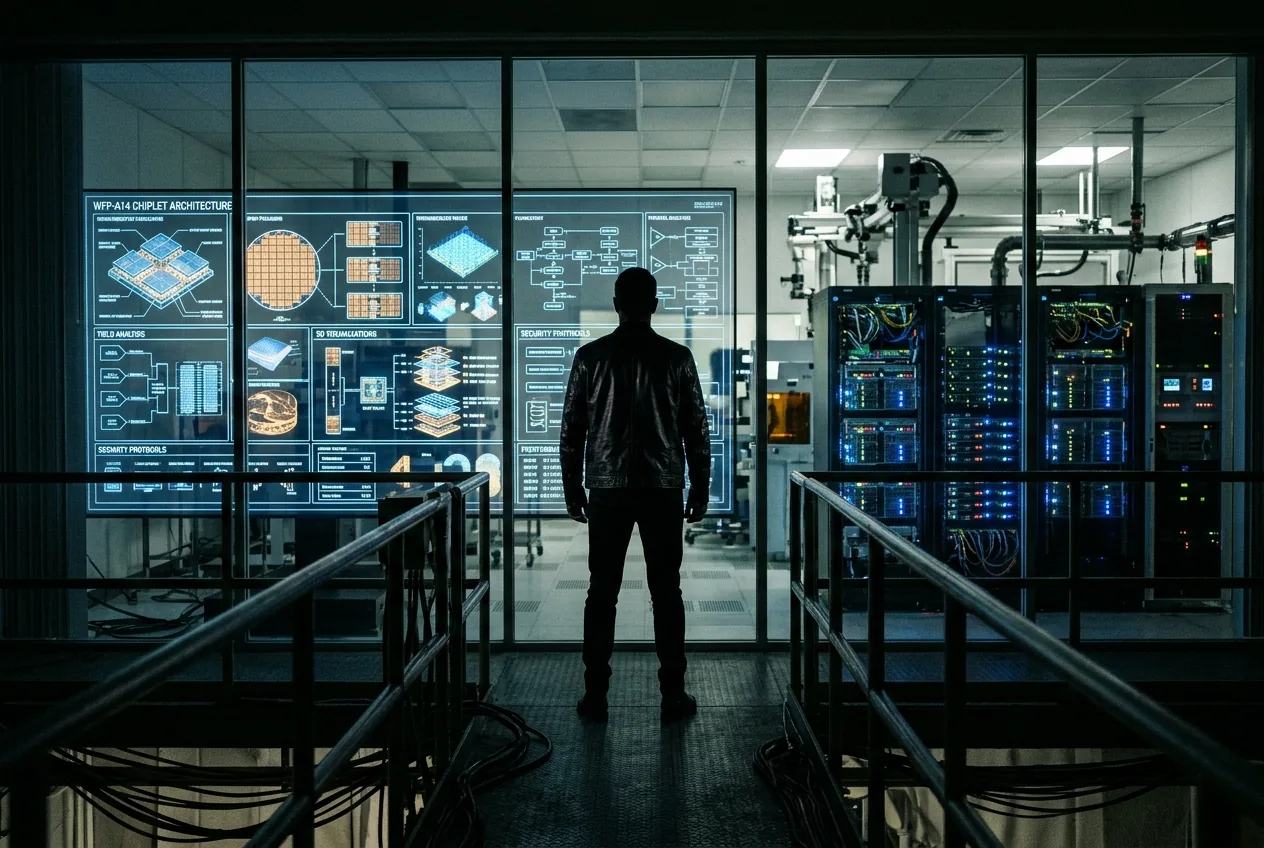
In modern industrial engineering, silicon microarchitecture and global statecraft have become inextricably linked. High-performance accelerators capable of training frontier artificial intelligence models are no longer treated simply as commercial components; they are classified, monitored, and regulated as strategic assets analogous to enriched fissile material or advanced aerospace propulsion. When personal conduct intersects with the operational integrity of the world’s foremost semiconductor vendor, the shockwaves reverberate far beyond corporate governance into the core of international trade policy.
The Singapore Compute Pipeline and the Megaspeed Channel
To understand why a personal relationship ignited a high-stakes intelligence investigation, one must examine the physical and financial logistics of advanced semiconductor distribution. In the wake of strict export controls enacted by the U.S. Department of Commerce’s Bureau of Industry and Security, high-density computing clusters running on architectures like Hopper and Blackwell have faced stringent compute-density caps when destined for mainland China. These regulations were specifically drafted to prevent foreign state actors from pooling enterprise-grade floating-point capabilities for dual-use military simulation and advanced autonomous systems development.
In response to these export limitations, Southeast Asia—and Singapore in particular—rapidly emerged as an essential hub for high-capacity enterprise data centers. Megaspeed, the company where Alice Huang served as a senior executive, established itself as an aggressive buyer of advanced enterprise silicon, procuring more than $4.8 billion in Nvidia processors over a 24-month span. On paper, these clusters were intended to power regional colocation and cloud-compute services. However, intelligence analysts and supply-chain monitors have long scrutinized third-party data center operators in neutral jurisdictions, wary of compute leasing schemes that effectively route processing capacity or physically divert packaged accelerators directly to entities restricted under the U.S. Entity List.
The central question facing federal investigators is whether this commercial nexus provided a channel for strategic intelligence collection. Intelligence agencies are examining whether Alice Huang sought direct architectural insights regarding Nvidia’s upcoming semiconductor roadmaps, packaging telemetry, or internal deliberations surrounding export-compliant product variants. Equally critical is whether the relationship was leveraged to subtly shape corporate lobbying efforts, as Jensen Huang had consistently been one of the most prominent industry voices urging Washington to ease restrictions on shipping advanced silicon to East Asian markets.
Corporate Fallout and the Boardroom Investigation
The controversy broke into public view after Huang issued a candid internal memo to Nvidia personnel, apologizing to his family, company employees, and shareholders for personal misconduct. In the communication, titled "A Message to Our Company," Huang accepted sole responsibility for his infidelity while attempting to compartmentalize his personal lapses from the firm’s technical operations. The board of directors moved quickly to form an independent special committee, supported by external legal counsel, to audit the company's internal security logs, commercial contracts with Megaspeed, and executive communications.
In its initial statements, the board emphasized that an ongoing review had uncovered no preliminary evidence indicating that proprietary technical secrets, microcode, or sovereign national security data had been compromised. Company spokespeople maintained that commercial roadmap execution would proceed without technical disruption. However, market analysts and corporate governance specialists quickly recognized that corporate assurances alone could not insulate a multi-trillion-dollar firm from systemic counterintelligence audits.
The administrative turbulence escalated dramatically within days, culminating in reports of Huang stepping down from his executive post and board seat amid the multiplying pressures of federal inquiries, shareholder class-action lawsuits, and additional disclosures concerning executive workplace conduct. Wedbush technology analyst Dan Ives noted that the controversy delivered a profound blow to the organization, warning that when an individual founder’s identity is synonymous with a company's market momentum, any structural leadership vacuum threatens capital-intensive roadmaps that depend on deep, multi-year customer relationships.
Evaluating the Counterintelligence Threat Model
Industrial counterintelligence operations against high-tech manufacturers rarely conform to popular cinematic depictions of digital sabotage. When nation-state intelligence apparatuses target hardware firms, their objective is typically either technical collection—such as obtaining low-level design files, firmware documentation, or advanced packaging methodologies—or strategic influence. In the case of advanced semiconductor manufacturing, the barrier to independent domestic production is immense; high-numerical-aperture extreme ultraviolet lithography and complex multi-die packaging require decades of specialized fabrication tooling that cannot be replicated purely through stolen architectural schematics.
Instead, the high-value target in an operation like this is access to organizational decision-making. Knowing how an executive leadership team plans to negotiate export thresholds, which technical parameters are being engineered into regional silicon variants, and how the company interfaces with the Commerce Department allows a foreign adversary to anticipate regulatory bottlenecks months before they materialize. An asset positioned within an intermediary compute reseller offers a vantage point not just for social engineering, but for monitoring the real-time velocity of global chip allocations across critical geographic nodes.
China’s Foreign Ministry forcefully dismissed the espionage allegations as baseless smears designed to justify broader economic containment policies. Yet within the intelligence community, the vector of approach remains standard tradecraft. By cultivating individuals at the intersection of distribution and executive leadership, hostile intelligence services seek to quietly erode regulatory barriers and identify potential leverage points within corporate governance hierarchies.
Capitol Hill Mobilizes as Geopolitical Friction Peaks
Washington lawmakers responded to the revelations with bipartisan urgency. Leaders across House committees on Foreign Affairs, Select Strategic Competition, and Intelligence swiftly dispatched formal inquiries demanding that executive leadership appear for closed-door briefings. Lawmakers are seeking exhaustive accounting of Nvidia’s anti-espionage defenses, internal handling of conflict-of-interest declarations, and the rigorousness of end-use monitoring procedures applied to massive hardware procurements by third-party infrastructure providers.
Congressional representatives have raised pointed questions regarding the timeline of corporate awareness: precisely when Nvidia’s internal compliance apparatus became aware of counterintelligence concerns surrounding Megaspeed personnel, and whether commercial transactions continued after warnings were flagged. Simultaneously, members of the Senate have signaled plans to broaden their review into a wider examination of technology diversion, using the incident to press for sweeping audits of every major Silicon Valley hardware firm operating high-throughput supply channels across the Asia-Pacific corridor.
Adding an unexpected dynamic to the unfolding controversy, former President Donald Trump publicly addressed the situation, breaking ranks with more hawkish members of his party. Speaking to reporters, Trump referred to Huang as an honorable individual who had performed exceptional work for the domestic technology industrial base, questioning the veracity of the espionage claims and openly expressing openness to Huang's eventual reinstatement. The unexpected political defense highlights the unique intersection of industrial policy, political alliances, and tech nationalism, where national champions in the semiconductor race are often viewed as too strategically vital to bench permanently.
The Broader Impact on Hardware Roadmaps and Industrial Automation
For the broader robotics and automation ecosystem, the instability at Nvidia arrives at an exceptionally delicate juncture. Modern robotic platforms—from autonomous mobile logistics systems to precision humanoid prototypes—are shedding localized compute constraints in favor of hybrid architectures. These setups rely on massive, centralized computing clusters running physics engines like Omniverse to train synthetic models, combined with low-latency edge modules mounted directly onto robotic chassis for real-time inference.
The hardware pipeline underpinning this technical shift depends on absolute operational certainty. Foundries like Taiwan Semiconductor Manufacturing Company allocate ultra-dense packaging lines, such as Chip-on-Wafer-on-Substrate capacity, years in advance based on firm engineering roadmaps. If regulatory friction forces severe compliance overhauls, protracted internal leadership transitions, or punitive licensing restrictions on intermediate distribution partners, the downstream availability of specialized silicon could tighten across the entire industrial sector.
Furthermore, this crisis is likely to hasten a significant pivot in how advanced hardware enterprises manage their geographic exposure. Enterprise hardware designers will face intense pressure from security agencies to implement cryptographic hardware roots of trust that enforce geographic locking, cryptographically binding processors to specific licensed physical racks and data centers. As compute silicon continues to function as the premier currency of industrial parity, the margin for human error at the top of these manufacturing monoliths has effectively shrunk to zero.



Comments
No comments yet. Be the first!