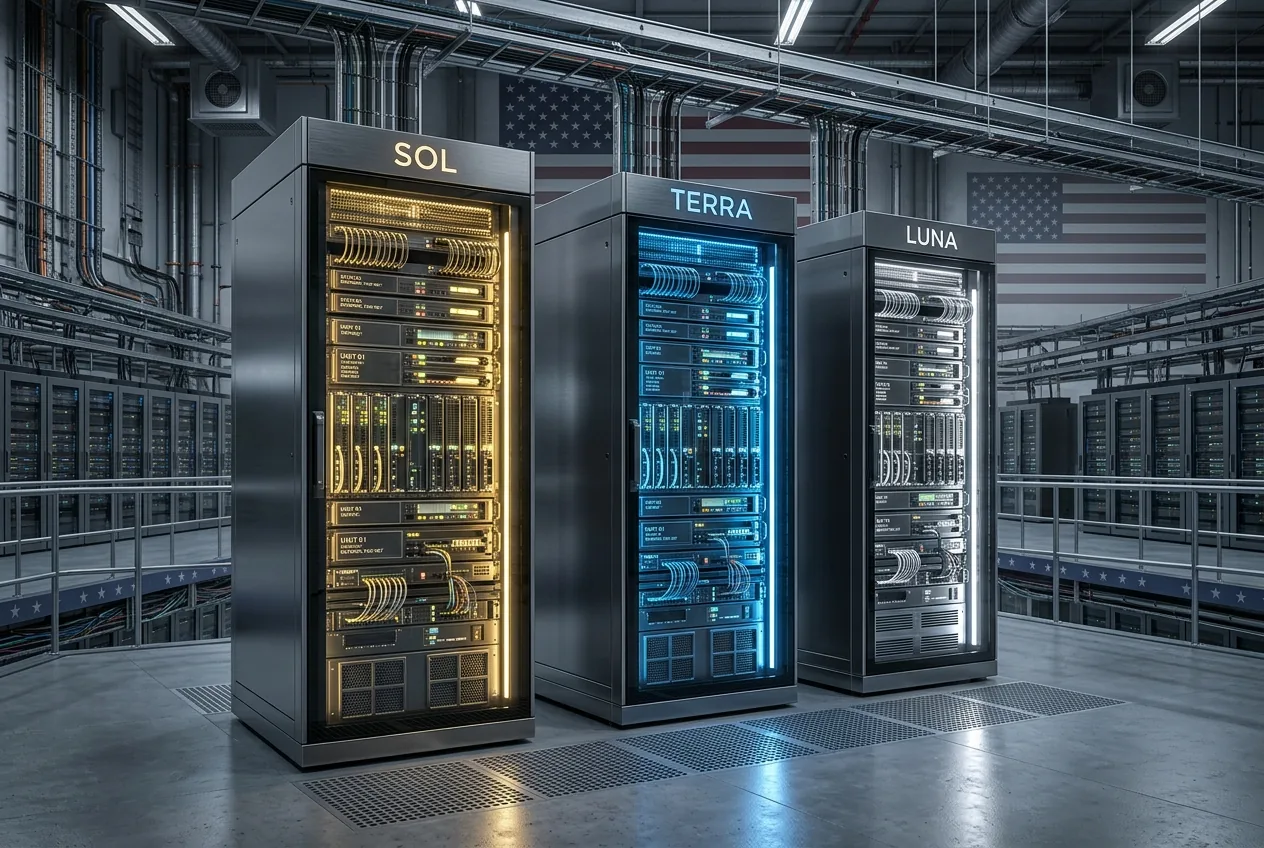
The Three-Tier Architecture of GPT-5.6
OpenAI is moving away from a monolithic model approach, instead offering a tiered system designed for specific industrial and commercial utilities. The flagship of this release is Sol, the most powerful reasoning engine the company has developed to date. Sol is engineered for high-complexity tasks, specifically focusing on advanced reasoning and cybersecurity. Unlike previous iterations, Sol includes a “max” reasoning effort mode, which allows the model to dedicate more compute time to iterating through logic chains before providing an output. This is a critical feature for engineering applications where a quick, shallow answer is less valuable than a deep, verified structural analysis.
The mid-tier variant, Terra, is positioned as the workhorse for everyday enterprise use. From a technical standpoint, Terra is perhaps the most impressive achievement in the lineup. It matches the performance benchmarks of the older GPT-5.5 model but does so at roughly half the cost. In the world of industrial automation and supply chain management, where inference costs can quickly erode margins, a 50% reduction in token pricing while maintaining parity in reasoning is a major economic win. Terra represents the maturation of model distillation and quantization techniques, proving that efficiency is now as much a priority as raw power.
Finally, Luna serves as the entry-level model, designed for high-volume, low-latency tasks. While it lacks the deep reasoning capabilities of Sol, its pricing structure—set at $1 per million input tokens—makes it a viable candidate for edge computing and basic sorting algorithms that require more flexibility than traditional heuristics but don’t justify the expense of a flagship model. By segmenting the market this way, OpenAI is clearly targeting a broad range of industrial users, from R&D departments to fulfillment center logistics.
The Hardware Cost of Safety and Jailbreak Prevention
One of the most striking technical details revealed in the launch announcement is the sheer amount of compute dedicated solely to safety. OpenAI reported spending over 700,000 GPU hours specifically to identify “universal jailbreaks” and adversarial vulnerabilities within the 5.6 series. To put that into perspective, that is the equivalent of running a thousand high-end H100 GPUs continuously for nearly a month just to find ways to break the model. This level of investment suggests that the company is no longer treating safety as a post-training wrapper, but as a core component of the model’s mechanical integrity.
This focus on “prohibited cyber assistance” is a direct response to the recent failures seen in the industry. For instance, Anthropic was recently forced to suspend access to its Mythos 5 and Fable 5 models after the government was notified that they could be manipulated for malicious cyber activities. By hardening Sol against adversarial pressure before it hits the wider market, OpenAI is attempting to avoid the same costly shutdowns that have plagued its competitors. For industrial partners, this stability is essential. No company wants to integrate an AI into its cybersecurity stack only to have the service revoked by a federal directive 48 hours later.
The Economic Viability of Sol vs. The Competition
When analyzing the economic utility of these models, the pricing of Sol is particularly noteworthy. At $5 per million input tokens and $30 per million output tokens, Sol is significantly more affordable than the now-suspended Fable model from Anthropic, which was priced at $10 and $50, respectively. This aggressive pricing indicates that OpenAI has found a way to scale its reasoning infrastructure more efficiently than its rivals. However, the lower cost also reflects the increased pressure to attract enterprise clients who are increasingly wary of the high overhead associated with LLM integration.
Is the Government Review Process the New Normal?
The most controversial aspect of the GPT-5.6 launch is the explicit involvement of federal authorities. OpenAI stated in its announcement that it does not believe government access should be the “long-term default,” yet they are currently sharing partner lists and model capabilities with the administration to facilitate a faster public release. This tension between private innovation and public safety is the central debate of the 2026 AI landscape. The 30-day voluntary review period for powerful models is ostensibly a safety measure, but it also functions as a bottleneck that could slow down the pace of deployment.
From an engineering perspective, this oversight adds a new layer of “system testing” that feels more like the certification process for a new aircraft than the release of a software update. While this may frustrate those used to the rapid-fire releases of 2023 and 2024, it provides a much-needed framework for reliability. If the GPT-5.6 series can successfully navigate this review without being flagged for national security risks, it sets a precedent for how “frontier” models will be handled moving forward. The goal is to move from a state of “emergency suspensions” to a state of “verified deployment.”
As we look toward the broad release of Sol, Terra, and Luna in the coming weeks, the question remains whether these models will deliver the promised performance gains in real-world industrial settings. OpenAI has built a robust machine, fortified it with massive compute-intensive safety protocols, and priced it to compete. However, the ultimate success of GPT-5.6 will depend on whether it can function effectively within the narrow confines of the new regulatory reality. For the mechanical and industrial sectors, the arrival of Terra—with its 50% cost reduction—may prove to be the most impactful development, turning AI from an expensive experimental luxury into a standard component of the modern supply chain.




Comments
No comments yet. Be the first!