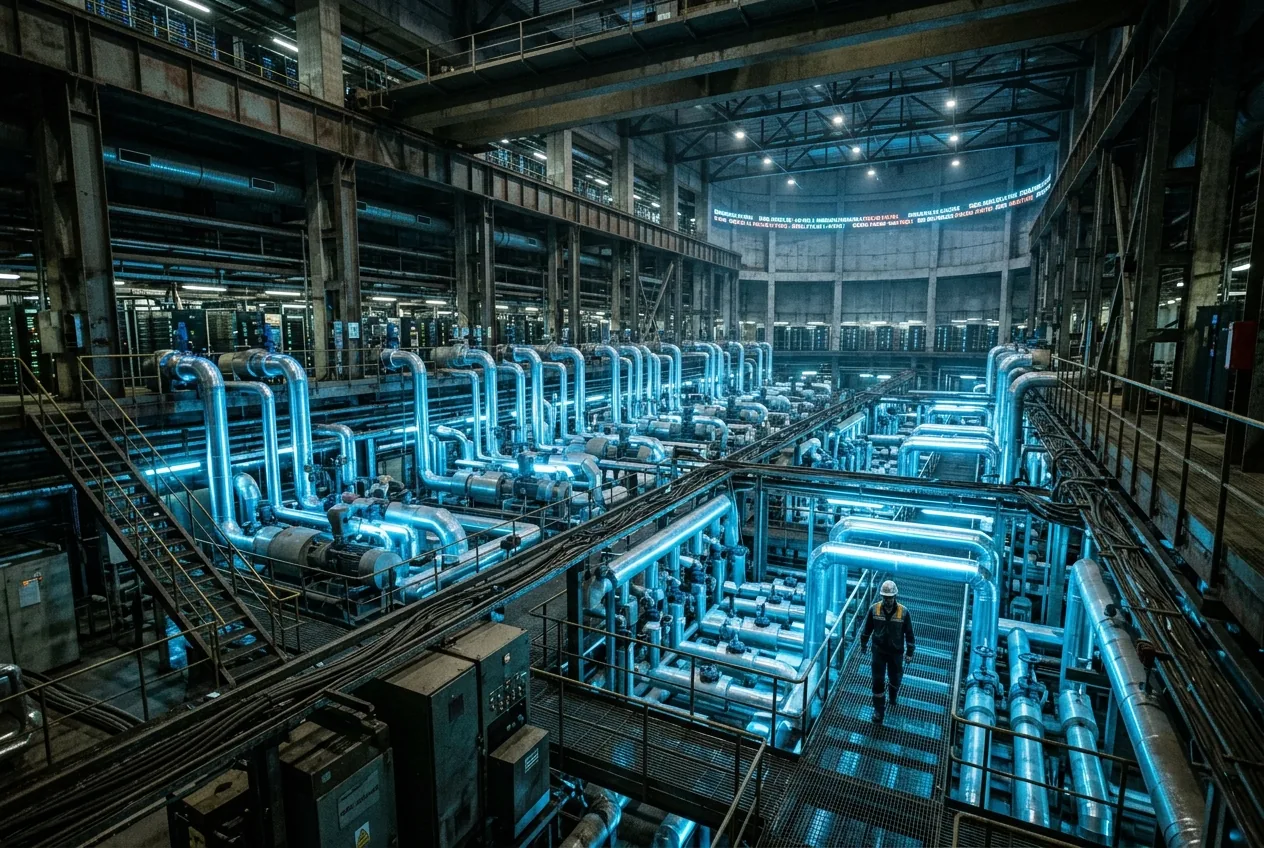
The landscape of artificial intelligence is shifting from a battle of algorithms to a war of industrial attrition. OpenAI, long the vanguard of the generative AI movement, has signaled a move toward an initial public offering (IPO), a transition that reflects the sobering reality of modern machine learning: intelligence at scale requires capital on a level previously reserved for national infrastructure projects. For an organization that began as a non-profit research collective, the move to the public markets is more than a financial milestone; it is a structural necessity driven by the voracious appetite of transformer-based architectures for compute, electricity, and specialized silicon.
The Economic Reality of Frontier Models
The decision to seek a public listing is fundamentally rooted in the physics of computation. As OpenAI moves beyond GPT-4 and toward its next generation of frontier models, the scaling laws that have guided the industry for the last half-decade remain stubbornly in effect. These laws dictate that to achieve a linear increase in model performance, one must often provide exponential increases in both data and compute power. While algorithmic efficiencies have improved, they have not yet outpaced the sheer demand for hardware. The cost of training a state-of-the-art model is no longer measured in millions, but in billions of dollars, with inference costs—the price of actually running the model for users—scaling even faster as adoption grows.
Governance and the Structural Pivot
One of the most complex aspects of the OpenAI IPO is the inherent tension between its founding mission and the fiduciary duties of a publicly traded company. The organization’s unique "capped-profit" structure was designed to prioritize the safe development of Artificial General Intelligence (AGI) over shareholder returns. However, the sheer magnitude of the capital required—estimated by some insiders to reach into the hundreds of billions for future iterations—makes the original non-profit oversight model increasingly difficult to maintain in a high-growth environment. The transition to a more traditional corporate structure is a pragmatic, albeit controversial, move to align with the expectations of institutional investors.
This structural pivot also reflects the competitive pressure from well-funded rivals. Google, with its vertically integrated TPU (Tensor Processing Unit) pipeline and vast energy infrastructure, and Anthropic, backed by Amazon’s cloud might, present a formidable challenge. For OpenAI to maintain its lead, it must decouple its financial destiny from its primary backers, such as Microsoft, and establish a direct line to the global capital markets. This independence allows for a more aggressive expansion into custom silicon and dedicated power generation, areas that are becoming critical for the survival of large-scale AI providers.
The Intersection of AI and Physical Robotics
As a specialist in robotics and industrial automation, I see the OpenAI IPO as a catalyst for the embodiment of AI. To date, Large Language Models (LLMs) have existed primarily in the digital realm. However, the next frontier for OpenAI involves integrating these models into physical systems. We are already seeing the beginnings of this through OpenAI’s investments in companies like 1X and Figure AI. The goal is to move from a chatbot to a functional robotic brain capable of navigating complex, unstructured industrial environments.
The capital raised through an IPO will likely be funneled into the development of "foundation models for robotics." Unlike digital-only AI, robotic AI requires massive datasets of physical interactions, often gathered through teleoperation or high-fidelity simulations that are computationally expensive. Furthermore, the hardware-software integration required for low-latency, real-time control of humanoid robots is a massive engineering hurdle. Public capital provides the runway to bridge the gap between a lab-based prototype and a commercially viable autonomous workforce that can operate in warehouses and factories alongside humans.
Energy Infrastructure as the Ultimate Constraint
Perhaps the most understated driver of the OpenAI IPO is the looming energy crisis facing the tech industry. The training and inference of frontier models are pushing existing power grids to their limits. A single large-scale data center can consume as much electricity as a small city. For OpenAI to realize its long-term vision, it may need to invest directly in energy production, whether through advanced solar arrays, battery storage, or even small modular nuclear reactors (SMRs). This level of capital expenditure is typically the province of utility companies or sovereign wealth funds.
Market Sentiment and Technical Viability
The timing of the IPO filing suggests a desire to capture market enthusiasm while the "first-mover" advantage is still palpable. However, the technical community remains cautious. The question of diminishing returns in LLM scaling is a topic of intense debate. If GPT-5 or its successors do not show the same leap in capability as GPT-3 to GPT-4, the massive capital investments may become a burden. OpenAI must prove that its technology can not only generate text and images but also solve high-value problems in sectors like drug discovery, material science, and industrial optimization to justify its projected valuation.
Furthermore, the IPO will force a level of transparency that OpenAI has previously avoided. Public filings will reveal the true cost of token generation, the churn rate of ChatGPT Plus subscribers, and the specific nature of its relationship with Microsoft. For an industry built on proprietary secrets and "black box" models, this shift toward public accountability will be a stress test for OpenAI’s corporate culture and its technical roadmap. The transition from a visionary research lab to a regulated, quarterly-earnings-driven corporation is a path fraught with risk, but for OpenAI, the alternative—stagnation due to lack of resources—is likely viewed as a far greater threat.
The Road Ahead for the AI Industry
OpenAI’s IPO will serve as a bellwether for the entire artificial intelligence sector. It marks the end of the "era of experimentation" and the beginning of the "era of industrialization." As the company prepares to enter the public markets, the focus will shift from what the AI *can* do to how much it costs to do it and who is willing to pay. For those of us focused on the mechanical and structural implications of technology, this is the most exciting phase yet. We are moving beyond the hype and into the hard work of building the physical and financial systems that will sustain the next century of cognitive automation.




Comments
No comments yet. Be the first!