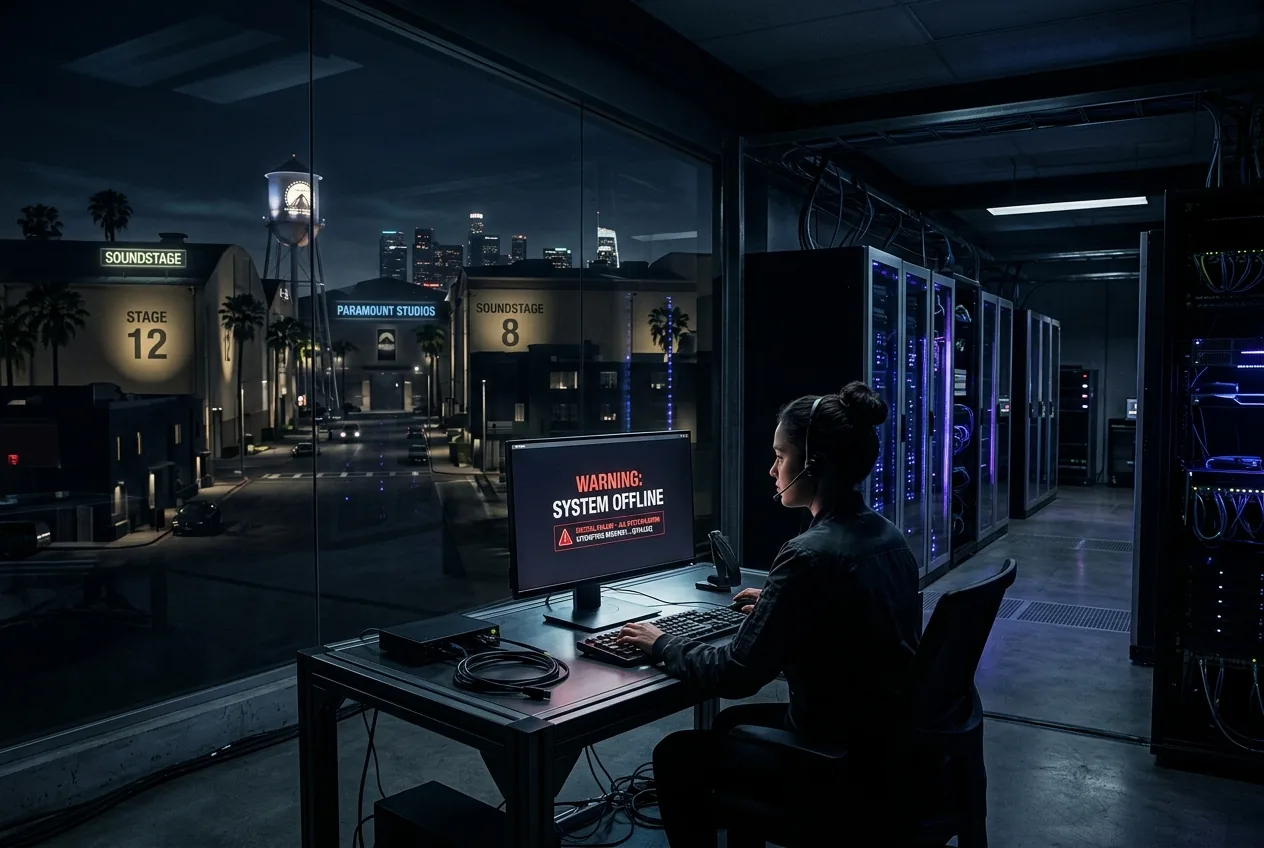
The era of hyper-realistic generative video has reached a sudden, industrial-scale crossroads. OpenAI, the organization that ignited the current artificial intelligence arms race, has officially announced the shutdown of Sora, its text-to-video generation platform. The news, which broke late Tuesday, coincides with the dissolution of a strategic partnership with The Walt Disney Company—a deal once heralded as the bridge between Silicon Valley’s latent diffusion models and Hollywood’s established production pipelines.
For observers of industrial automation and computational economics, the fall of Sora is more than just a product cancellation; it is a signal of the shifting cost-benefit analysis within the generative AI sector. While Sora stunned the world in late 2024 with sixty-second clips of high-fidelity environments, the transition from a viral research demonstration to a viable commercial tool appears to have hit a wall of technical and financial friction. The shutdown affects the standalone Sora application, its integrated features within ChatGPT, and the developer API, marking a total retreat from the consumer video market.
The Economic Friction of High-Fidelity Synthesis
From a mechanical and systems engineering perspective, the primary bottleneck for Sora was likely the sheer intensity of its compute requirements. Unlike text-based large language models (LLMs) that predict the next token in a sequence, Sora utilized a diffusion transformer (DiT) architecture. This required the model to perform massive amounts of denoising across three-dimensional spacetime patches. In simpler terms, the energy and hardware cycles required to generate a single minute of video were orders of magnitude higher than those needed for a thousand-word essay or a static image.
In the industrial world, efficiency is the ultimate arbiter of survival. While OpenAI successfully demonstrated that Sora could produce visually arresting content, the cost-per-frame remained prohibitively high for a broad subscription model. For Disney and other major studios, the value proposition of generative AI lies in reducing the overhead of VFX (Visual Effects) and pre-visualization. If the cloud compute costs of generating a scene via Sora rivaled the cost of traditional digital rendering—or even a small live-action crew—the technology lost its primary economic advantage.
Furthermore, the "black box" nature of diffusion models creates a lack of granular control. In a professional production environment, a director needs to be able to adjust the precise lighting of a character’s face or the physics of a falling object. Sora’s probabilistic approach meant that minor changes often required entire re-renders, further ballooning the compute budget without guaranteeing a specific result. This lack of deterministic output is a fatal flaw for high-end industrial application.
Why the Disney Partnership Unraveled
The exit of Disney from the Sora ecosystem is the most telling aspect of this shutdown. Initially, the partnership was viewed as a way for Disney to leverage its vast library of intellectual property to fine-tune OpenAI’s models, creating a closed-loop system for high-speed content iteration. However, sources close to the deal suggest that the legal and technical hurdles proved insurmountable. Intellectual property protection in the age of generative models is not just a matter of copyright; it is a matter of brand integrity.
Disney’s core assets are its characters, which require absolute visual consistency across different media. Sora, despite its brilliance, struggled with temporal consistency—the ability to keep a character looking exactly the same from one frame to the next over long durations. For a studio that prides itself on the precision of its animation and cinematography, the "dream-like" hallucinations often present in Sora-generated video were a liability rather than an asset. The deal likely collapsed when it became clear that Sora could not yet meet the rigorous standards of a multi-billion-dollar production house without human-intensive cleanup that negated the AI's efficiency gains.
There is also the matter of the "training data" controversy that has dogged OpenAI since its inception. As the legal landscape around the fair use of copyrighted material for AI training becomes more litigious, a company as protective of its IP as Disney may have found itself in a paradoxical position: using a tool that, by its very nature, challenges the traditional definitions of ownership and derivative work.
The Broader AI Bubble and Market Realignment
Industry analysts are already drawing parallels between the Sora shutdown and the cooling of the initial AI hype cycle. We are entering a period of "AI Realism," where the market is no longer satisfied with flashy demos and is instead demanding clear paths to profitability and industrial utility. The shutdown of Sora suggests that OpenAI is pivoting its resources toward more foundational, high-margin sectors, such as reasoning-heavy models (like the o1 and o3 series) and integrated enterprise solutions.
The competition in the video space has also become remarkably dense. Startups like Runway, Luma AI, and the China-based Kling have moved with a speed that larger organizations often struggle to match. These companies have focused on narrower, more targeted tools for creators rather than trying to build a monolithic "world simulator" as Sora was often described. By the time OpenAI was ready to move Sora out of its red-teaming and limited-access phase, the market had already been saturated with alternatives that were "good enough" for social media and basic marketing, leaving little room for a high-cost premium tier.
This pivot also highlights a critical shift in OpenAI’s corporate strategy. As the company transitions from a non-profit-controlled research lab to a more traditional for-profit entity, it must answer to investors who prioritize sustainable revenue over speculative research. In this context, Sora was a massive R&D sink with a murky timeline for ROI. Shutting it down allows the company to reallocate its tens of thousands of H100 GPUs toward the next generation of ChatGPT, which remains the company’s flagship revenue generator.
What Happens to the Data and the Technology?
Users who participated in the Sora limited-access program have been given a grace period to download their generated content before the servers go dark. However, the technological legacy of Sora will likely live on in other forms. The diffusion transformer architecture that powered Sora is already being adapted for other tasks, including robotic path-planning and synthetic data generation for autonomous vehicles. The ability to simulate a 3D environment based on a text prompt has significant applications in training physical robots, where it is often safer and cheaper to test a machine in a generated simulation before deploying it in the real world.
In the field of robotics, Sora’s "world model" approach was seen as a potential breakthrough for teaching machines about the physics of the everyday world. If a robot can "imagine" the consequences of an action—such as a glass breaking if it falls—it can learn without needing to break thousands of real-world glasses. While Sora may be dead as a consumer video app, its underlying weights and architecture will likely be cannibalized to bolster OpenAI's efforts in the embodied AI and robotics space.
The Future of Generative Media
The shutdown of Sora should not be viewed as the end of AI video, but rather the end of its first, unrefined chapter. The technology has proven that it is possible to synthesize reality at a level that was unthinkable five years ago. The next challenge is not making the video look better, but making the generation process cheaper, more controllable, and legally compliant. We are moving from the era of "magic" to the era of "engineering."
For the workers in the film and creative industries, this provides a brief moment of breathing room, though not a total reprieve. The pressure to integrate AI into workflows remains, but the collapse of the Sora-Disney deal suggests that the wholesale replacement of human production pipelines is much further off than the initial hype suggested. The human element—artistic intent, consistency, and directorial control—remains the premium value in the market.
Ultimately, OpenAI’s decision to kill Sora is a pragmatic one. It is a recognition that in the cold light of industrial reality, a tool that is 90% impressive but 100% unpredictable is a difficult product to sell. As the AI industry continues to mature, we should expect more of these high-profile sunsetting events as companies trim the fat and focus on the tools that actually drive the global economy forward.




Comments
No comments yet. Be the first!