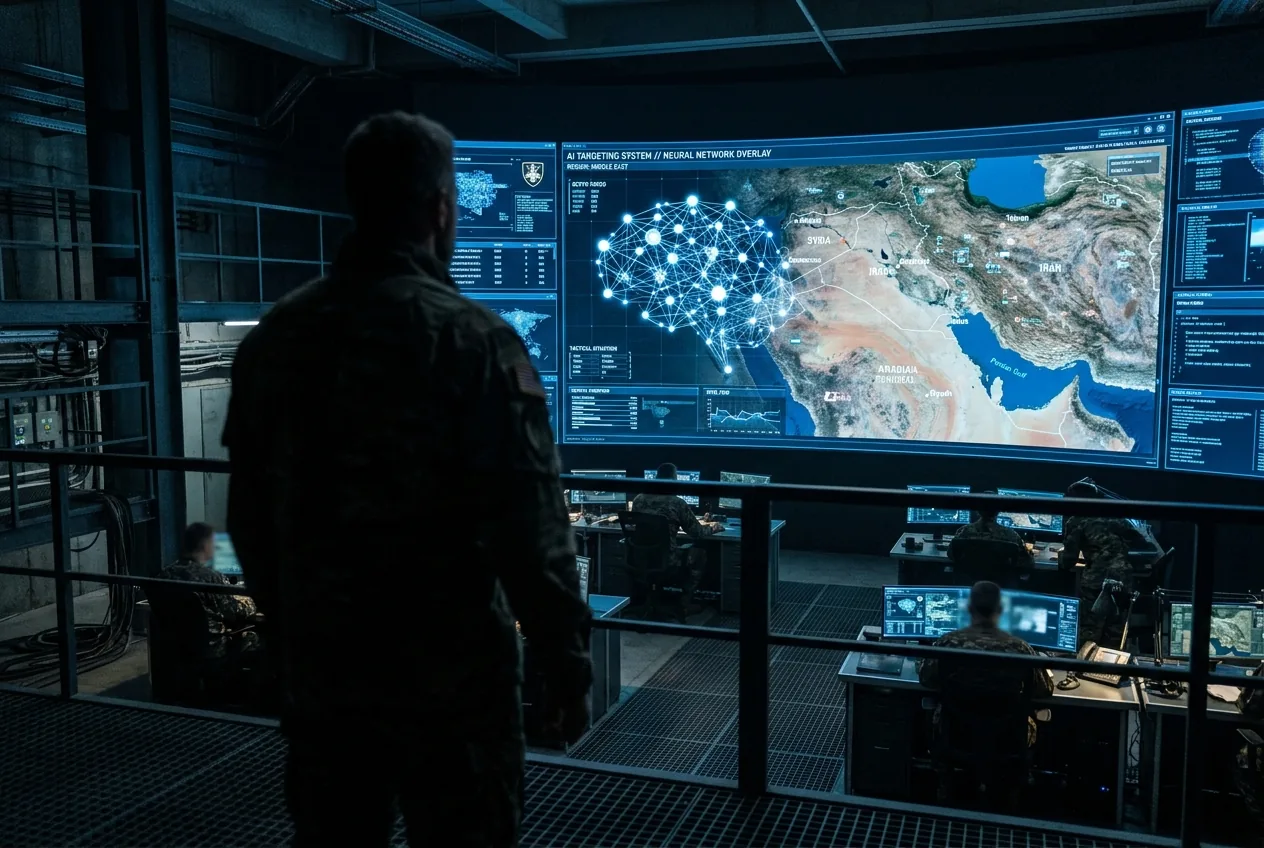
In the high-stakes theater of modern warfare, the line between data processing and kinetic action is blurring at an unprecedented rate. Recent reports suggesting that the United States Department of Defense utilized commercial Large Language Models (LLMs), specifically Elon Musk’s xAI-developed Grok, to assist in identifying targets for airstrikes in the Middle East, have sent shockwaves through both the technology and defense sectors. While the Pentagon has long sought to integrate artificial intelligence into the "kill chain," the move from specialized computer vision to general-purpose, often unpredictable generative models represents a fundamental shift in military doctrine—and a significant engineering risk.
To understand the gravity of these reports, one must first distinguish between the types of AI currently in play within the military-industrial complex. For over a decade, initiatives like Project Maven have focused on computer vision—teaching algorithms to identify a T-72 tank or a surface-to-air missile battery from satellite imagery. These are classification tasks based on visual data, which, while complex, operate on a deterministic goal of accuracy. The introduction of LLMs like Grok into this ecosystem changes the nature of the task from identification to synthesis and reasoning, a domain where generative AI is notoriously unstable.
The Technical Disconnect of Commercial LLMs in Combat
From a mechanical and systems engineering perspective, the primary requirement for any component in a tactical environment is reliability. Whether it is the tensile strength of a turbine blade or the logic gates in a flight control system, the output must be predictable. General-purpose LLMs are, by design, probabilistic. They do not "know" facts; they predict the next most likely token in a sequence based on training data. When an LLM like Grok—which was explicitly marketed as having an "edgy" persona and a willingness to provide unconventional answers—is used to synthesize intelligence reports, the risk of "hallucination" becomes a literal matter of life and death.
Why Military Decision-Makers Are Turning to xAI
The question arises: Why would the Department of Defense turn to a commercially available, relatively unproven model like Grok? The answer lies in the massive data ingestion capabilities of these models. Modern warfare generates petabytes of data daily, from SIGINT (signals intelligence) to open-source social media feeds. Human analysts are the bottleneck. Grok, having been trained on the real-time data stream of the X platform (formerly Twitter), offers a capability that older, more siloed military models lack: the ability to parse current events and colloquial language in real-time.
However, this reliance on real-time social media data is a structural vulnerability. Grok’s training set is inherently noisy, filled with misinformation, propaganda, and the very "snark" that Musk has touted as a feature. For a targeting officer, the difference between a legitimate insurgent meeting and a civilian gathering can be a single mistranslated phrase or a sarcastic post. When the AI synthesizes these disparate data points into a target recommendation, it creates a "black box" of reasoning. The human-in-the-loop, presented with a seemingly coherent justification for a strike generated by an AI, may suffer from automation bias—the tendency to trust an algorithmic suggestion over their own intuition or conflicting evidence.
The Reliability Gap in Algorithmic Targeting
In any industrial application, safety-critical systems are subjected to rigorous stress testing and edge-case analysis. Generative AI models currently lack a standardized framework for this level of validation. When we look at Grok’s performance in public benchmarks, it often struggles with basic logic and factual consistency, a trait it shares with competitors like GPT-4 or Gemini. But while a hallucination in a customer service chatbot results in a frustrated user, a hallucination in a military target-selection tool results in collateral damage and geopolitical escalation.
Furthermore, the proprietary nature of xAI’s weights and training methodologies presents a significant hurdle for military accountability. If a strike goes wrong due to a flaw in the AI’s reasoning, where does the liability lie? Is it a failure of the operator, the software engineers at xAI, or the procurement officers who bypassed more rigorous testing? The lack of transparency in how Grok arrives at its conclusions makes it impossible to conduct a traditional forensic post-mortem on a failed operation. This "interpretability problem" is a known issue in AI research, but its application in kinetic warfare is a dangerous leap forward without the necessary safety nets.
Geopolitical Implications of High-Speed AI Warfare
The use of Grok in targeting Iran-linked assets is not just a technical failure; it is a signal to the rest of the world that the barrier to entry for lethal force is being lowered. If the United States signals that it is willing to trust its most sensitive decisions to an AI known for its erratic behavior, it encourages an arms race in "autonomous" decision-making. We are moving toward a reality where the speed of conflict outpaces human cognition, forcing adversaries to also adopt high-speed AI tools to compete.
This creates a feedback loop of instability. If two opposing AI systems, both trained on noisy data and prone to hallucinations, are making decisions about escalation, the risk of accidental war increases exponentially. The pragmatic engineer looks at this system and sees a massive potential for cascading failure. In a complex system, the more tightly coupled the components are—and the faster they operate—the more likely they are to experience a catastrophic collapse when a single part malfunctions. In this case, the malfunctioning part is the AI’s perception of reality.
Is There a Path to Responsible Integration?
The allure of AI in the military is undeniable. The ability to process vast quantities of information and identify patterns that humans might miss is a legitimate force multiplier. However, the integration must be handled with the same rigor as any other aerospace or mechanical system. This means moving away from general-purpose commercial LLMs and toward domain-specific models that are trained on vetted, classified data and designed with "explainability" at their core.
We must also establish clear "no-go" zones for AI. While AI can be invaluable for logistics, supply chain optimization, and predictive maintenance of hardware, its role in the actual selection of human targets should be strictly limited, if not outright banned, until the hallucination problem is solved. The use of Grok, a tool built for engagement and entertainment, in the context of bombing campaigns is a stark reminder that the rush to modernize can sometimes lead to a regression in human judgment.
As we continue to map the interface of robotics and human industry, the lesson of the Pentagon’s Grok experiment is clear: precision cannot be sacrificed for speed. In the world of engineering, we know that a system is only as strong as its weakest link. In the modern kill chain, that link is increasingly made of code, and right now, that code is far too fragile for the weight it is being asked to carry. The move toward algorithmic warfare requires more than just better software; it requires a new ethics of engineering that prioritizes the preservation of human oversight in our most lethal machines.




Comments
No comments yet. Be the first!