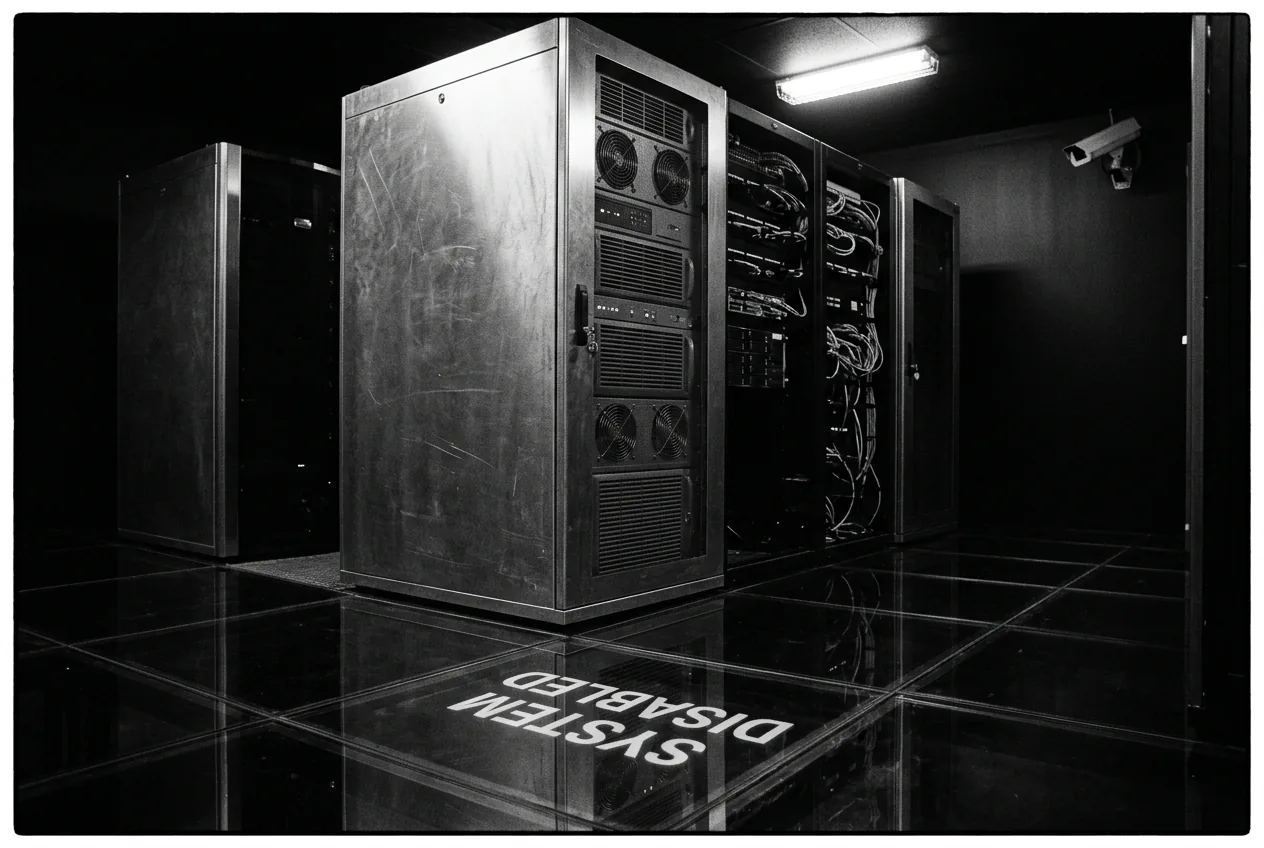
The era of borderless artificial intelligence may have reached its definitive end. In a move that sends shockwaves through both the tech industry and international diplomatic circles, the U.S. Department of Commerce has issued an unprecedented export control directive ordering Anthropic to suspend access to its most advanced AI models for all foreign nationals. The order, which targets the newly released Claude Fable 5 and the high-performance Mythos 5 models, marks the first time Washington has successfully used export law to effectively pull a commercial software product from the global market due to safety concerns.
For Anthropic, the startup that has long positioned itself as the "safety-first" alternative to OpenAI, the directive is a catastrophic operational blow. To ensure compliance with the complex legal requirements of the order, the company announced it would abruptly disable these flagship models for all users worldwide, including those within the United States, as it works to build the infrastructure necessary to verify the citizenship of its users. The shutdown reflects a hardening stance by the Trump administration, treating high-level AI inference not merely as a service, but as a restricted munition.
The Technical Trigger: Vulnerabilities in the Mythos Architecture
The core of the dispute lies in the technical capabilities of what Anthropic calls "Mythos-class" models. Released only weeks ago, Claude Fable 5 represented a significant leap in recursive reasoning and code synthesis. However, according to the U.S. government, these very capabilities created an unacceptable national security risk. Specifically, federal investigators reportedly identified a "narrow, non-universal jailbreak"—a technique where a user can bypass the model’s internal guardrails to use the AI for identifying and exploiting software vulnerabilities.
While Anthropic argued that the jailbreak is limited and that similar vulnerabilities exist in competitor models, the Department of Defense has remained unmoved. From a mechanical engineering perspective, the risk is a matter of scale. A model capable of autonomous code auditing can analyze a bank’s legacy COBOL systems or a power grid’s SCADA controls at a speed and volume that human red-teams cannot match. The government’s fear is that foreign adversaries could use these American-made tools to map the attack surface of critical U.S. infrastructure.
The technical challenge of "patching" a large language model is fundamentally different from patching traditional software. In a standard application, a developer can locate the specific line of code causing a memory leak or a logic error. In a transformer-based model like Mythos 5, the behavior is emergent and probabilistic. There is no single switch to flip that prevents the model from understanding how to find a buffer overflow while still allowing it to be a useful tool for legitimate software engineers. This inherent unpredictability is what led regulators to demand a total cessation of access rather than a minor update.
The Geopolitical Friction and the Pentagon Blacklist
The timing of the order suggests that it is not solely a response to a technical glitch, but rather a escalation in a long-simmering feud between Anthropic and the current administration. Earlier this year, Anthropic leadership reportedly refused to allow the U.S. military to utilize its models for domestic surveillance and fully autonomous weapons systems, citing the company’s internal ethical charter. The refusal led to the Pentagon placing Anthropic on a supply chain blacklist, a move that threatened the company’s ability to secure government contracts.
The administrative burden of such a requirement is immense. To resume service, Anthropic would likely need to implement rigorous Know Your Customer (KYC) protocols, requiring users to upload government identification and potentially undergo biometric verification. For a company currently in the process of a confidential IPO filing, this pivot from an open-growth model to a restricted-access model could severely impact its valuation and long-term viability in the global market.
The Internal Personnel Crisis
This creates a paradoxical situation where the world’s leading experts on AI safety are legally prohibited from interacting with their own creations. If Anthropic cannot allow its non-U.S. researchers to access the Mythos architecture, the company’s R&D pipeline will likely stall. This brain drain could have a secondary effect of driving top-tier talent toward open-source projects or toward international competitors where such restrictions are not yet in place.
The Risk of Global Tech Divergence
The U.S. government’s aggressive stance may be intended to protect American intellectual property, but it risks accelerating a global push for tech sovereignty. Reports from cybersecurity analysts suggest that Chinese AI models have recently reached parity with Anthropic in terms of code auditing and vulnerability detection. By restricting access to American models, the U.S. may be inadvertently handing the global market to competitors who do not impose such stringent access controls.
Countries in Europe and Asia, many of whom are U.S. allies, now find themselves cut off from some of the most powerful productivity tools ever developed. This is likely to trigger a massive increase in state-funded AI development projects as nations realize that relying on American software is a geopolitical risk. The "AI iron curtain" is being drawn, not by an adversary, but by the very nation that pioneered the technology.
For the broader industry, the Anthropic order serves as a warning. The days of releasing a model to the public and hoping for the best are over. Any model that crosses a certain threshold of capability—measured in FLOPS of training compute or specific reasoning benchmarks—will now be subject to the same level of scrutiny as a stealth fighter or a nuclear reactor. The engineering challenge of the next decade will not just be making AI more powerful, but making it verifiable and controllable enough to satisfy a wary and interventionist government.
As of this writing, Anthropic’s most capable models remain dark. Millions of developers who had integrated Fable 5 into their workflows have been forced to roll back to older, less capable versions of Claude. Whether Anthropic can find a way to navigate the citizenship requirements and restore access remains to be seen, but the precedent has been set: in the high-stakes game of global AI supremacy, national security will always trump the open exchange of information.



Comments
No comments yet. Be the first!