In the high-stakes theater of global semiconductor manufacturing, the distance between dominance and vulnerability is measured in nanometers and interconnect bandwidth. For the better part of two years, Nvidia has operated almost without a peer, riding the wave of generative AI to a valuation that briefly eclipsed the world’s largest tech giants. However, a series of developments within the Chinese domestic chip industry has sent a tremor through Wall Street, raising questions about the long-term viability of Nvidia’s "moat" in the face of rapid, sanctioned-defying innovation.
The core of the recent market anxiety centers on the realization that the technological gap between Western high-end GPUs and Chinese domestic accelerators is closing faster than anticipated. While the U.S. Department of Commerce has consistently tightened export controls on the A100, H100, and the newer Blackwell architectures, Chinese firms have been forced into an intensive period of internal R&D. The result is a new generation of silicon that, while perhaps not matching Nvidia’s peak theoretical throughput, offers enough performance to satisfy the massive demand for large language model (LLM) training within the world’s second-largest economy.
The Engineering Reality of the Ascend 910C
Central to this shift is Huawei’s reported progress with the Ascend 910C processor. For engineers and system architects, the interest lies not just in the raw TFLOPS (Teraflops) of compute power, but in the memory architecture and interconnect efficiency. Nvidia’s dominance has historically been protected by its NVLink technology, which allows thousands of GPUs to communicate at high speeds, effectively acting as a single, massive computer. Without this high-speed communication, individual chips are bottlenecked by data transfer delays.
Can Software Parity Break the CUDA Monopoly?
The hardware is only half of the equation. Nvidia’s true stronghold has always been CUDA (Compute Unified Device Architecture), the proprietary software platform that has become the industry standard for AI development. For a decade, developers have written their libraries and frameworks specifically for Nvidia hardware. Transitioning to a different architecture usually involves a prohibitive amount of code rewriting and optimization loss.
The Logistics of Lithography and Yield Rates
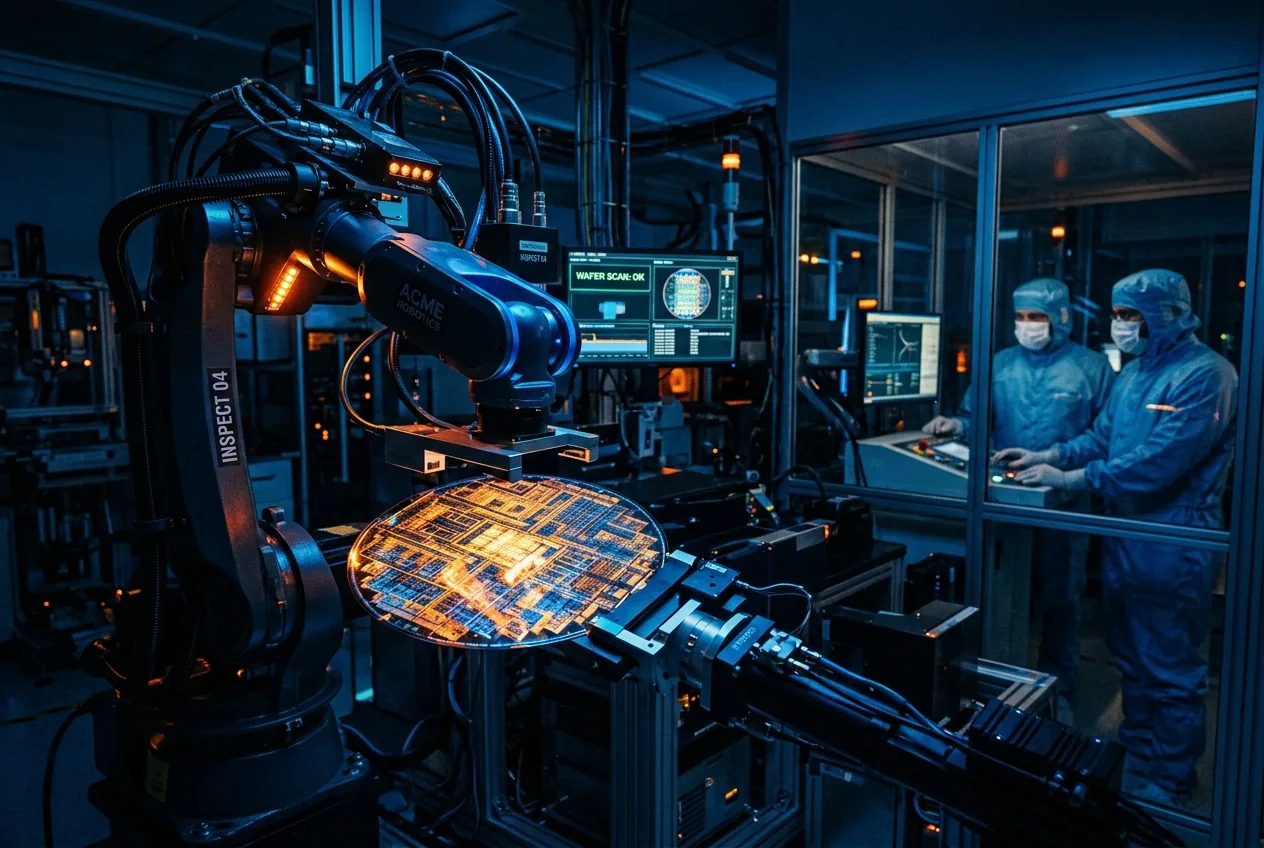
From a mechanical and industrial engineering perspective, the manufacturing of these chips is a feat of endurance. SMIC (Semiconductor Manufacturing International Corporation) has faced immense pressure to increase yield rates on advanced nodes without access to extreme ultraviolet (EUV) lithography machines. The physics of DUV multi-patterning are incredibly complex; it requires multiple exposures of the silicon wafer to define features that are smaller than the wavelength of the light being used.
This process is traditionally expensive and prone to defects, leading to low yields. However, the sheer volume of state-sponsored investment in the Chinese semiconductor sector has allowed SMIC to absorb these costs. As yield rates improve, the cost per chip drops, making domestic AI accelerators commercially viable even without the efficiency of EUV. For Nvidia, this means the "China-only" versions of their chips—which are intentionally throttled to meet export regulations—are now facing superior domestic competition. When a customer in Shenzhen can buy a domestic chip that outperforms a nerfed Nvidia H20, the economic logic of the export-compliant GPU falls apart.
Market Valuation and the High-Growth Paradox
The $400 billion swing in market sentiment reflects a broader realization: Nvidia’s valuation is predicated on near-infinite growth and a near-total monopoly. Any credible threat to its market share in China—which has historically accounted for a significant double-digit percentage of its revenue—forces a re-evaluation of its price-to-earnings ratio. Investors are beginning to price in a future where Nvidia is one of several major players, rather than the sole provider of the world’s AI infrastructure.
Furthermore, the emergence of domestic Chinese hardware has sparked a secondary concern regarding oversupply. If Chinese firms can satisfy their own internal demand, the excess capacity of Nvidia’s production partners might lead to a glut in other markets. While demand for AI compute currently exceeds supply globally, the industrial lifecycle of semiconductors suggests that this peak cannot be sustained indefinitely. When the supply chain finally catches up, margins will inevitably contract.
The Rise of Dedicated AI Silicon
Beyond the GPU, we are seeing a shift toward Application-Specific Integrated Circuits (ASICs). While Nvidia’s GPUs are versatile, they carry the overhead of being general-purpose processors. Many Chinese tech giants are now designing their own ASICs specifically for their internal workloads—search algorithms, social media recommendation engines, and targeted LLM inference. These chips are more power-efficient and cost-effective than a high-end GPU for specific tasks.
This trend toward vertical integration is perhaps the greatest long-term threat to Nvidia’s business model. When a company like Alibaba or Tencent designs its own silicon, it doesn't just replace one Nvidia chip; it removes a customer from the market entirely. The breakthrough that shook Wall Street isn't just a single chip from Huawei; it is the maturation of an entire vertical ecosystem that no longer requires Western intervention to scale.
Geopolitical Friction and Technical Sovereignty
The pursuit of "technical sovereignty" has become a national mandate in China. This isn't merely about economic competition; it is about ensuring that the foundational technology of the 21st century—Artificial Intelligence—is not subject to the whims of foreign trade policy. This drive has accelerated the testing and validation cycles for new hardware. What would normally take five years of iterative development is being compressed into eighteen months through massive capital infusion and a high tolerance for failure.
For Nvidia, the path forward involves a delicate balancing act. They must continue to push the envelope with the Blackwell and Rubin architectures to maintain a performance lead that justifies their price point, while simultaneously navigating a geopolitical landscape that restricts their ability to sell their best products to one of their biggest markets. The recent "shock" is a signal that the era of uncontested silicon supremacy is ending, replaced by a fragmented global market where engineering ingenuity is once again the primary currency.
Ultimately, the $400 billion fluctuation in market value is a symptom of a transition. We are moving from the "gold rush" phase of AI, where any hardware was good hardware, to a phase of industrial optimization. In this new era, the mechanical precision of manufacturing, the efficiency of power delivery in data centers, and the resilience of the supply chain will determine the winners. Nvidia remains the leader, but for the first time, the rearview mirror shows a competitor that is gaining ground with remarkable speed.




Comments
No comments yet. Be the first!