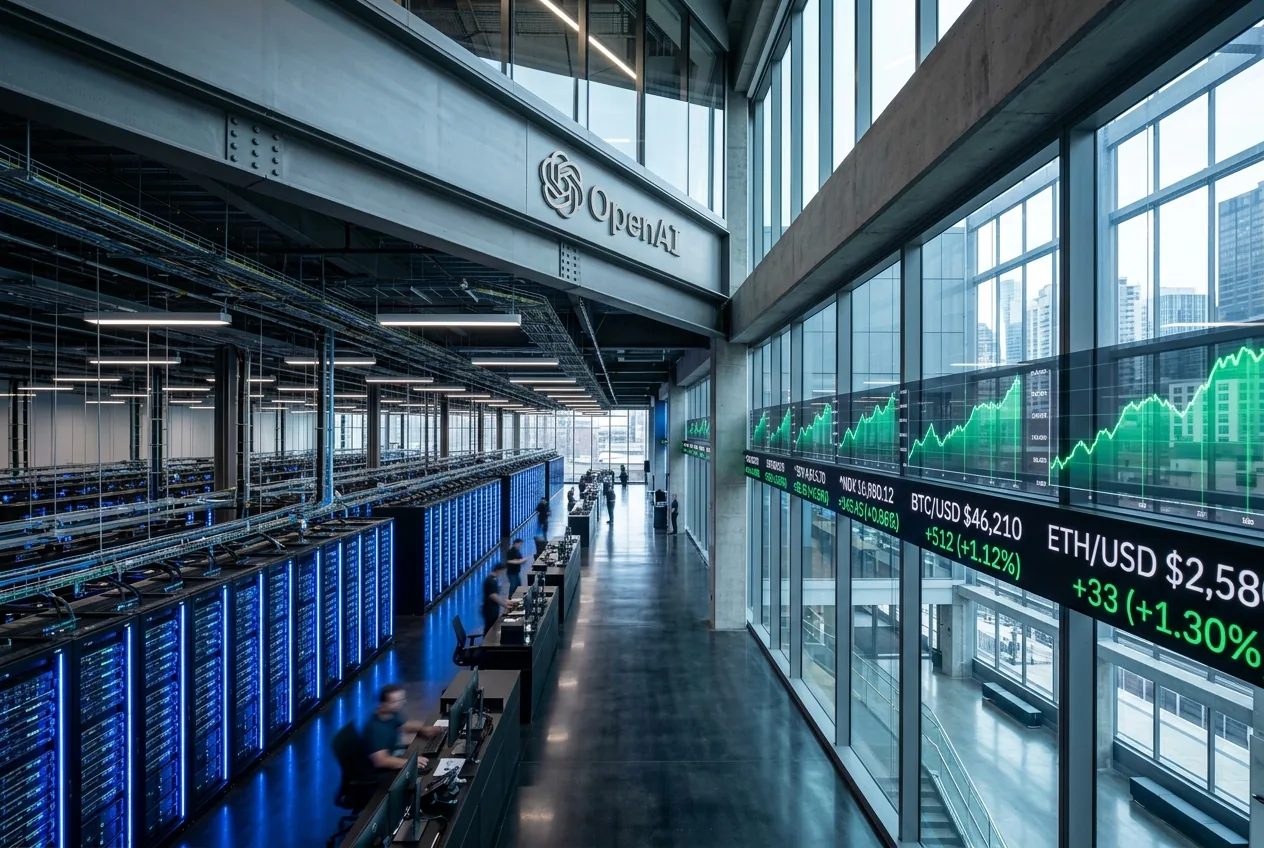
OpenAI, the San Francisco-based laboratory that transitioned from a niche nonprofit to the vanguard of the generative artificial intelligence movement, has reportedly submitted confidential paperwork to the Securities and Exchange Commission (SEC) for an initial public offering (IPO). This move, confirmed by sources familiar with the matter, marks a watershed moment for the technology sector, signaling that the most capital-intensive era of software development is now seeking the liquidity and scale of the public markets. By filing under the Jumpstart Our Business Startups (JOBS) Act, OpenAI can keep its financial details private during the initial review process, a common strategy for high-growth firms looking to maintain strategic flexibility before a formal roadshow.
The timing of this filing suggests a debut could occur as early as the late third quarter or early fourth quarter, depending on market volatility and the speed of the SEC’s feedback loop. While the company has previously operated on private venture capital, including massive injections from Microsoft, the sheer scale of the hardware and energy requirements necessary to achieve Artificial General Intelligence (AGI) has necessitated a broader capital base. For a company that was once a 501(c)(3) research lab, the pivot toward a public debut is more than just a financial milestone; it is a structural acknowledgment that the development of frontier models has moved beyond the capacity of private equity alone.
The trillion-dollar valuation and the scale of the AI race
Early reports indicate that OpenAI is eyeing a valuation that could eclipse $850 billion, with some internal projections stretching toward the $1 trillion mark. If achieved, this would place OpenAI in a rare tier of "mega-cap" entities from the moment it lists, rivaling the market capitalization of established giants like Berkshire Hathaway or Meta. This valuation is not merely speculative but is anchored in the company's aggressive revenue trajectory. OpenAI recently reported reaching $2 billion in monthly revenue, driven by 900 million weekly active users of ChatGPT. This growth rate—approximately four times faster than the early expansion of Google or Facebook—underlines the unprecedented speed of AI adoption across both consumer and enterprise sectors.
However, the valuation also reflects a broader "clustering" of high-value tech offerings. OpenAI is not alone in its quest for public capital; industry peers such as Anthropic and Elon Musk’s SpaceX are also reportedly weighing public entries or secondary offerings that could collectively absorb hundreds of billions in investor capital. This concentration of mega-IPOs represents a test of the market's depth. Analysts are closely watching whether the influx of these AI-native firms will provide a secular boost to the tech indices or if they will cannibalize the liquidity currently supporting smaller, less established startups.
From a technical perspective, the $1 trillion valuation is a bet on the "scaling laws" of transformer models. Investors are effectively pricing in the assumption that more compute and more data will continue to yield diminishing errors and increasing utility. For a mechanical engineer looking at the infrastructure, this valuation represents the market’s appraisal of OpenAI’s proprietary stack—not just the algorithms, but the massive GPU clusters and the intricate power-management systems required to keep them operational. The company’s ability to defend this valuation will depend on whether it can maintain its lead in inference efficiency as competitors like Google and Meta release increasingly capable open-weights models.
Analyzing the unit economics of frontier AI
While the revenue numbers are staggering, the underlying financials reveal a high-burn environment that is typical of frontier engineering. Reports suggest that OpenAI burned through approximately $3.7 billion in a single quarter recently, a figure that represents more than half of its $5.7 billion in revenue for that same period. For every dollar earned, the company is spending roughly $2.20. This negative margin is almost entirely attributable to the physical costs of intelligence: the procurement of H100 and Blackwell GPUs, the build-out of multi-gigawatt data centers, and the high salaries required to retain the world’s top machine learning talent.
This burn rate is often misunderstood as traditional "startup waste." In reality, it is better characterized as a capital expenditure on the infrastructure of the next industrial era. Unlike traditional software companies where the marginal cost of a new user is near zero, AI companies face significant "compute-per-query" costs. Every time a user interacts with a model, OpenAI must pay for the electricity and hardware depreciation required to run those calculations. The company does not expect to achieve true profitability until 2030, a long-term horizon that requires public investors to have a high tolerance for technical risk and a belief in the eventual arrival of highly efficient, autonomous agents that can generate massive economic value.
The structural pivot to a Public Benefit Corporation
Central to the IPO narrative is OpenAI’s ongoing transition from its original nonprofit-controlled structure to a "Public Benefit Corporation" (PBC). This shift is designed to make the company more attractive to a wider range of institutional investors while theoretically maintaining a commitment to its mission of ensuring that AI benefits all of humanity. As a PBC, the board of directors is legally allowed to balance the interests of shareholders with the company’s stated social mission, providing a buffer against the short-term pressures of quarterly earnings reports that might otherwise force compromises on safety or alignment research.
This restructuring has not been without friction. It was a core point of contention in the legal battles with co-founder Elon Musk, who alleged that the company had abandoned its founding principles. However, a recent jury dismissal of Musk’s lawsuit in 2026 cleared a significant legal hurdle, removing an "overhang" that could have spooked prospective underwriters. With the litigation largely resolved, OpenAI is now free to present a cleaner corporate governance model to Wall Street. The move to a PBC is a pragmatic compromise, acknowledging that the path to AGI requires billions in hardware that only a for-profit entity can attract, while attempting to retain the ethical guardrails that defined its early years.
For the broader robotics and automation industry, OpenAI’s IPO serves as a bellwether. The company’s recent investments in humanoid robotics and embodied AI suggest that it views the physical world as the next great training set. If OpenAI can successfully go public with a trillion-dollar valuation, it will validate the thesis that AI is not just a digital tool but a foundational general-purpose technology. This will likely trigger a wave of investment into the physical infrastructure—robotics, sensors, and power grids—that will eventually serve as the "body" for the intelligence OpenAI is building. The IPO is the first step in moving AI from the laboratory to the backbone of global industry.
Can OpenAI maintain its lead in a commoditized market?
Furthermore, the data moat is evolving. With the internet largely "scraped" to its limits, the next frontier of model training will rely on high-quality synthetic data and specialized proprietary datasets from industries like medicine, law, and mechanical engineering. The capital from an IPO will allow OpenAI to strike the massive licensing deals necessary to secure this data. Ultimately, the company’s survival as a public entity will depend on its ability to transition from a research pioneer to a reliable utility provider for the global economy, proving that it can manage the immense technical complexities of AI at a scale that remains economically viable.




Comments
No comments yet. Be the first!