The Capital Requirements of Artificial General Intelligence
Recent reports circulating through financial and technology circles suggest that OpenAI is laying the foundational groundwork for an initial public offering that could target a valuation in the neighborhood of $1 trillion. While the timeline of September remains speculative and subject to the volatile shifts of the private equity market, the underlying narrative is clear: the cost of developing frontier artificial intelligence has moved beyond the realm of traditional software venture capital and into the territory of massive industrial infrastructure projects. For an organization that began as a non-profit laboratory, the transition to a trillion-dollar corporate titan represents more than just a financial milestone; it is a calculated bet on the physical and mechanical requirements of the next computational era.
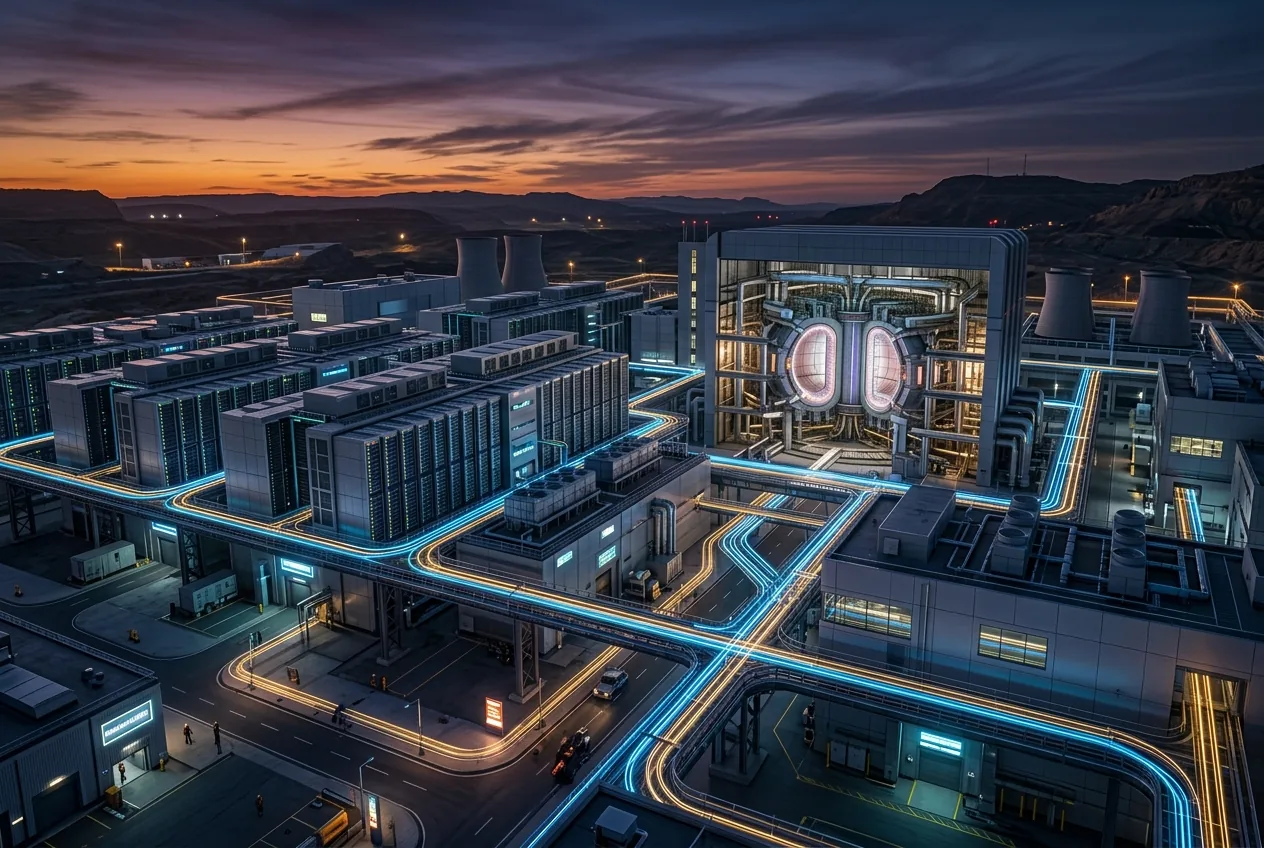
To understand the necessity of such a staggering valuation, one must look past the consumer-facing interface of ChatGPT and into the high-density server racks and energy grids that power it. The current generation of Large Language Models (LLMs) has reached a point of diminishing returns regarding simple data scraping. The next phase of development—often referred to within the industry as the pursuit of Artificial General Intelligence (AGI)—demands an exponential increase in compute power, specialized hardware, and, most importantly, the capital to secure a global supply chain of semiconductors. A trillion-dollar IPO would provide the liquidity necessary to move OpenAI from a developer of models to an owner of the foundational infrastructure of the AI age.
The Shift from Training to Inference Infrastructure
In the early days of the current AI boom, the primary technical challenge was the training of massive models on static datasets. This required large clusters of Nvidia H100 GPUs working in parallel over several months. However, as OpenAI moves toward more advanced architectures, such as the recently revealed 'o1' series (codenamed Strawberry), the technical bottleneck is shifting. These new models utilize 'system 2' thinking—a process where the model spends more time processing a query before providing an answer, effectively trading compute time for improved accuracy and reasoning capabilities.
This shift from rapid-fire training to sustained inference-time compute changes the economic and mechanical requirements of the data center. Unlike traditional search queries that require milliseconds of processing, reasoning-heavy AI tasks may require several seconds or even minutes of sustained GPU activity. Scaling this to hundreds of millions of users requires an infrastructure footprint that rivals the global power grid. A $1 trillion valuation reflects the market's realization that OpenAI isn't just selling a service; it is building a new kind of utility. The capital from an IPO would likely be diverted into 'Project Stargate,' the rumored $100 billion supercomputer initiative planned in collaboration with Microsoft, which aims to house millions of specialized AI chips in a singular, hyper-integrated facility.
The Hardware Bottleneck and the Quest for Custom Silicon
One of the primary drivers behind OpenAI’s massive capital requirements is the need to decouple its fate from the supply chains of third-party hardware vendors. While Nvidia currently dominates the market with its Blackwell architecture, the margins on these chips are high, and the lead times are long. For OpenAI to sustain its growth and achieve the margins expected of a trillion-dollar company, it must eventually internalize more of its hardware stack. Reports have long suggested that Sam Altman is seeking trillions of dollars in investment to reshape the global semiconductor industry, a move that would involve partnering with foundries like TSMC to produce custom-designed silicon optimized specifically for OpenAI’s proprietary algorithms.
From a mechanical engineering perspective, custom silicon allows for more efficient thermal management and power delivery at the rack level. Current general-purpose GPUs are versatile but carry overhead that an AI-specific ASIC (Application-Specific Integrated Circuit) could eliminate. By designing its own chips, OpenAI can optimize for the specific memory bandwidth requirements of transformer models, potentially reducing the energy-per-token cost significantly. This move into hardware is not merely a cost-saving measure; it is a strategic necessity to ensure that the physical limits of current data center designs do not stall the progress of model intelligence.
Energy Independence and the Nuclear Option
Can the Economic Model Support the Valuation?
Critics of the $1 trillion valuation often point to the high 'burn rate' of AI companies and the lack of a clear, high-margin revenue stream that justifies such a price tag. Currently, OpenAI generates revenue through a mix of consumer subscriptions and API access for developers. While this has proven lucrative, it does not yet mirror the scale of a global tech giant like Apple or Google. The justification for a trillion-dollar IPO lies in the belief that AI will move from being a 'tool' to being an 'agent.'
In an agentic economy, AI models don't just answer questions; they perform tasks. They manage supply chains, optimize industrial manufacturing processes, and conduct autonomous research. The economic value of an autonomous agent that can perform the work of a human engineer or administrator is orders of magnitude higher than a chatbot. From a pragmatic standpoint, if OpenAI can successfully deploy models that significantly reduce the cost of labor in high-value sectors like mechanical design or software development, the $1 trillion valuation may actually be a conservative estimate. However, this transition requires a level of reliability and 'hallucination-free' output that current models have yet to fully master.
The Risks of the Trillion-Dollar Hype Cycle
There is, of course, the risk that the reports of an impending IPO are a strategic maneuver to secure more private funding at a higher valuation. The history of technology is littered with 'unicorns' that struggled to maintain their private valuations once subjected to the scrutiny of the public markets. OpenAI faces significant regulatory hurdles, particularly in Europe and the United States, regarding data privacy, copyright, and the potential for market monopolization. Furthermore, any significant technical plateau in the 'scaling laws'—the theory that more data and more compute always lead to more intelligence—could deflate the bubble overnight.
If the next iteration of GPT does not show a quantum leap in reasoning capabilities, investors may begin to question the wisdom of spending hundreds of billions on hardware. As a mechanical engineer looking at the system from the outside, the bottleneck appears to be moving from the digital to the physical. We can write the code, but can we build the machines and generate the power fast enough to keep up? OpenAI’s reported IPO groundwork is an attempt to answer that question with a resounding 'yes,' backed by the largest war chest in corporate history.
Ultimately, the story of OpenAI's trillion-dollar gambit is the story of the industrialization of the mind. It is a shift away from the ethereal nature of software and toward a future where intelligence is a physical commodity, manufactured in massive quantities in specialized factories powered by the atom. Whether the IPO happens in September or later, the trajectory of the company is now inextricably linked to the physical infrastructure of the modern world. For those of us focused on the mechanics of industry and robotics, the real interest lies not in the stock price, but in what that capital will build: the first truly global-scale infrastructure for autonomous reasoning.




Comments
No comments yet. Be the first!