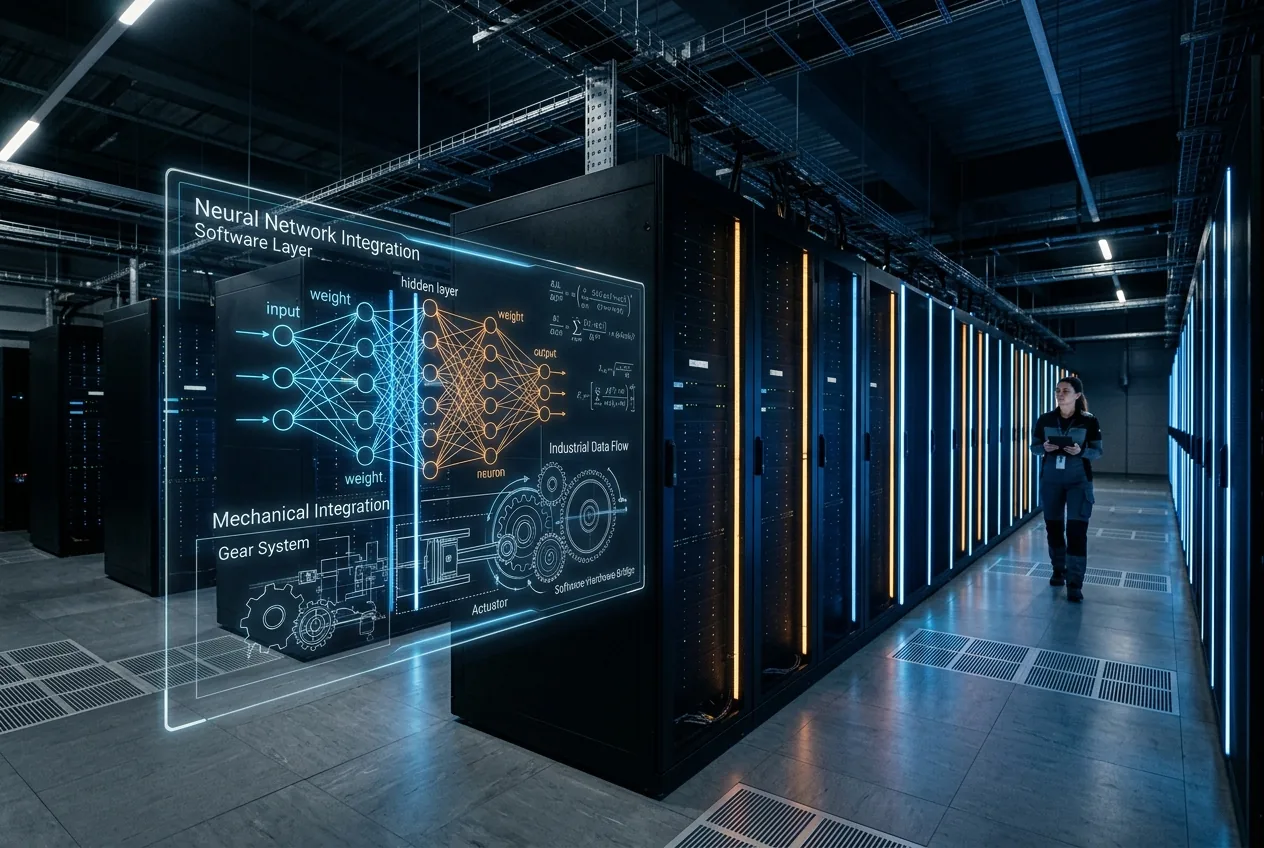
The landscape of artificial intelligence is currently undergoing a seismic re-calibration. While OpenAI long held the position of the de facto leader in the generative pre-trained transformer (GPT) space, the recent market activity and technical milestones from Anthropic suggest a pivot is underway. Reports of a staggering valuation surge—positioning the firm as a direct, and perhaps more agile, competitor to the Microsoft-backed incumbent—highlight a broader industrial realization: the AI race is no longer just about who launched first, but who can provide the most robust, reliable, and technically efficient architecture for enterprise-level automation.
The Architecture of Constitutional AI
To understand why investors are flocking to Anthropic, one must look past the user interface and into the underlying training methodology known as Constitutional AI. Unlike traditional Reinforcement Learning from Human Feedback (RLHF), which relies on thousands of human contractors to manually label data and steer model behavior—a process prone to human bias and inconsistency—Anthropic has pioneered a technique where a model is trained to follow a specific set of rules or a 'constitution.' This allows for a more scalable and transparent safety framework.
Breaking the Performance Ceiling: Claude 3.5 Sonnet
Technical benchmarks often provide a noisy signal, but the recent performance of Claude 3.5 Sonnet has been impossible to ignore. In standard industry evaluations such as MMLU (Massive Multitask Language Understanding) and HumanEval (for coding proficiency), Sonnet has not only matched but frequently exceeded the performance of OpenAI’s GPT-4o. What is particularly noteworthy for those of us focused on industrial utility is the model’s latency and cost-to-performance ratio.
In the context of a robotic assembly line or a real-time logistics optimizer, latency is the enemy of utility. Claude 3.5 Sonnet operates at twice the speed of its predecessor, Claude 3 Opus, while maintaining a higher reasoning capability. This suggests a significant breakthrough in inference optimization. For developers building agents that must react to real-world data inputs in milliseconds, this speed increase is not a luxury—it is a requirement. The ability to process complex visual data and return actionable insights with low overhead is what allows these models to move from the 'chatbot' category into the 'operating system' category.
The Industrial Bridge: Computer Use and Robotic Process Automation
Perhaps the most significant technical leap in the last quarter is Anthropic’s introduction of 'Computer Use' capabilities. While other models can write code or interpret images, Anthropic has trained Claude to interact directly with a standard computer interface. This involves perceiving a screen, moving a cursor, clicking buttons, and typing text—essentially emulating a human operator. This is the bridge between pure software and the physical world of industrial control.
In a warehouse or manufacturing setting, there are thousands of 'legacy' software interfaces that do not have modern APIs. These systems control everything from inventory tracking to temperature sensors. Traditionally, automating these systems required bespoke, brittle scripts. A model that can 'see' the legacy UI and navigate it with human-like reasoning opens the door for a new era of Robotic Process Automation (RPA). We are talking about the ability for an AI to manage complex, multi-step workflows across disparate software environments without human intervention. This is where the true economic value lies, and it is likely a primary driver behind the recent valuation spikes.
The Strategic Importance of Hardware Alliances
No discussion of Anthropic’s ascent is complete without analyzing the strategic backing of Amazon and Google. While OpenAI is deeply integrated with Microsoft’s Azure ecosystem, Anthropic has played a clever game of multi-cloud availability. Amazon’s multibillion-dollar investment is particularly telling. By leveraging AWS’s custom Trainium and Inferentia chips, Anthropic is insulating itself from the global GPU shortage while optimizing its models for the specific hardware they run on.
This vertical integration is a classic engineering move. When the software (the model weights) is optimized for the specific silicon (the AI accelerators), you achieve a level of efficiency that generic cloud deployments cannot match. For enterprises already on the AWS ecosystem, the integration of Claude into Amazon Bedrock provides a seamless path to deployment. This 'industrialization' of AI—turning it into a reliable utility like electricity or water—is what will sustain these high valuations over the long term. It is no longer about the novelty of the AI; it is about the reliability of the infrastructure.
Is the Valuation Justifiable?
Critics point to the staggering numbers and suggest a bubble, but a pragmatic look at the addressable market for 'human-level' reasoning suggests otherwise. If a company can capture even a fraction of the global spend on white-collar labor through automated agents, the returns are astronomical. Anthropic’s focus on the 'enterprise' rather than the 'consumer' gives them a clearer path to monetization. They aren't trying to build a viral social media tool; they are building the cognitive core for the next generation of global industry.
However, challenges remain. The compute requirements for training the next generation of models (the rumored Claude 4) will necessitate even more capital and energy. The mechanical and electrical infrastructure required to power the data centers for these 'trillion-parameter' models is becoming a bottleneck in itself. This is where the expertise of mechanical engineers will become paramount—solving the thermal management and power distribution issues that come with packing tens of thousands of H100 or B200 GPUs into a single facility.
Ultimately, the race between Anthropic and OpenAI is a net positive for the technological landscape. It forces a faster cadence of innovation and a more rigorous focus on model efficiency. For those of us on the front lines of robotics and automation, the choice of which 'brain' to use for our systems is becoming more difficult, but also more exciting. Anthropic has proven that a focus on safety-first architecture and industrial-grade reliability is not just a moral stance—it is a winning business strategy. The era of 'agentic' AI is here, and it is being built on the foundation of technical precision and rigorous engineering.




Comments
No comments yet. Be the first!