On April 28, 2026, the landscape of the global technology sector underwent a seismic shift as Anthropic officially crossed the $1 trillion valuation threshold. This milestone does more than just cement the company’s status as a financial juggernaut; it signals the end of the “chatbot era” and the beginning of an age defined by agentic AI and deep industrial integration. For a company that began as a safety-focused offshoot of OpenAI, the ascent to becoming the most valuable artificial intelligence firm on Earth is a testament to a strategy that prioritized mechanical reliability and constitutional governance over mere conversational flair.
The valuation comes on the heels of the release of the Neuron architecture, Anthropic’s proprietary framework designed to handle complex, multi-step workflows with a level of precision previously reserved for hard-coded industrial automation. Unlike the early iterations of Large Language Models (LLMs) that were prone to hallucinations and stochastic drift, the Neuron-based models operate within a rigid ethical and functional boundary. For the manufacturing and supply chain sectors, this precision has turned AI from a novelty into a critical component of the mechanical stack.
The engineering behind the trillion-dollar milestone
To understand how Anthropic outpaced its rivals, one must look past the user interface and into the underlying mechanical logic of their latest deployments. While competitors focused on increasing parameter counts to achieve better benchmarks in creative writing or coding, Anthropic focused on “inference reliability.” This is the technical equivalent of ensuring a robotic arm hits the same coordinate with sub-millimeter precision every single time, rather than just most of the time. By utilizing Constitutional AI—a method where the model is trained against a set of written principles—Anthropic created a self-correcting system that requires significantly less human oversight than previous generations.
From a mechanical engineering perspective, the efficiency of these models is the real story. The 2026 models demonstrate a significant reduction in compute-per-action. In the industrial world, every millisecond of latency in a decision-making loop translates to lost throughput. Anthropic’s ability to compress these models for local execution—running on-site rather than relying solely on high-latency cloud clusters—has made them the preferred partner for logistics giants and automated factory operators. The $1 trillion valuation reflects the market's realization that AI is no longer just software; it is the new nervous system for physical infrastructure.
Why industrial agency is the new gold standard
The transition from a chatbot to an agent is a distinction that defines Anthropic’s current market dominance. Early AI was reactive: you asked a question, it gave an answer. Modern agentic AI, as pioneered by Anthropic’s Neuron system, is proactive. It can observe a supply chain bottleneck, simulate 10,000 alternative routing scenarios, and execute the necessary adjustments in the ERP (Enterprise Resource Planning) system without needing a human to act as the intermediary. This capacity for autonomous action within a governed framework is what has driven enterprise adoption to unprecedented levels.
We are seeing a move away from generic “prompt engineering” toward “workflow engineering.” While guides for writing better prompts still circulate for casual users, the enterprise level now focuses on how AI agents can interact with legacy mechanical systems. Whether it is managing the thermal load of a data center or optimizing the kinematics of a warehouse sorting fleet, the value is found in the depth of the integration. Anthropic has successfully positioned itself as the “OS” for these complex environments, moving beyond the browser and into the server rack and the factory floor.
The competitive landscape and the pivot to utility
While consumer-facing AI companies struggle with the churn of subscription models, Anthropic has focused on high-stakes reliability. In the world of mechanical systems, failure is expensive. A chatbot hallucinating a fact is a minor inconvenience; an AI agent miscalculating the stress tolerances of a bridge design or the power requirements of a microgrid is a catastrophe. Anthropic’s “safety-first” branding, which many once thought was a marketing gimmick, has become its greatest technical asset. It provides the insurance and assurance that boards of directors need to hand over the keys to their operational infrastructure.
What does a trillion-dollar AI company look like?
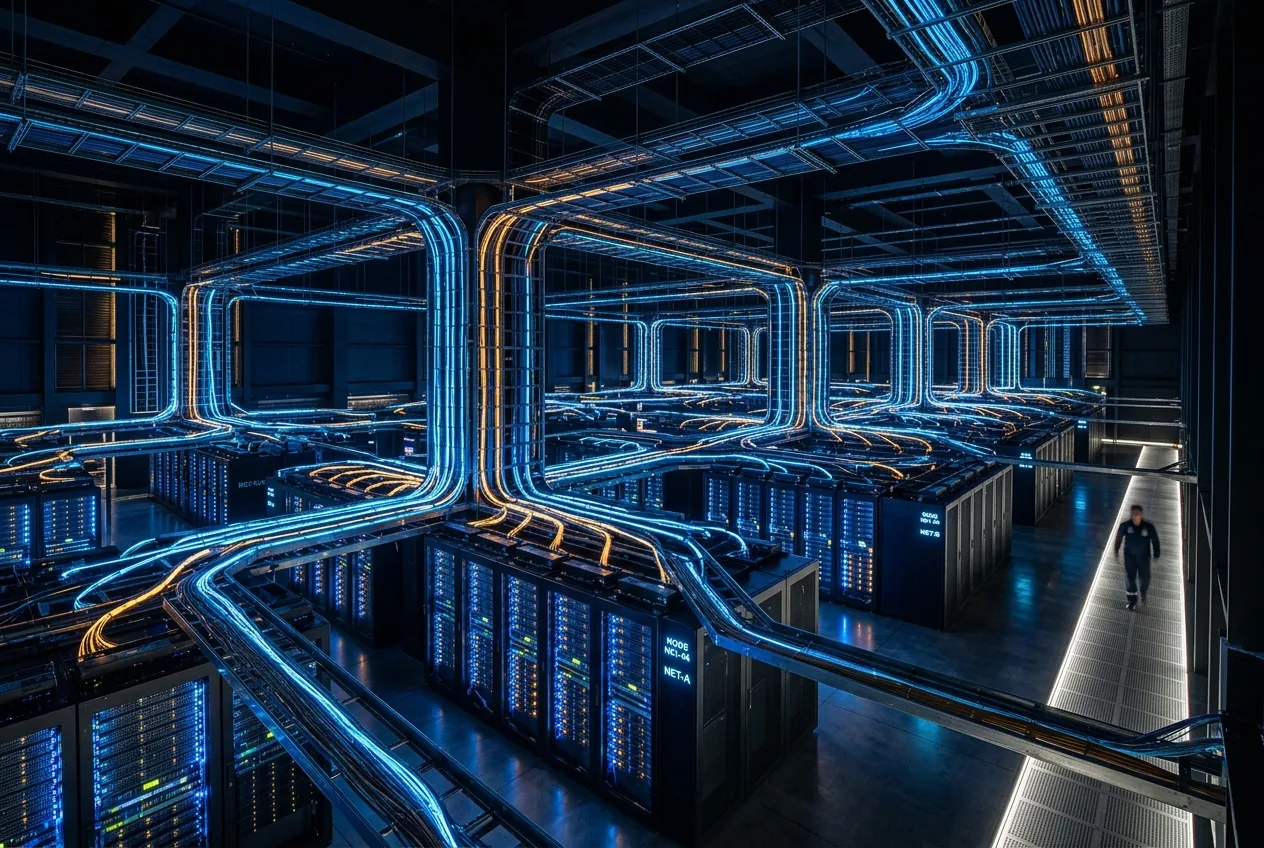
The physical reality of a $1 trillion AI company is not found in a sleek Silicon Valley office, but in the sprawling data centers and energy projects required to sustain it. Anthropic’s valuation is inherently tied to its hardware partnerships and its massive “infrastructure debt.” To maintain the throughput required for global industrial agency, the company has had to secure unprecedented amounts of GPU capacity and, increasingly, dedicated power generation. The intersection of AI and the power grid is the next great engineering challenge, and Anthropic’s valuation suggests that investors believe the company can navigate the transition to more sustainable, perhaps even fusion-based, compute power.
Is the valuation a bubble or a new baseline?
Critics of the $1 trillion milestone point to the history of tech bubbles, noting that valuations often decouple from reality during periods of rapid innovation. However, the difference in 2026 is the tangible ROI (Return on Investment) being seen in the industrial sector. When a company uses Anthropic’s tools to reduce energy waste by 15% across a global fleet or to increase supply chain transparency to a degree that eliminates millions in lost inventory, the valuation is grounded in physical efficiency and saved capital. This is not the speculative value of “ad clicks,” but the hard value of industrial optimization.
As we look toward the final half of the decade, the focus for Noah Brooks and the team at Apollo Thirteen will remain on the mechanical and structural implications of this wealth. A company with this much capital has the power to dictate the standards for the entire robotics industry. If Anthropic uses its position to push for open standards in robotic operating systems and interoperable AI agents, we could see a golden age of automation. If they choose a closed ecosystem, we may be looking at a new era of industrial monopolization. Regardless of the outcome, the engineering of intelligence has officially become the most lucrative business in human history.




Comments
No comments yet. Be the first!