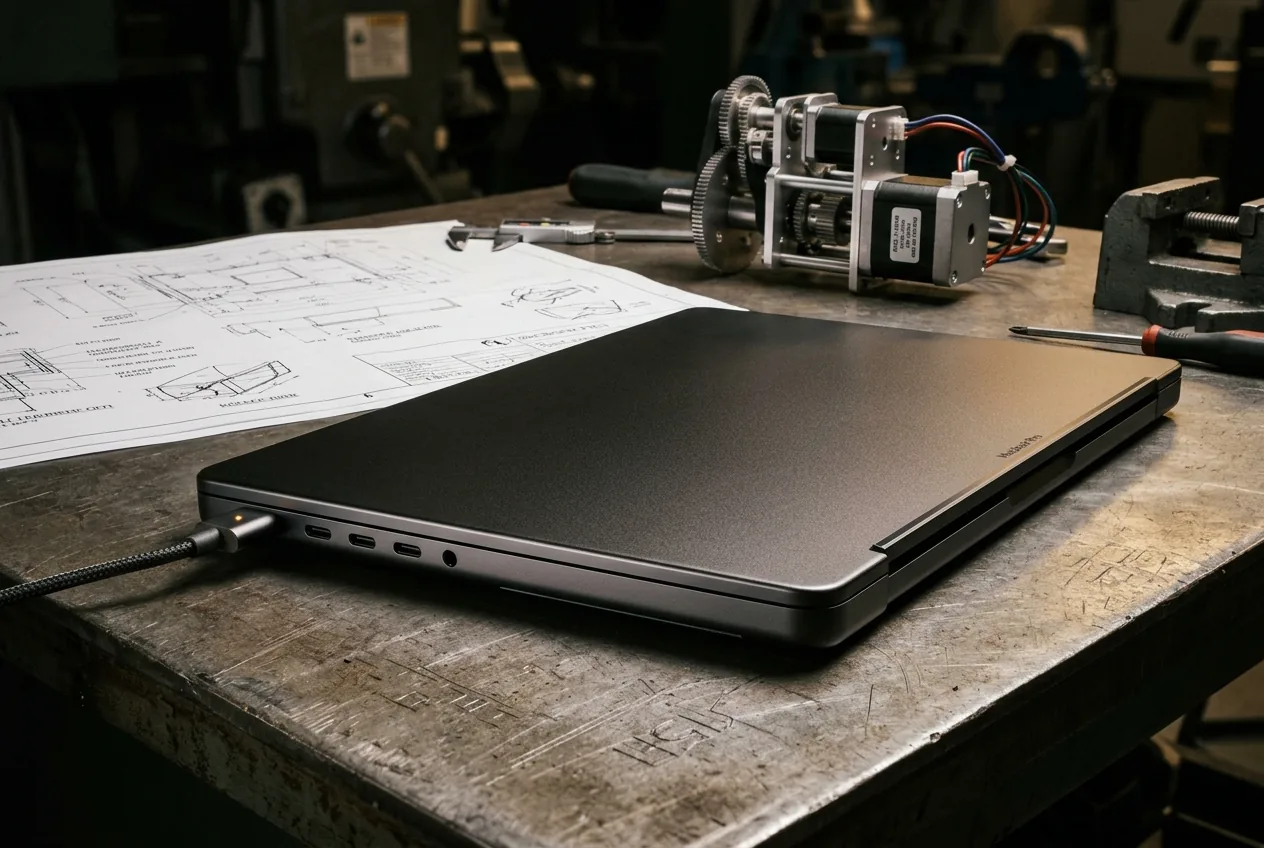
In a volatile market where semiconductor costs and DRAM shortages have begun to dictate retail strategy, a significant pricing anomaly has emerged on the 14-inch M5 Pro MacBook Pro. Amazon has reduced the price of the Space Black base configuration to $1,983.94, representing a $215 discount. While a 10 percent price reduction might seem modest in the broader consumer electronics space, for Apple’s professional-grade silicon, it marks a record-breaking shift in the price-to-performance ratio, particularly as the industry braces for a projected spike in component costs.
For technical professionals—ranging from robotics engineers to machine learning researchers—this hardware represents more than just a seasonal upgrade. The transition of the base "Pro" tier to 24GB of unified memory, paired with a 1TB Gen 5 NVMe SSD, signals a pivot in Apple’s hardware philosophy. This is no longer about incremental browser speed; it is about providing the necessary overhead for local inference of Large Language Models (LLMs) and complex industrial simulations that previously required dedicated workstation hardware.
The Architecture of Efficiency: Analyzing the M5 Pro Silicon
The M5 Pro chipset at the heart of this machine utilizes a 15-core CPU and a 16-core GPU architecture. From a mechanical engineering perspective, the efficiency of this SoC (System on a Chip) is the primary driver of its industrial utility. By integrating the memory directly into the package, Apple minimizes the latency between the processor and the data it requires. In the context of robotics control systems or real-time sensor fusion, those milliseconds of latency reduction are critical. The 24GB of unified memory is shared dynamically between the CPU and GPU, a feature that is increasingly vital as modern software workflows blur the lines between general-purpose computing and graphical processing.
Furthermore, the inclusion of a 1TB SSD running on the PCIe NVMe Gen 5 standard is a significant technical milestone. This standard offers nearly double the theoretical bandwidth of Gen 4, allowing for near-instantaneous data transfer for massive datasets. For those working in supply chain logistics or automated manufacturing, where multi-gigabyte logs are generated and analyzed in real-time, the storage speed becomes a bottleneck-breaking feature. The move from a 512GB base to 1TB also reflects the growing footprint of development environments and the local assets required for modern high-fidelity engineering software.
Why 24GB of Unified RAM is the New Technical Minimum
For years, the professional community has debated Apple’s 8GB or 16GB starting points. However, the current landscape of artificial intelligence has rendered those debates moot. Local LLM execution, such as running quantized versions of Llama 3 or Mistral, requires a specific memory threshold to avoid "swapping" to the SSD. While Apple’s SSDs are fast, they are orders of magnitude slower than unified memory. When the system is forced to use the SSD as virtual RAM, performance in AI tasks can drop by 80% or more.
Thunderbolt 5 and the Return of Professional Connectivity
The retention of the SDXC card reader, HDMI port, and MagSafe 3 charging indicates a continued commitment to the "Pro" moniker. In an industrial or laboratory setting, the ability to pull data directly from an SD card or connect to a legacy monitoring display via HDMI without a dongle array reduces points of failure. From a reliability engineering standpoint, the unibody aluminum chassis continues to serve as a robust heat sink, managing the thermal output of the 15-core CPU during sustained high-load operations, such as 3D rendering or long-duration simulations.
The Economic Reality of the Global Memory Shortage
Why is Amazon offering a record discount now? The answer likely lies in the current state of the global supply chain. Apple CEO Tim Cook has recently signaled that the company’s strategic stockpile of low-cost memory is nearing depletion. For the past year, Apple has benefited from long-term contracts signed during a period of DRAM oversupply. However, as manufacturers like Samsung and Micron pivot toward HBM (High Bandwidth Memory) for AI data centers, the production of consumer-grade DRAM has tightened, driving prices upward.
Cook’s warnings suggest that the current pricing for high-memory configurations may be unsustainable. If memory costs continue to rise, we may see Apple increase the MSRP of future batches or reduce the frequency of retail discounts. This makes the current $215 discount on the 24GB model a strategic acquisition for firms looking to refresh their hardware fleet before the inflationary effects of the memory shortage fully hit the retail market. The ROI (Return on Investment) of a 10% discount today must be weighed against a potential 15-20% price hike in the next hardware cycle.
How Does This Compare to the 2027 AI Roadmap?
While the M5 Pro is a powerhouse for current tasks, it is also being positioned as a bridge to Apple’s ambitious 2027 AI roadmap. Reports indicate that Apple is developing a specialized Siri chatbot and wearable AI pins designed to compete directly with OpenAI’s ecosystem. This suggests that the macOS software environment will become increasingly reliant on NPU (Neural Processing Unit) and RAM overhead. Purchasing a machine with 24GB of memory today isn't just about handling today’s software; it’s about ensuring the device remains functional when the 2027 AI-heavy operating systems arrive.
For the industrial sector, this trajectory is crucial. As generative AI moves from text-based assistants to agentic workflows—where the computer can autonomously perform sequences of tasks in engineering software—the hardware requirements will scale exponentially. The M5 Pro’s 16-core GPU and enhanced Neural Engine are the foundational components for this shift. By securing this hardware at a record-low price, organizations are essentially buying an insurance policy against software obsolescence over the next three to five years.
Is the Space Black M5 Pro the Right Industrial Choice?
The specific discount on the Space Black colorway highlights a retail trend where aesthetic preference meets technical demand. From a purely functional perspective, the anodization process used for the Space Black finish includes a breakthrough seal that significantly reduces fingerprint visibility—a small but appreciated detail in field environments where hardware is handled frequently. However, the real value lies in the 24-hour claimed battery life. In industrial site audits or long-haul logistics monitoring, the ability to operate for a full shift (and then some) without a power outlet is a logistical advantage that rivals the raw speed of the processor.
Ultimately, the $1,983.94 price point for a machine with these specifications is an outlier in the current market. As we move closer to a period of increased component costs and more demanding AI software, the M5 Pro MacBook Pro stands as a highly efficient tool for those who require mobile workstation performance without the traditional trade-offs in battery life or thermal throttling. For the pragmatist, the technical data suggests that the window for high-performance Apple Silicon at a discount is closing, and the M5 Pro is currently sitting in the sweet spot of that transition.




Comments
No comments yet. Be the first!