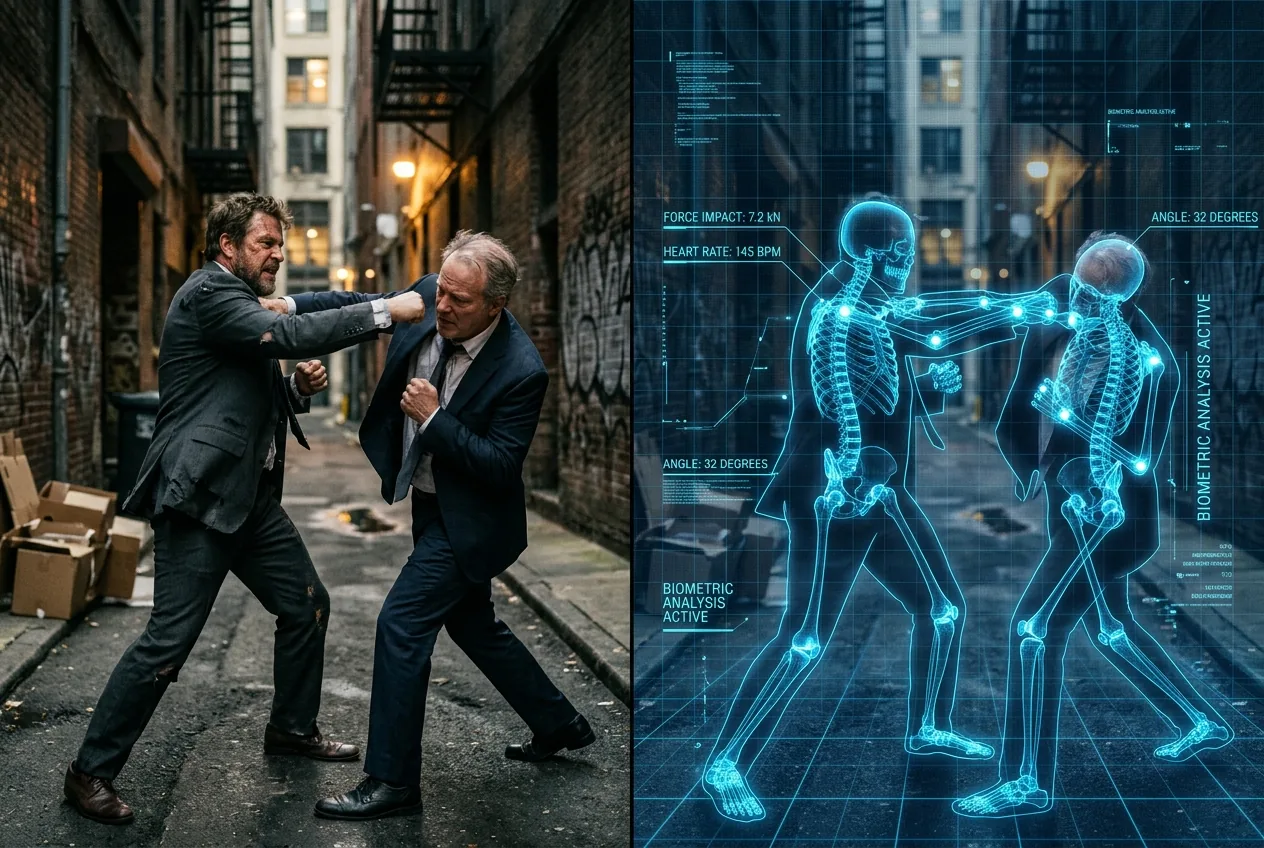
For decades, the physical presence of a movie star was the most valuable asset in the entertainment industry. The unique curvature of a smile, the specific cadence of a voice, and the athletic precision of a choreographed fight scene were the proprietary domains of human performers. However, a recent viral video featuring Brad Pitt and Tom Cruise engaged in a high-octane cinematic fistfight has fundamentally challenged that assumption. The video, which has sent shockwaves through the executive offices of Burbank and the writer’s rooms of Hollywood, was not filmed on a soundstage; it was rendered by ByteDance’s newest generative video model, Seedance 2.0.
The Technical Leap from Sora to Seedance 2.0
This technical proficiency is exactly what prompted Rhett Reese, the screenwriter known for the Deadpool franchise, to label the technology as “terrifying.” The anxiety is not just about the loss of jobs; it is about the devaluation of the human craft that defines the cinematic experience. If a two-line prompt can replicate a $100 million action sequence, the entire economic structure of the film industry begins to collapse.
Economic Displacement and the Death of the Crew
In my experience analyzing industrial automation, the introduction of a more efficient tool usually leads to the displacement of manual labor. In Hollywood, that labor includes stunt performers, lighting technicians, camera operators, and makeup artists. A video like the Pitt-Cruise fight indicates that the “industrialization” of storytelling is accelerating. When a director can generate a fight scene without a permit, a set, or a payroll, the barrier to entry drops, but so does the demand for a specialized workforce.
The broader implications for the supply chain of content creation are staggering. We are looking at a transition from a labor-intensive industry to a compute-intensive one. The capital that used to flow into the pockets of actors and technicians will likely shift toward the cloud computing providers and the AI developers who maintain these massive models. This represents a seismic shift in how value is generated in entertainment. If likeness and performance can be simulated with high fidelity, the “movie star” is no longer a human being; they are a license-able digital asset.
Hollywood unions are already bracing for this reality. Duncan Crabtree-Ireland, the executive director of SAG-AFTRA, has noted that the implications are deeply worrying for all creative talent. The union's recent strike was fought, in part, over AI protections, but technology like Seedance 2.0 is moving faster than the ink can dry on any labor contract. The ability to create a performance that looks and feels like a top-tier actor without their physical presence is a direct threat to the concept of professional acting.
Can Legal Protections Stop the Synthetic Wave?
The immediate reaction to the Seedance viral video was not just emotional; it was legal. The Walt Disney Company reportedly issued a cease and desist to ByteDance, citing the unauthorized use of characters and intellectual property within the app. ByteDance responded by agreeing to impose restrictions on copyrighted material, claiming they respect intellectual property rights and are working to prevent unauthorized likeness use. However, this legal skirmish reveals a massive hypocrisy at the heart of the industry.
Even as Disney seeks to curb ByteDance, the media giant recently signed a $1 billion deal with OpenAI for the use of Sora. This suggests that the major studios are not necessarily opposed to the technology itself; they are opposed to anyone else owning it. The goal for a company like Disney is to create a closed ecosystem where they can leverage their vast library of IP to train their own generative models, effectively replacing their human talent with digital clones that they own in perpetuity.
The legal framework for likeness rights is currently a patchwork of state laws and emerging federal proposals. But in a global digital economy, enforcing these rights against a company like ByteDance, headquartered in Beijing, presents significant jurisdictional challenges. If a creator in a different country uses Seedance 2.0 to make a movie starring a digital Tom Cruise, the technical ability to stop that content from proliferating across social media is almost nonexistent.
Why Realistic Motion Simulation Matters for Robotics
While the focus remains on Hollywood, there is a secondary, more pragmatic application for the technology powering Seedance 2.0: the training of robotic systems. As someone who maps the interface of robotics and industry, I find the fidelity of the Pitt-Cruise fight particularly relevant for synthetic data generation. In the field of mechanical engineering, one of the biggest bottlenecks in developing advanced humanoid robots is the need for high-quality motion data.
If we can simulate human physics with the accuracy shown in Seedance 2.0, we can create “digital twins” for robotic training at a scale previously unimaginable. Instead of needing a human to perform a task thousands of times for a robot to learn via reinforcement learning, we can generate synthetic videos of perfectly executed physical maneuvers. The same algorithms that allow a digital Brad Pitt to dodge a punch can be repurposed to help an industrial robot navigate a cluttered warehouse or perform delicate assembly tasks. The convergence of generative video and physical robotics is likely the next frontier of this technology.
The Future of Truth in a Generative World
Hollywood’s panic is justified, but it is also symptomatic of a larger societal shift. We are transitioning into a post-reality media environment. In this new landscape, the value will not be in the image itself, but in the verification of that image. Cryptographic signatures and blockchain-based provenance will likely become the only way to distinguish between a human performance and a synthetic one.
For the creators who have devoted their lives to the craft of filmmaking, the message from ByteDance is clear: the machine has learned to act. The technical specifications of Seedance 2.0 suggest that the era of the high-budget, labor-intensive film set may be coming to a close, replaced by a prompt-engineered future where the only limit is the processing power of the data center. Hollywood is panicking because it has finally met a competitor that doesn't need a trailer, a makeup artist, or a salary.




Comments
No comments yet. Be the first!