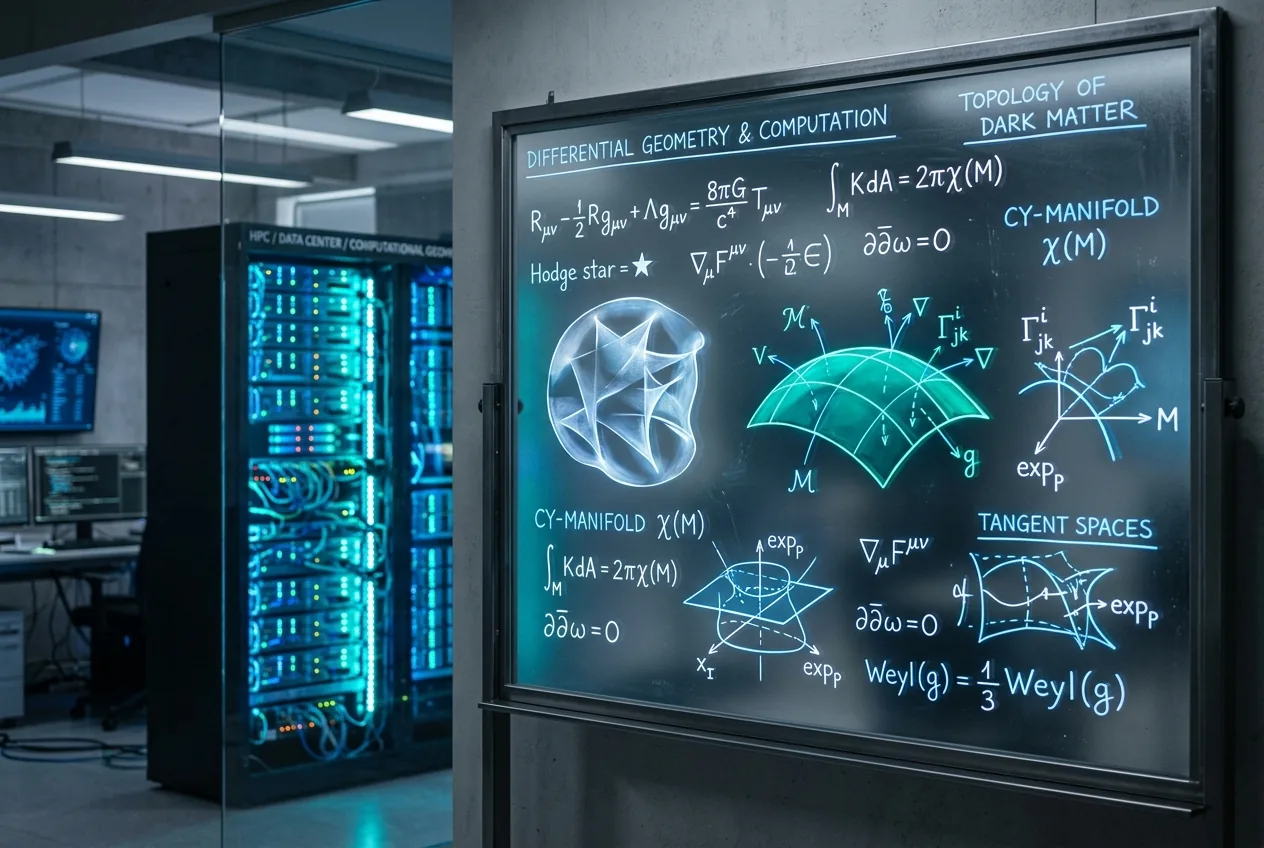
This development represents a shift from the probabilistic token-matching of previous years toward a structured, systemic reasoning capability. In the context of industrial automation and technical engineering, the implications are profound. We are moving past the era of AI as a digital assistant and into an era where AI serves as an autonomous cognitive engine capable of performing high-order R&D. To understand the magnitude of this shift, one must look past the interface and into the underlying mechanics of how these models are now approaching symbolic logic and abstract problem-solving.
The Mechanics of Autonomous Mathematical Reasoning
To produce PhD-level mathematics, an AI cannot simply rely on its training data to predict the next word in a sentence. It must engage in what researchers call inference-time compute or "system 2 thinking." Traditional LLMs operate on a "system 1" basis—fast, intuitive, and prone to error—much like a human speaking off the cuff. The newer iterations, such as the architecture seen in the recent o1 series and the purported 5.5 Pro, utilize reinforcement learning and chain-of-thought processing to verify their own logic as they work. This allows the model to explore multiple branching paths of a proof, backtrack when it hits a logical dead end, and eventually converge on a mathematically sound conclusion.
In the specific instance reported, the model was tasked with a problem involving complex topological invariants—a field where visual intuition and rigorous algebraic manipulation must coexist. The model did not merely provide a solution; it constructed a formal proof that introduced a novel heuristic for evaluating specific multidimensional manifolds. For a human researcher, this process typically involves months of literature review, hypothesis testing, and rigorous peer feedback. The AI compressed this lifecycle into the time it takes to have a long lunch. This speed is a function of the model’s ability to simulate thousands of logical permutations per second, discarding those that violate the fundamental axioms of the mathematical system provided in its context window.
From Abstract Proofs to Industrial Application
While the achievement is celebrated in academic circles, the pragmatic utility lies in the transition from pure mathematics to applied physics and mechanical engineering. Mathematics is the foundational language of the physical world. If a model can autonomously solve for novel topological properties, it can, by extension, solve for optimal fluid dynamics in a turbine, the structural integrity of a new composite material, or the micro-scheduling complexities of a global supply chain. The ability to perform autonomous R&D means that the "bottleneck of expertise" is beginning to widen.
In the world of robotics and automation, this level of reasoning enables what we call "synthetic engineering." Instead of a human engineer spending weeks using CAD and finite element analysis (FEA) to optimize a robotic arm's weight-to-torque ratio, an autonomous reasoning model could theoretically iterate through millions of designs, verifying each against the laws of physics, and present the mathematically perfect blueprint. The zero-human-help aspect is critical here; it suggests that the model's internal verification systems are now robust enough to replace the human supervisor in the early and middle stages of the design process.
Will AI Replace the Research Scientist?
The question of displacement is no longer speculative. However, the nature of that displacement is nuanced. The Fields Medalist involved in this discovery noted that while the AI produced original research, the "originality" was bounded by the parameters of the mathematical framework it was given. AI currently excels at finding the shortest path through an existing logical forest, but it does not yet decide which forest is worth exploring. The human role is shifting from the creator of the proof to the architect of the problem statement. We are seeing a transition from the "worker-bee" researcher to the "visionary-director" researcher.
Furthermore, there is the issue of verification. While the model produced a PhD-level result, it still required a Fields Medalist to confirm that the result was, in fact, correct and novel. In an industrial setting, this is the equivalent of a senior mechanical engineer signing off on a design generated by an autonomous system. The liability and the final ethical weight still rest with the human operator. However, the economic reality is that a single expert can now oversee the output of a dozen autonomous research agents, effectively multiplying the R&D output of a firm by an order of magnitude without increasing the headcount of high-cost specialists.
The Economic Viability of High-Compute Reasoning
From a mechanical engineering and industrial standpoint, the primary barrier to adopting these models has been the cost of compute. Training a model like ChatGPT 5.5 Pro requires an investment in the billions of dollars, and the inference cost—the energy and hardware required to generate a single complex proof—is significantly higher than that of a standard search query. However, when compared to the cost of employing a PhD-level researcher for two years, the "under-two-hours" timeframe represents a massive return on investment. We are reaching a crossover point where the silicon-based cognitive hour is cheaper and more productive than the carbon-based cognitive hour for specific, high-complexity tasks.
This shift will likely trigger a massive re-allocation of capital in the tech and industrial sectors. Companies will prioritize "reasoning-as-a-service" over simple automation. In the logistics sector, for example, the ability to solve the Traveling Salesperson Problem at an extreme scale with real-time variables (weather, fuel prices, mechanical failure probabilities) could save billions. If an AI can solve a PhD math problem, it can certainly solve the NP-hard problems that currently plague global shipping and manufacturing scheduling. The leap from the chalkboard to the factory floor is much shorter than it appears.
The Path Toward General Purpose Reasoning
As we look toward the future of this technology, the focus must remain on the precision of the output. In engineering, a 99% success rate is often a failure; we require five-nines reliability. The fact that a model can now satisfy the scrutiny of a Fields Medalist suggests that we are approaching that level of reliability in the digital realm. The next decade will be defined by how we translate that digital precision into physical reality, transforming the way we build, move, and innovate across the globe. The age of the autonomous scientist has arrived, and it is running on a server rack.




Comments
No comments yet. Be the first!