The landscape of Silicon Valley is shifting as OpenAI, once a small non-profit research laboratory, prepares for what could be the largest financial debut in history. Recent market reports and insider speculation suggest the company is laying the groundwork for an initial public offering (IPO) that aims for a staggering $2.5 trillion valuation. This figure does not just reflect the popularity of ChatGPT; it represents a fundamental bet on the total transformation of human labor, industrial production, and the underlying infrastructure of the digital age. For observers of the robotics and automation sectors, this move signals a transition from theoretical research to the aggressive deployment of physical-world artificial intelligence.
Achieving a $2.5 trillion valuation would place OpenAI in the same rarified air as Microsoft, Apple, and Nvidia. To reach this height, the company must convince the public markets that its technology is not merely a conversational tool but the operating system for a new industrial revolution. The pivot toward a traditional for-profit structure is a necessary precursor to this goal. By removing the control of the non-profit board and establishing a more conventional corporate hierarchy, OpenAI aims to attract the massive capital inflows required to sustain its compute-heavy roadmap. For the engineering community, this transition is a sign that the cost of developing next-generation models has reached a point where only the public markets can provide the necessary liquidity.
The Economic Engine of Artificial General Intelligence
The core of OpenAI’s valuation thesis rests on the concept of Artificial General Intelligence (AGI). Unlike previous software iterations that optimized specific tasks, OpenAI is building a generalized reasoning engine. From a mechanical engineering perspective, the value of such an engine is found in its ability to manage complexity. In supply chain management and manufacturing, the primary bottleneck has always been the inability of machines to adapt to unstructured environments. A $2.5 trillion valuation assumes that OpenAI will successfully bridge the gap between digital processing and physical execution, creating a platform that can automate high-level cognitive and manual labor simultaneously.
The financial markets are looking at OpenAI’s revenue growth as a primary indicator of its health, but the technical community is looking at its capital expenditure. The development of GPT-5 and its successors requires an unprecedented investment in hardware and energy infrastructure. Reports of the "Stargate" project—a $100 billion supercomputer initiative in partnership with Microsoft—highlight the scale of the operation. This is no longer just about writing code; it is about the logistics of sourcing millions of high-end GPUs, securing gigawatts of power, and designing cooling systems capable of managing the thermal output of a city-sized data center. Investors are betting that the efficiency gains provided by these models will eventually outpace the astronomical costs of building and maintaining them.
Redefining Robotics Through Multimodal Reasoning
One of the most compelling aspects of OpenAI’s future is its re-entry into the field of robotics. While the company shuttered its dedicated robotics team in 2021, it has recently pivoted back to the physical world through strategic partnerships, most notably with Figure. The integration of OpenAI’s multimodal models into Figure’s humanoid robots has demonstrated a shift in how machines interact with their environment. Instead of being programmed with rigid, if-then logic, these robots use neural networks to process visual data and verbal commands in real-time. This allows a robot to understand that when a human says they are hungry, the robot should identify an apple, grasp it with the correct pressure, and hand it over.
This technical evolution has profound implications for industrial automation. Current factory floors are highly orchestrated environments where robots operate in cages to ensure safety. OpenAI’s vision suggests a future where robots can operate alongside humans in unstructured environments, such as warehouses or construction sites. The ability of a model like GPT-4o to handle low-latency reasoning is the missing piece for truly autonomous systems. By providing the "brain" for these mechanical bodies, OpenAI is positioning itself as a central utility for the global labor market, justifying a valuation that rivals the giants of the industrial age.
Energy Constraints and the Infrastructure Bottleneck
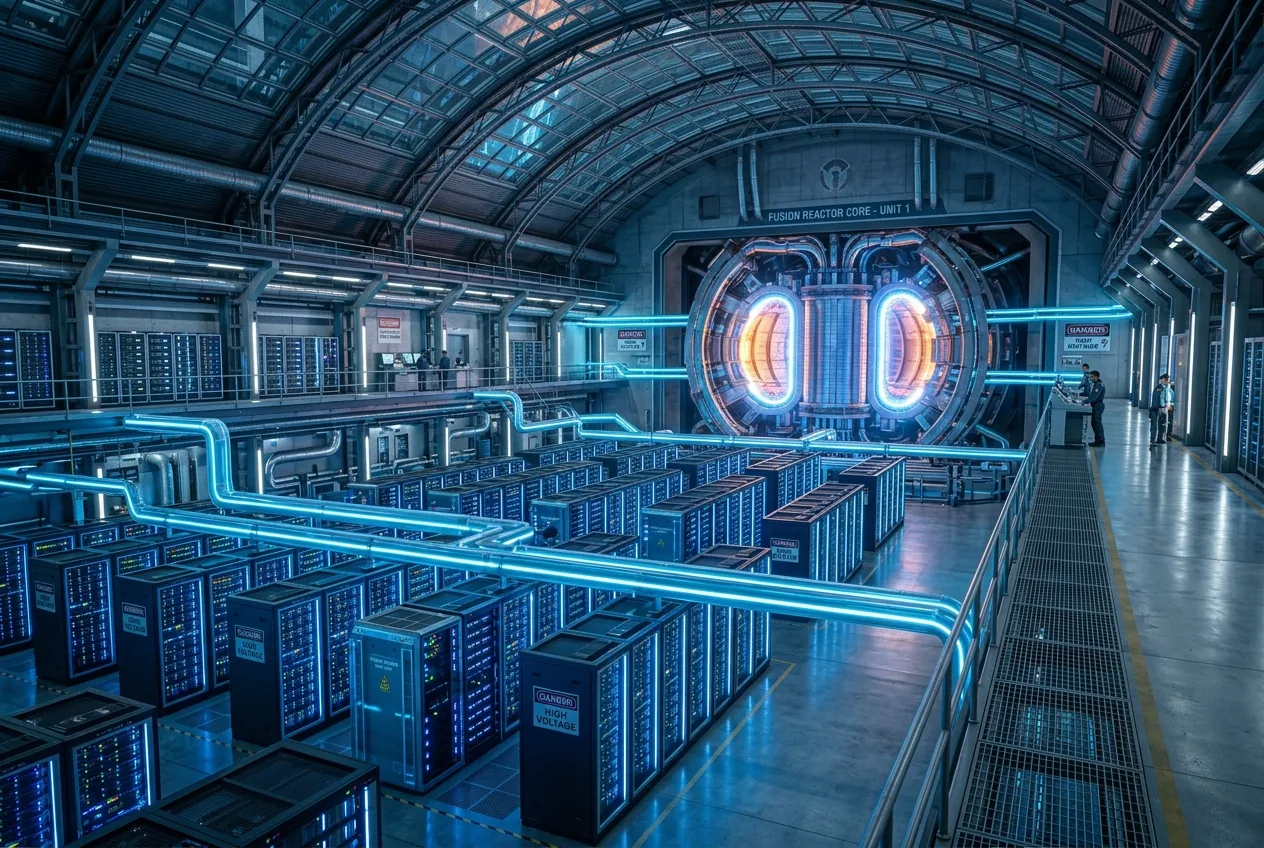
No discussion of a multi-trillion-dollar valuation is complete without addressing the physical constraints of energy and chips. Sam Altman, OpenAI’s CEO, has been vocal about the need for a global energy breakthrough to support the scaling laws of AI. The company’s path to an IPO is intrinsically linked to its ability to secure reliable, high-density power sources. This has led to speculation about OpenAI’s involvement in small modular reactors (SMRs) and fusion energy. From a pragmatic engineering standpoint, the scalability of AI is currently limited not by software but by the physics of the power grid.
The logistical challenge of deploying AI at a global scale involves more than just software updates. It requires a massive overhaul of how data centers are built and where they are located. We are seeing a move toward data centers that are integrated directly with power generation facilities to minimize transmission losses. For OpenAI to maintain its lead and justify a $2.5 trillion market cap, it must solve the "compute per watt" equation. Every incremental improvement in model efficiency reduces the operational expenditure, making the path to profitability clearer for potential shareholders. The market is not just buying into an AI company; it is buying into a vision of a modernized, electrified, and automated global economy.
Will the Public Market Support an AGI Premium?
A significant debate among analysts is whether the public markets are ready for the volatility of an AI-centric business model. Traditional IPOs are evaluated on Price-to-Earnings (P/E) ratios and steady growth metrics. OpenAI, however, operates on a different logic, often referred to as the "AGI premium." This is the idea that the first entity to achieve human-level intelligence will capture such a massive share of the global economy that traditional valuation metrics become irrelevant. However, this relies on the assumption that scaling laws will continue to hold and that diminishing returns are not yet on the horizon.
From an industrial perspective, the risk is that the infrastructure costs will eventually collide with the reality of market adoption. While the potential for automation is vast, the actual integration of AI into legacy systems—such as maritime shipping, heavy manufacturing, and civil engineering—is a slow process. These sectors prioritize reliability and safety over rapid iteration. OpenAI’s challenge as a public company will be to balance the long-term research goals of AGI with the quarterly demands of investors who want to see immediate returns from enterprise software and industrial partnerships. The transition to a for-profit benefit corporation is intended to provide this balance, allowing the company to pursue its mission while providing a clear path for shareholder liquidity.
The Geopolitics of AI Capital
The scale of OpenAI’s IPO ambitions also carries heavy geopolitical weight. A $2.5 trillion company becomes a national asset, subject to intense scrutiny regarding export controls and domestic security. As OpenAI seeks to build a global network of data centers and chip fabrication partnerships, it must navigate the increasing friction between major technological powers. For the mechanical and industrial sectors, this means that the supply chains for AI hardware are becoming as sensitive as those for aerospace and defense. The capital raised in an IPO would likely be used to diversify these supply chains, ensuring that the company’s compute resources are resilient to regional instability.
Furthermore, the competition is not standing still. Anthropic, Google, and Meta are all vying for the same talent, hardware, and energy resources. The $2.5 trillion valuation is, in many ways, a defensive maneuver designed to outspend and outscale the competition. By going public, OpenAI can offer liquid stock options to top-tier engineers and researchers, a crucial advantage in a field where talent is the scarcest resource. The battle for the future of AI is being fought in the cleanrooms of chip fabs and the boardrooms of energy companies just as much as it is being fought in the lines of code. As Noah Brooks, I see this not just as a financial milestone, but as the moment when the digital brain finally seeks to buy the physical world it was built to manage.




Comments
No comments yet. Be the first!