A sudden wave of industry reporting and supply-chain leaks has sent tremors through the artificial intelligence sector, alleging that OpenAI is preparing to deploy a 10-trillion-parameter frontier model codenamed Astra, positioned informally as GPT-6. According to circulating disclosures originating across specialized technical tracking feeds and financial platforms, the model represents an aggressive fivefold expansion over the estimated 1.8-trillion parameters of GPT-4. Accompanying reports point to an even larger secondary system codenamed Doug slated for late-year deployment, framed as an engineering counteroffensive against Anthropic’s forthcoming next-generation architectures.
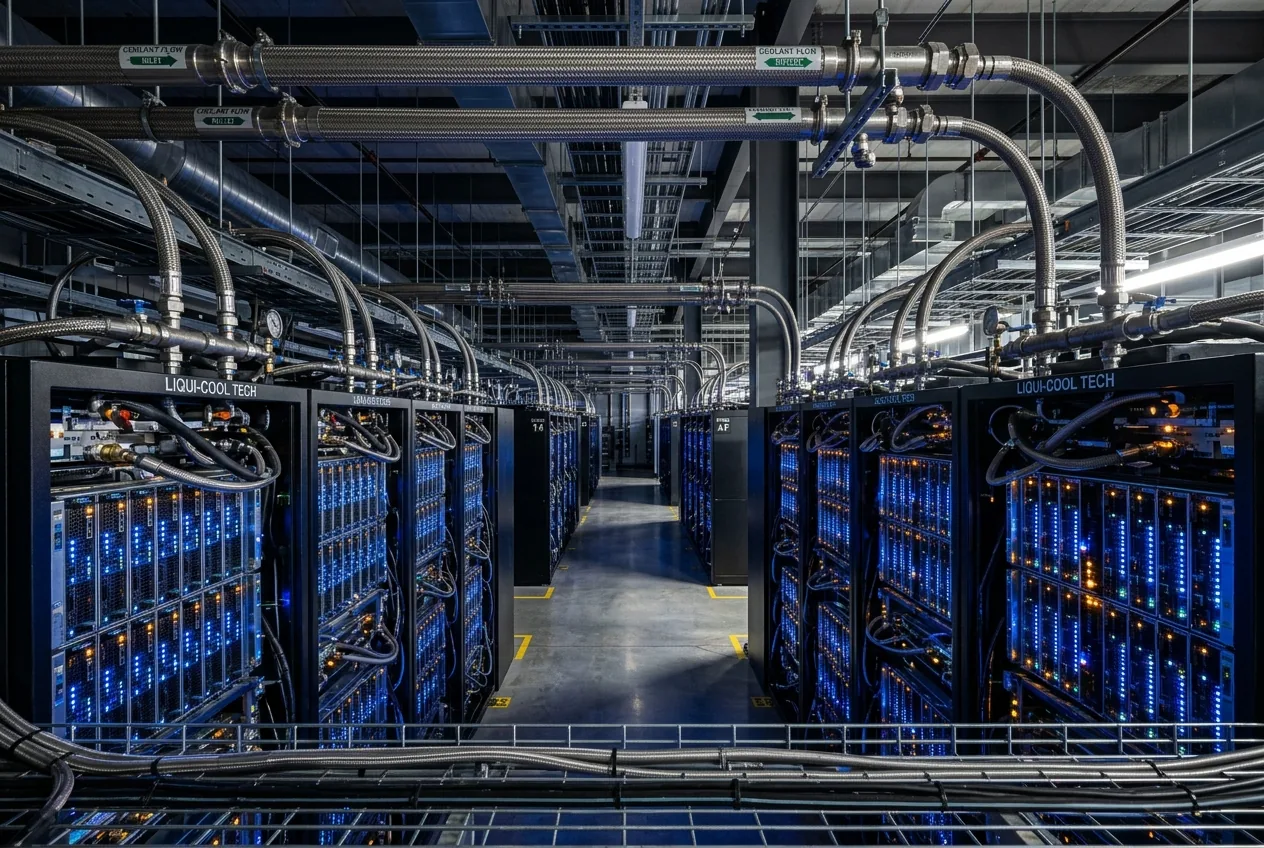
While speculative leaks surrounding unreleased foundation models routinely proliferate across social media, the technical specificity of the latest reports warrants rigorous scrutiny from an engineering and infrastructure standpoint. Shifting from a sub-two-trillion parameter Mixture-of-Experts architecture to a ten-trillion parameter baseline is not a trivial linear scaling exercise. It represents a categorical escalation in compute topology, high-bandwidth memory demand, optical networking fabric, and multi-megawatt thermal dissipation that strains the physical limits of current datacenter hardware.
To evaluate whether a 10-trillion parameter model can feasibly transition from experimental pre-training clusters into commercial inference environments, one must strip away the speculative hype and analyze the underlying thermodynamics, interconnect bandwidth, and silicon constraints governing contemporary machine learning systems.
The Mathematical Reality of a Ten-Trillion Parameter Footprint
In modern deep learning architectures, parameter scale directly dictates raw memory overhead before a single token of activation memory or context cache is calculated. If Astra utilizes a 16-bit floating-point representation (bfloat16 or FP16), storing ten trillion weights requires approximately 20 terabytes of static memory purely for model retention. Even under aggressive 8-bit quantization (FP8), which has become the standard for modern enterprise pre-training and high-performance inference, the raw static weight payload demands a minimum of 10 terabytes of ultra-fast memory distributed across a unified cluster.
This static footprint expands exponentially when factoring in the dynamic memory required for extended context windows. Circulating reports suggest context lengths expanding up to 1.5 million tokens, a capability that introduces massive Key-Value (KV) cache storage bottlenecks. In standard multi-head attention mechanisms, the KV cache scales linearly with both sequence length and batch size, demanding terabytes of additional capacity across the cluster. Without sophisticated architectural interventions—such as Grouped-Query Attention (GQA), multi-latent attention sharding, or severe context compression—the hardware footprint required to serve even a single low-concurrency user session becomes commercially prohibitive.
Consequently, any viable 10-trillion-parameter architecture almost certainly relies heavily on sparse routing rather than dense computation. If Astra is implemented as an ultra-wide Mixture-of-Experts (MoE) system, only a fraction of its total parameters—perhaps 500 billion to 800 billion—would activate per token. While MoE models decouple total parameter capacity from FLOP requirements per forward pass, they do not alleviate the physical memory requirement. Every single parameter must remain resident in High-Bandwidth Memory (HBM) across thousands of networked accelerators to maintain acceptable latency thresholds.
Did OpenAI Finally Pierce the Pre-Training Wall?
For more than twenty-four months, frontier AI development has wrestled with what researchers describe as the pre-training wall. While models such as the o-series demonstrated that test-time compute—allocating inference FLOPs to chain-of-thought verification and Monte Carlo tree search—could unlock step-function gains in mathematical and coding logic, the underlying foundational pre-trained base models remained largely incremental evolutions of 2023-era foundations. Algorithmic bottlenecks, high-quality human text exhaustion, and catastrophic loss divergence at extreme scales forced labs to rely on post-training refinement rather than brute-force pre-training leaps.
Overcoming this plateau requires more than merely throwing additional accelerator nodes at a standard transformer. Stable training runs of this magnitude demand comprehensive synthetic data generation pipelines, automated curriculum filtering, and novel optimizer stability regimes to prevent gradient explosions. Industry chatter pointing to internal exploratory prototypes codenamed Garlic suggests OpenAI engineers spent months resolving critical training instabilities before scaling the architecture to the cluster size required for Astra and Doug.
If the leaked parameters reflect actual production runs, they confirm that pre-training scaling laws have not hit a permanent mathematical ceiling. Instead, the wall appears to have been an infrastructure and optimization barrier. Demonstrating stable convergence across trillions of tokens at the ten-trillion-parameter scale signals that algorithmic breakthroughs in loss stabilization and curated synthetic data topologies have successfully bridged the gap between theoretical scaling curves and physical reality.
The Compute Fabric: Silicon Interconnects and Cluster Survivability
Deploying a pre-training run capable of absorbing 10 trillion parameters requires tens of thousands of state-of-the-art accelerators operating in synchronous lockstep for months. At this magnitude, the dominant failure modes are no longer algorithmic; they are mechanical, electrical, and thermal. The Mean Time Between Failures (MTBF) for individual components in an 80,000-accelerator cluster is measured in hours, not weeks. A viable training run at this scale depends on automated distributed checkpointing, fast fault recovery, and non-blocking optical switching fabrics that prevent isolated hardware drops from corrupting the entire gradient aggregation pipeline.
Rumors linking the larger late-year Doug model to next-generation silicon architectures, such as NVIDIA’s upcoming Vera Rubin platform, highlight the shifting hardware paradigms required to sustain these workloads. Current-generation Hopper (H100/H200) and Blackwell (B200) clusters face severe bandwidth bottlenecks when scaling tensor parallelism across non-adjacent racks. Ultra-dense models require multi-dimensional model parallelism—combining Megatron-style tensor sharding, pipeline parallelism, and Fully Sharded Data Parallel (FSDP) configurations—which places immense pressure on bisection bandwidth.
Parallel reports regarding OpenAI’s development of a proprietary in-house inference ASIC, colloquially referred to under internal project designations like Jalapeño, indicate that the company is keenly aware of the inference economics trap. Relying entirely on general-purpose GPUs to serve a 10-trillion parameter architecture at global scale would impose an untenable power and margin burden. Dedicated inference silicon optimized specifically for low-precision tensor operations, extreme memory bandwidth, and static sparse routing represents the only economically viable path toward commercializing models of this scale without consuming entire regional energy grids.
Can Enterprise Economics Justify Ten-Trillion Parameter Inference?
The central question confronting mechanical engineers, datacenter operators, and technology executives is whether the marginal intelligence gains of a 10-trillion parameter system justify its staggering thermodynamic and financial operating costs. In an industrial or enterprise deployment, every API call carries an operational cost directly tied to kilowatt-hours consumed, rack cooling overhead, and silicon depreciation. If a 10-trillion parameter system requires multiple megawatts of dedicated continuous power simply to maintain active weights in memory, the price per generated token must rise substantially.
Enterprises have already demonstrated growing cost sensitivity, frequently opting for distilled, quantized, or domain-specific 8-billion to 70-billion parameter models that run efficiently on local edge servers or cost-effective cloud instances. A monolithic or ultra-wide frontier model cannot merely deliver marginal improvements in conversational fluency to justify its existence. It must demonstrate unambiguous, mission-critical proficiency in zero-shot complex reasoning, autonomous multi-step software synthesis, advanced mechanical simulation, or high-dimensional scientific analysis where failure costs far exceed high API pricing.
Furthermore, datacenter power availability has emerged as the primary geopolitical constraint in tech infrastructure. Major metropolitan utility grids are facing multi-year delays in interconnect approvals for facilities drawing upwards of 100 megawatts. Operating models at the scale of Astra and Doug forces frontier labs to negotiate power purchase agreements alongside utility-scale transmission corridors, fundamentally linking software capabilities to the physical constraints of heavy power engineering and liquid-cooling infrastructure.
The Narrowing Frontier and the Accelerating Race
The intense pace of concurrent developments—including leaked counter-strategies from Anthropic involving iterative releases of its Fable and Mythos architectures, alongside sudden leadership transitions within competing legacy research laboratories—underscores an aggressive consolidation at the frontier of artificial intelligence. The financial and infrastructural barrier to entry for training frontier foundation models has now risen into the billions of dollars per individual training cluster, effectively narrowing the primary race to a handful of exceptionally well-capitalized entities.
Whether Astra surfaces in public enterprise channels within weeks or remains restricted behind controlled cybersecurity red-teaming protocols, the technical trajectory is unmistakable. The era of relying solely on post-training inference trickery to mimic structural intelligence gains appears to be transitioning into an aggressive return to scale. If OpenAI has successfully stabilized a 10-trillion parameter engine, the industrial AI landscape will once again be forced to recalibrate its expectations of what compute density, datacenter engineering, and hardware infrastructure can physically deliver.



Comments
No comments yet. Be the first!