In a move that signals a tightening of the nexus between artificial intelligence and federal oversight, the U.S. Department of Commerce has officially cleared OpenAI for the broad public release of its latest flagship model, GPT-5.6. Following a series of delays prompted by national security concerns, the release—expected this Thursday—represents more than just an incremental upgrade in natural language processing; it is a calculated deployment of what OpenAI describes as its most capable agentic architecture to date.
The Architecture of Capability: Sol, Terra, and Luna
OpenAI’s strategy for the GPT-5.6 rollout is built on a tripartite model hierarchy, designed to balance raw computational power with economic viability. The flagship model, dubbed GPT-5.6 Sol, is the centerpiece of the release. Sol is engineered for high-complexity tasks that require multi-step reasoning and deep domain expertise. Preliminary data shared by OpenAI suggests that Sol is particularly potent in areas that have traditionally been difficult for generative AI to master: complex software engineering, biological modeling, and offensive/defensive cybersecurity operations.
Accompanying the flagship are two more specialized versions: Terra and Luna. Terra is positioned as a mid-range model, optimized for cost-efficiency without sacrificing the core reasoning capabilities found in the Sol architecture. It is likely aimed at the enterprise market, where volume and reliability are paramount. Luna, the smallest of the trio, is designed for low-latency applications, making it a prime candidate for edge computing and real-time robotic control—a sector that is increasingly hungry for localized intelligence that does not rely on constant cloud connectivity.
From a mechanical and systems engineering perspective, the "agentic" nature of these models is the true headline. Unlike previous iterations that largely functioned as sophisticated autocomplete systems, GPT-5.6 is built to operate with a higher degree of autonomy. It can initiate sub-tasks, use external tools with greater precision, and self-correct across long-running workflows. In industrial applications, this means the AI can theoretically manage an entire coding pipeline or optimize a supply chain logistics network with minimal human intervention, representing a significant leap in functional utility.
The Regulatory Guardrails and National Security
The road to this week’s launch was paved with significant regulatory friction. In June 2026, the U.S. government stepped in to delay the public rollout, citing concerns over the potential for GPT-5.6 to be used in the development of sophisticated cyberattacks. This tension is rooted in the ongoing technological arms race between the United States and China. As both nations race to integrate AI into their respective military and intelligence frameworks, the risk of a "frontier model" being used to exploit decades-old, vulnerable infrastructure in sectors like energy and water management has become a primary concern for Washington.
The geopolitical context cannot be overstated. Chinese authorities have reportedly held similar closed-door meetings with their own tech giants, weighing the risks of allowing advanced Chinese models to be accessed by overseas users. The lifting of U.S. export controls on GPT-5.6, and the recent similar clearance for Anthropic’s Fable model, suggests a tactical decision by the U.S. to lead the market rather than allow regulatory bottlenecks to cede ground to international rivals. However, Anthropic’s more advanced Mythos model remains restricted to "trusted" U.S. organizations, highlighting that some AI capabilities are still deemed too volatile for general release.
Engineering the Agentic Shift in Industry
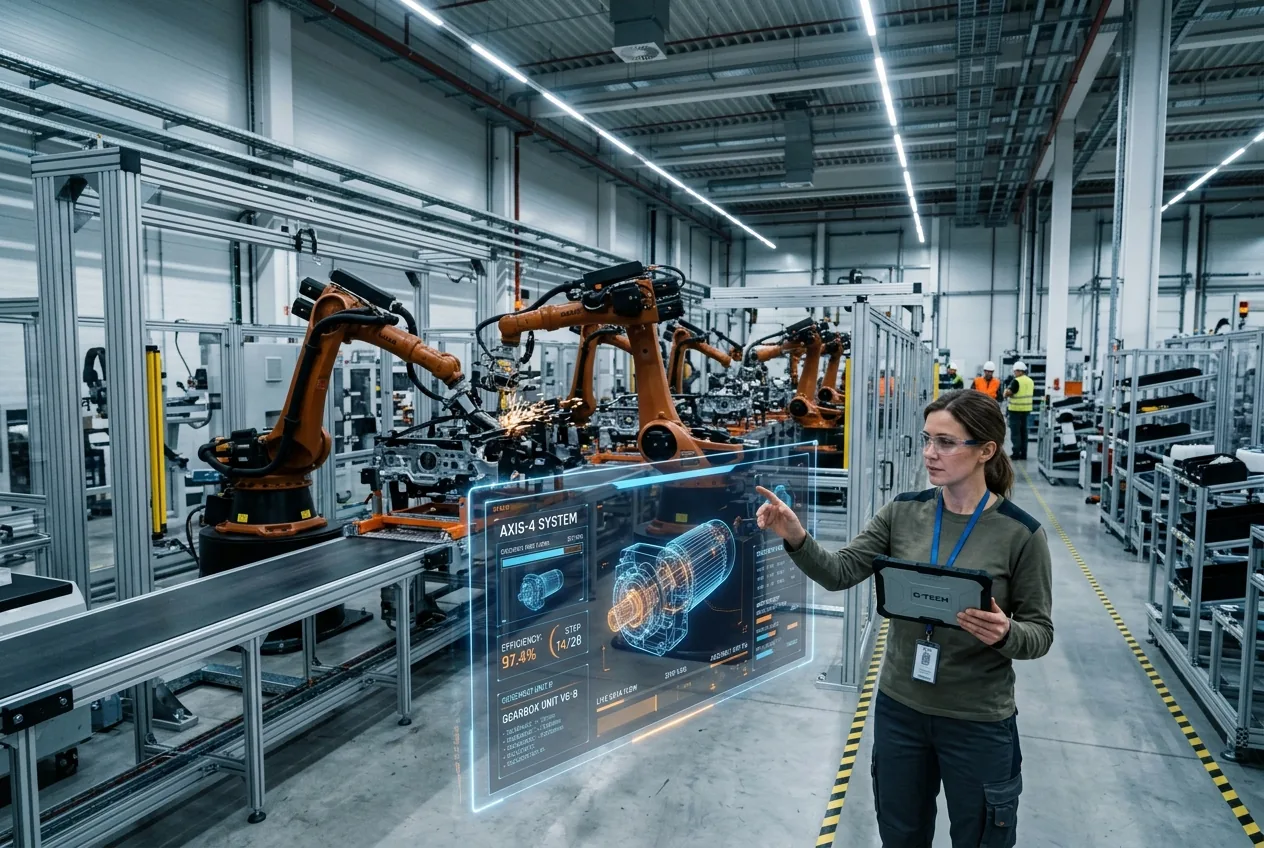
For those of us focused on the physical application of technology, the launch of GPT-5.6 Sol represents a breakthrough in the "digital twin" and industrial automation space. OpenAI has touted the model’s performance on ExploitBench—a rigorous benchmark for cybersecurity and software exploitability. While the focus there is often on software, the underlying logic applies directly to mechanical system diagnostics and automated manufacturing. A model that can identify a vulnerability in a software kernel is also uniquely positioned to identify a failure point in a complex robotic assembly line or a thermal management system in a high-density data center.
The integration of Sol into industrial ecosystems will likely focus on its ability to function as a highly specialized technical consultant. In my view, the real-world utility of GPT-5.6 lies in its ability to bridge the gap between high-level engineering requirements and low-level execution. We are looking at a model that can take a set of mechanical specifications and output a fully functional, optimized control script for a multi-axis robotic arm, complete with error-handling routines that account for physical friction and latency.
Furthermore, the agentic capabilities allow for a more resilient supply chain. Imagine a GPT-5.6-powered agent that monitors global shipping data, weather patterns, and factory output in real-time. When a disruption occurs, the agent doesn't just notify a human operator; it identifies alternative suppliers, calculates the cost-benefit analysis of rerouting shipments, and prepares the necessary documentation for approval. This level of autonomous decision support is the logical conclusion of the "smart factory" evolution.
The Competitive Landscape: A High-Stakes Rivalry
OpenAI is not operating in a vacuum. The approval of GPT-5.6 comes at a moment of intense competitive pressure. Anthropic recently navigated its own regulatory hurdles to relaunch its Fable 5 model, while billionaire Elon Musk has announced that SpaceXAI is making Grok 4.5 available to the public. These models are all vying for the same territory: the enterprise and industrial market that requires high-reliability, low-hallucination AI.
The rivalry between OpenAI and Anthropic is particularly noteworthy given their different approaches to safety. While OpenAI has leaned into a collaborative relationship with the Department of Commerce, Anthropic has remained vocal about the inherent risks of these systems. Anthropic’s warning that it is "probably impossible" to make any AI model fully robust against jailbreaks serves as a sobering reminder that even with federal clearance, the deployment of GPT-5.6 is a high-stakes experiment. The industry is watching closely to see if OpenAI’s safeguards can withstand the creativity of the global user base once the model is broadly available on Thursday.
As we look toward the Thursday launch, the focus will remain on the "how" and the "why." How will these models be integrated into the existing technical stacks of major industries? And why did the government ultimately feel comfortable with a broad release now? The answers to these questions will define the next chapter of the AI revolution, one where the line between software intelligence and physical industry becomes increasingly blurred. For the engineering world, GPT-5.6 is not just a chatbot; it is a new component in the complex machinery of the modern world.




Comments
No comments yet. Be the first!