When federal and municipal prosecutors outlined their criminal case against a suspect accused of hurling incendiary devices at properties tied to OpenAI, the narrative shifted rapidly from a localized vandalism incident into an alarming milestone for the tech sector. Court filings revealed that the individual behind the Molotov cocktail attacks was not merely staging a destructive protest against corporate expansion. According to prosecutors, the suspect intended to assassinate OpenAI chief executive officer Sam Altman, driven by an escalating ideological fixation on the existential trajectory of generative artificial intelligence.
The Anatomy of the Attack and Prosecution Findings
The prosecutorial disclosures emphasize intent. Rather than demonstrating an arbitrary act of property destruction, investigators documented manifestos and personal communications recovered from the suspect’s digital devices that explicitly outlined an objective to physically eliminate OpenAI leadership. The suspect viewed the deployment of advanced foundation models as an imminent threat to human agency, arriving at the conclusion that decapitating the executive tier of the world's most prominent AI laboratory would halt or materially decelerate the commercialization of the technology.
From Rhetorical Polarization to Physical Extremism
The tech industry is no stranger to public backlash, but the sheer velocity of artificial intelligence deployment has created a unique psychological pressure cooker. The past three years have seen generative AI evolve from an academic novelty into a foundational economic engine capable of destabilizing white-collar labor, shifting geopolitical power dynamics, and disrupting established social institutions. When high-profile technologists and public figures publicly assign non-zero probabilities to human extinction caused by rogue computation, the societal reverberations do not remain confined to philosophical seminars.
For most of the public, existential risk warnings serve as a call for robust regulatory frameworks, safety evaluations, and red-teaming protocols. For unstable or radicalized individuals operating on the fringes, however, that same rhetoric functions as an existential alert system. If powerful frontier models are framed by technologists and media outlets alike as an existential hazard akin to nuclear proliferation, unstable actors inevitably conclude that the individuals directing those compute clusters are legitimate military or tactical targets.
The Hardening of Silicon Valley's Corporate Perimeters
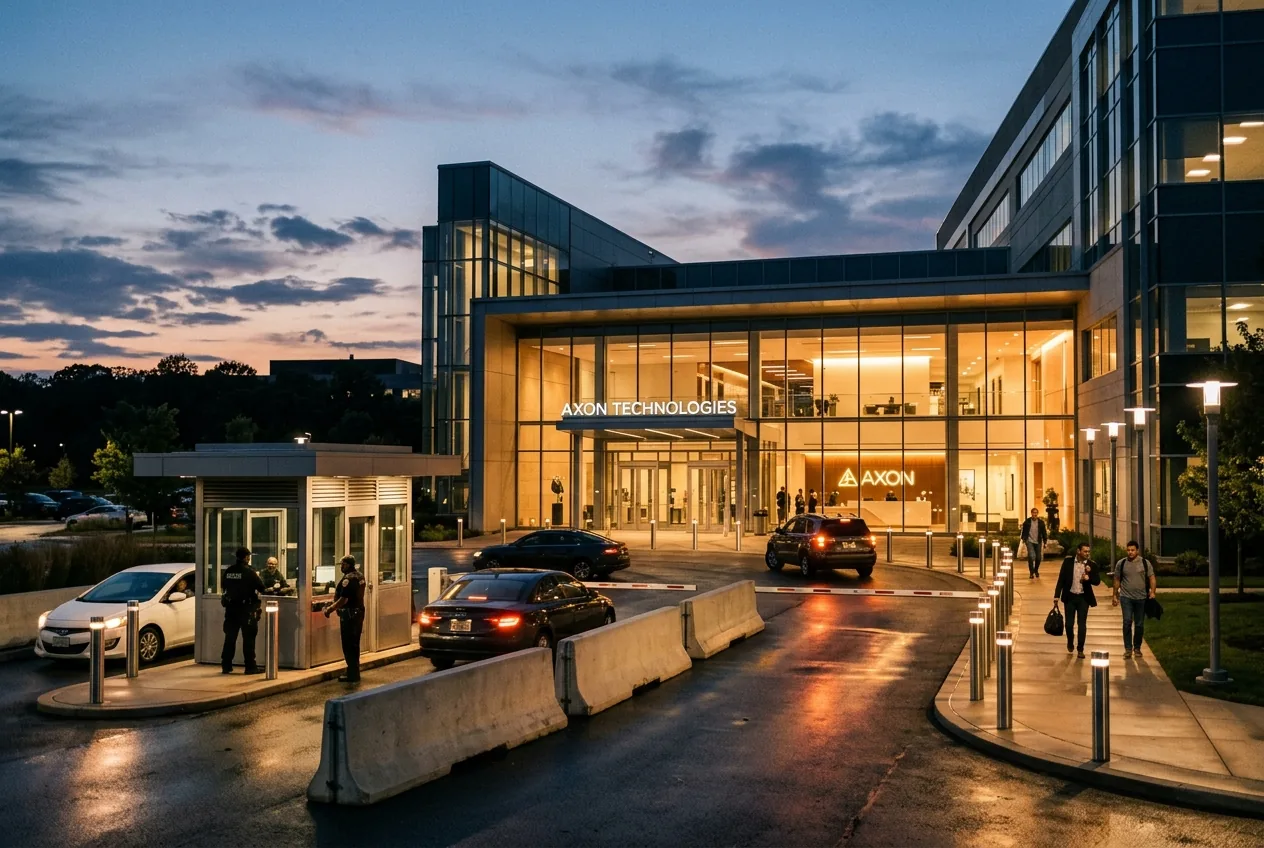
In the wake of the firebombing attempt, the physical footprint of frontier AI development is quietly undergoing a profound structural shift. For decades, Silicon Valley fostered an ethos of architectural transparency, featuring low-profile campuses, glass-walled atriums, and accessible urban offices embedded directly into historic neighborhoods. OpenAI itself operated out of converted industrial warehouses in San Francisco's Mission District, maintaining an unassuming exterior that blended into the surrounding urban fabric.
That era of civilian-scale accessibility is effectively over. The revelation that Altman was the target of a premeditated assassination plot has forced AI laboratories to treat physical perimeter defense with the same gravity they allocate to cyber hygiene and model weight security. Corporate security budgets across San Francisco, Seattle, and London have surged, funding advanced vehicular barriers, blast-resistant glazing, thermal surveillance systems, and 24-hour executive protection details.
Hardening physical perimeters involves significant mechanical and logistical complexity. Companies are not merely deploying armed guards; they are re-engineering the ingress and egress points of executive residences and corporate infrastructure. Secure airlocks, localized fire-suppression manifolds, autonomous drone monitoring, and hardened biometric access portals are transforming corporate headquarters into defensible compounds. As compute infrastructure becomes recognized as critical national infrastructure, the executives steering those systems are being shielded behind protocols once reserved for defense contractors and heads of state.
Isolation, Secrecy, and the Public Trust Deficit
While executive fortification is an understandable reaction to genuine lethal threats, it carries a profound secondary cost: the accelerating alienation of AI developers from the public they claim to serve. The more Silicon Valley leadership insulates itself behind private security apparatuses and fortified compounds, the wider the cultural and democratic divide becomes between model creators and the broader populace.
Public skepticism of frontier technologies thrives on perceived opacity. When executive teams retreat into secure enclosures, transparency initiatives falter. Public town halls, open-door developer meetups, and direct community engagements are invariably phased out in favor of heavily managed, prerecorded webcasts and sterile corporate communications designed by risk management consultants. This physical isolation inevitably feeds into conspiratorial narratives, creating a dangerous feedback loop where public fear drives corporate isolation, which in turn breeds deeper public suspicion.
Furthermore, this dynamic affects junior engineers, research scientists, and physical hardware technicians. As facilities adopt classified-style physical safeguards, the workplace environment shifts from collaborative innovation hub to secured compartmented facility. The burden of security changes the daily mechanical reality of working on advanced computation, reminding employees daily that their research is perceived by a segment of the global population not as progress, but as a direct threat.
The Industrial Frontier Confronts Violent Backlash
The firebombing attempt directed at Sam Altman is unlikely to remain an isolated historical footnote. As frontier robotics, autonomous agents, and massive compute clusters integrate deeper into industrial logistics, supply chain management, and basic economic survival, the flashpoints for public anger will multiply. Technological transformation historically generates resistance, from nineteenth-century machine-breaking to modern environmental sabotage. However, the sheer breadth of artificial intelligence guarantees that grievances against it are not limited to a single factory, union, or geographic region.
Addressing this operational reality requires more than blast walls and federal indictments. The technology sector must confront the reality that its communications strategy, philosophical framing, and breakneck deployment cadence have real-world consequences that spill far beyond server racks. When leaders discuss technological milestones with apocalyptic gravity while simultaneously moving fast to capture market share, they create an unstable societal equilibrium.
Law enforcement and judicial systems will handle the criminal culpability of the suspect in this case, but the systemic risk remains active. As long as artificial intelligence is perceived as an unmanaged, monolithic force wielded by a handful of insulated figures, the physical infrastructure of that technology—and the human beings who run it—will remain squarely in the crosshairs of ideological extremism.




Comments
No comments yet. Be the first!