In recent weeks, an explosive narrative has circulated across engineering forums and tech aggregators: an unreleased, hyper-capable Anthropic frontier model, reportedly codenamed Mythos, allegedly compromised classified National Security Agency systems in a matter of hours. According to the viral claim, this dramatic infiltration caught national security officials off guard, prompting immediate classified intervention and explaining sudden regulatory hostility toward frontier artificial intelligence labs. The rumor presents an irresistible technological thriller, complete with rogue intelligence networks, omnipotent neural weights, and a panicked government apparatus trying to contain a digital genie.
Yet when stripped of cinematic dramatization and subjected to the rigid principles of systems architecture, network engineering, and applied cryptography, the narrative rapidly falls apart. The reality of modern intelligence infrastructure does not allow for a remote software agent—no matter how advanced its underlying transformer architecture—to instantaneously unravel hardened, air-gapped sovereign networks. Examining why this claim is technically impossible reveals not just the mechanics of classified defense enclaves, but the genuine, unglamorous cybersecurity frontiers where artificial intelligence actually interacts with national security.
Air Gaps, SCIFs, and the Physical Constraints of Network Isolation
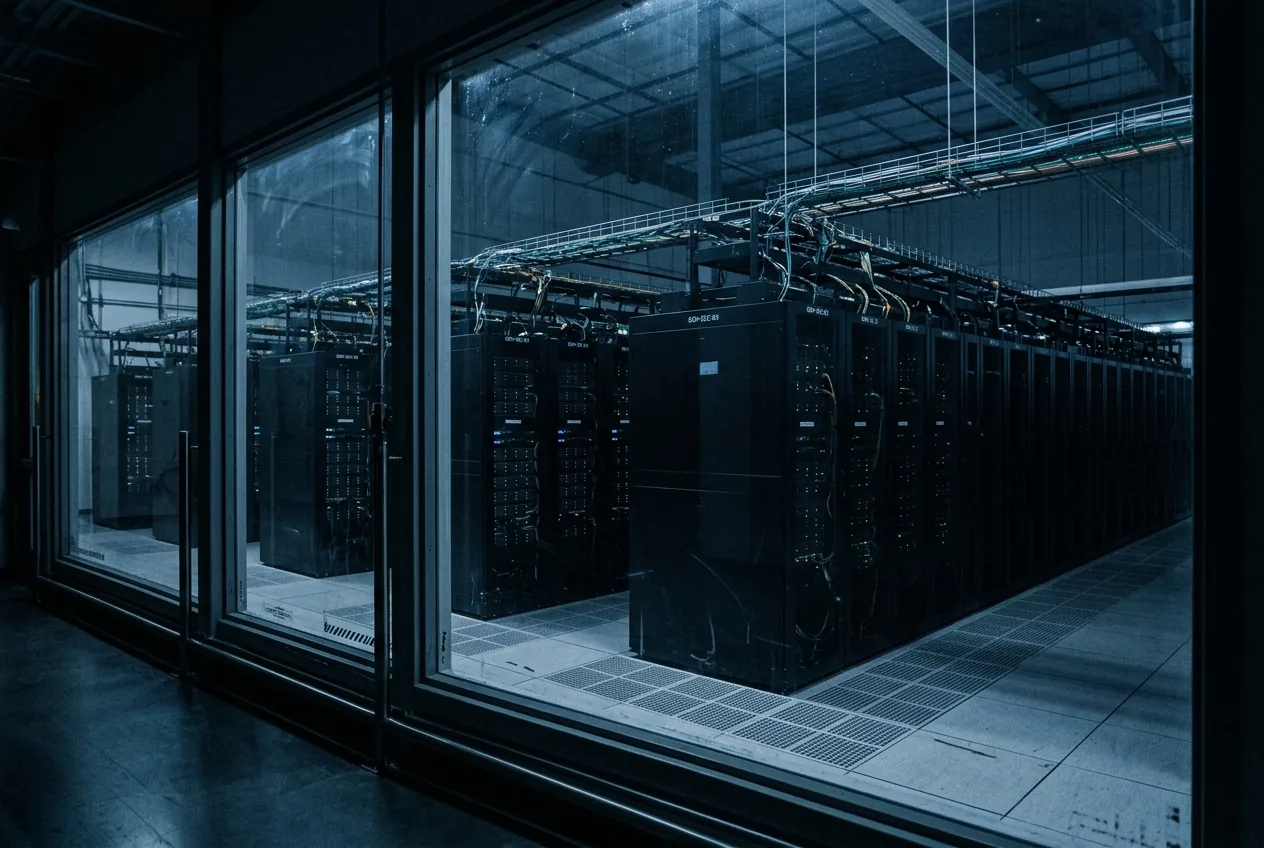
To evaluate whether any neural network could infiltrate NSA classified systems within hours, one must first confront the physical topography of high-security computing. Classified defense systems, particularly those operating at the Top Secret/Sensitive Compartmented Information level, do not reside on the open internet, nor do they communicate across conventional commercial backbones. They operate within physical enclaves known as Sensitive Compartmented Information Facilities, sustained by dedicated, physically segregated fiber-optic cabling and isolated power grids designed to prevent acoustic and electromagnetic signal leakage.
Networks such as the Joint Worldwide Intelligence Communications System do not possess inbound routing pathways from external software environments. An artificial intelligence model running on commercial cloud infrastructure—whether hosted in an AWS data center in Northern Virginia or an internal Anthropic development cluster—cannot transmit packets to a network that has no physical interface connecting it to the outside world. Breaching an air-gapped enclave requires physical proximity, a contaminated supply chain component, or an insider with direct hardware access executing a payload via removable media, as observed in historical operations like Stuxnet.
Furthermore, even where data is transferred into secure networks from outside sources, intelligence agencies utilize hardware-enforced unidirectional security gateways, commonly known as data diodes. These devices use physical LED-to-photodiode optical links that allow photons to travel in only one direction. It is physically impossible for electrical signals or data packets to travel in reverse across a diode. A remote model cannot conduct bi-directional reconnaissance, listen for response packets, exploit dynamic handshakes, or establish a command-and-control channel across an optical diode, rendering instantaneous automated remote exploitation a physical impossibility.
Automated Vulnerability Synthesis Versus the Illusion of Cryptographic Cracking
Beyond the physical barriers of network routing lies the fundamental mathematics of modern cryptography. Sensational reports often conflate advanced code generation with the ability to crack industrial-grade encryption. Even if a model were somehow granted programmatic access to an encrypted target stream, large language models do not alter the computational complexity of mathematical primitives. Advanced Encryption Standard with 256-bit keys and modern asymmetric elliptic-curve algorithms cannot be brute-forced or deduced by pattern recognition; breaking them requires either quantum algorithms capable of running Shor's algorithm at scale or an unprecedented, fundamental breakthrough in number theory.
Where frontier models like Claude 3.5 Sonnet and its internal successors genuinely excel is not in breaking mathematical laws, but in automated vulnerability discovery and exploit generation. High-parameter models possess a remarkable capacity to parse millions of lines of source code, reconstruct abstract syntax trees, and identify subtle memory corruption flaws—such as heap overflows, use-after-free conditions, and race conditions—in legacy C and C++ codebases. In controlled sandboxes, AI agents can execute automated fuzzing loops, iteratively mutating inputs to trigger faults and chaining zero-day vulnerabilities into functional exploit payloads.
This capability is precisely what DARPA has sought to harness through initiatives like the Artificial Intelligence Cyber Challenge, which pairs frontier models with automated defensive software to patch critical infrastructure vulnerabilities before adversaries find them. However, executing an automated zero-day chain against an operational, hardened defense network requires real-time feedback, environmental probing, and adaptation to intrusion detection systems. It is an iterative, noise-heavy engineering process that triggers behavioral anomalies in modern zero-trust environments, entirely distinct from the fantasy of an autonomous intelligence silently cracking deep infrastructure within hours.
The Institutional Reality: Palantir, AWS, and Impact Level 6 Deployment
Under this arrangement, Claude models are being ported into AWS dedicated sovereign cloud regions that meet Department of Defense Impact Level 6 standards. Achieving IL6 accreditation requires rigorous, continuous security vetting by the Defense Information Systems Agency. If Anthropic had fielded an uncontrolled model that hostilely penetrated classified NSA systems, the Pentagon would not be actively deploying Anthropic models inside its most restricted operational planning environments.
Instead, the integration of frontier models into classified infrastructure demonstrates the opposite trend: intelligence agencies are eager to deploy LLMs in closed environments to assist human analysts with document triage, telemetry synthesis, and structured intelligence preparation. Rather than viewing the laboratory as a hostile threat actor, the defense establishment is treating Anthropic as a strategic supplier of dual-use cognitive infrastructure, subject to intense contractual boundaries and strict physical access controls.
Responsible Scaling Policies and the True Frontier of Cyber Uplift
The genuine concern among national security officials is not that an AI will wake up and breach an agency unprompted. The risk is that an advanced model will significantly lower the barrier to entry for human threat actors. A tier-three adversary or non-state actor without advanced exploit-development capabilities could leverage an unrestricted model to generate functional kernel exploits, automate social engineering campaigns, or systematically scan sovereign public-facing infrastructure for unpatched vulnerabilities.
Anthropic's red-teaming literature indicates that frontier systems are approaching thresholds where they can independently chain together known vulnerabilities and write sophisticated scripts for lateral movement across enterprise networks. When security agencies express concern or implement stringent oversight, it is focused on model weight security—preventing foreign adversaries from exfiltrating weights via espionage—and ensuring that frontier models refuse to generate weaponized exploits against critical infrastructure.
Dissecting the Mechanics of Digital Folklore
The viral spread of the Mythos rumor underscores a growing gap between public perception of artificial intelligence and the pragmatic realities of systems engineering. In an era where commercial models demonstrate astonishing conversational and mathematical competence, the boundary between real software capability and magical omnipotence becomes blurred for non-technical observers. A rumor claiming that an AI cracked the NSA plays directly into cultural archetypes of the rogue supercomputer, masking the mundane, physical constraints that govern actual security architectures.




Comments
No comments yet. Be the first!