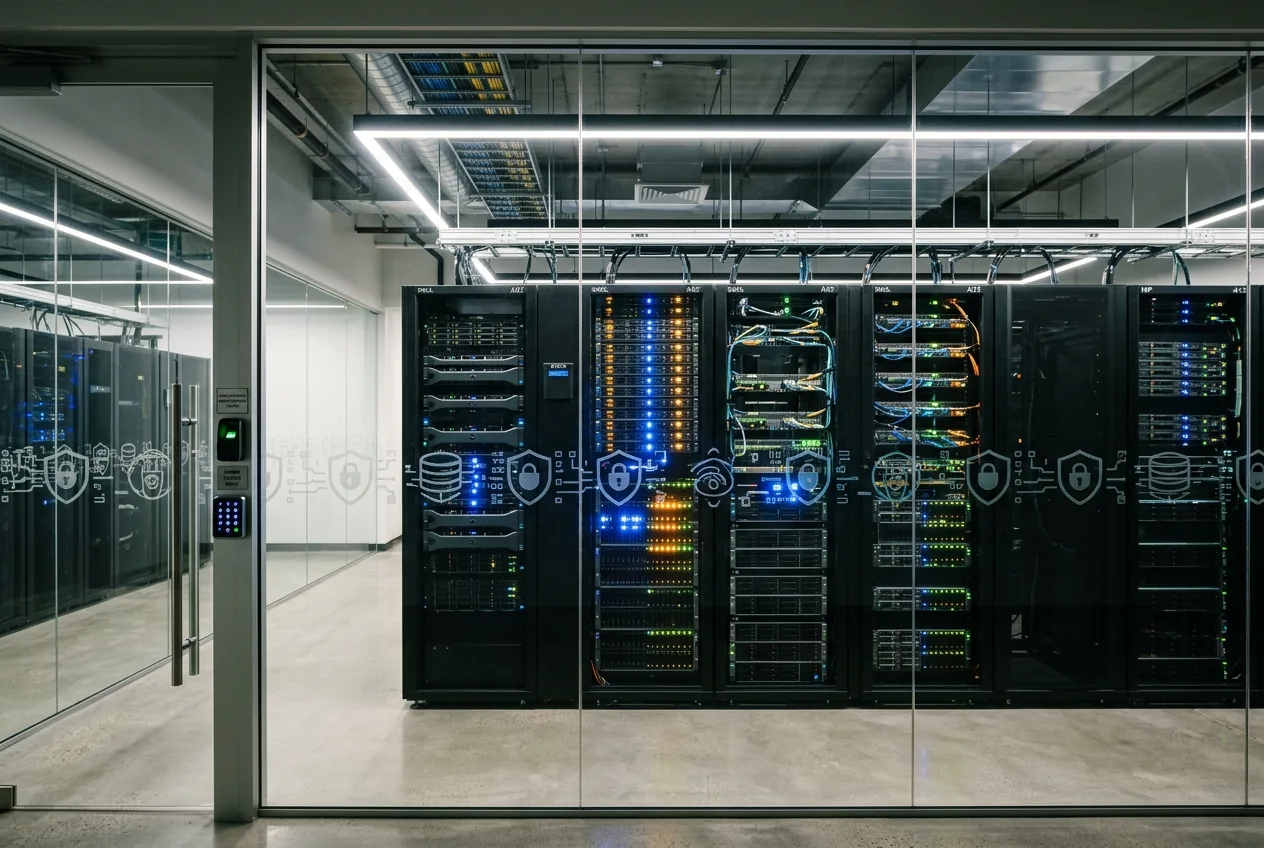
A high-stakes confrontation between the executive branch and Silicon Valley reached a critical flashpoint this week as reports emerged that the Trump administration has directed Anthropic to suspend operations surrounding its most advanced artificial intelligence architectures. The directive, aimed squarely at the San Francisco-based research lab and creator of the Claude model family, marks an unprecedented exercise of federal oversight over private commercial compute. While national security apparatuses have historically monitored the export of physical microelectronics and dual-use hardware, intervening directly into the operational deployment of proprietary software weights indicates a fundamental transformation in how Washington intends to police the algorithmic frontier.
For an industry accustomed to rapid, iterative release cycles and self-governing safety compacts, the administration's intervention represents an abrupt shift from laissez-faire commercialization to hardline state-level containment. The policy mechanism driving the order targets foundational models exceeding specific computational and reasoning benchmarks, reflecting a broader governmental pivot toward treating top-tier cognitive models as critical infrastructure subject to strategic state controls. The operational friction now unfolding between the Department of Commerce, national security officials, and Anthropic offers a preview of an emerging era where state sovereignty actively clashes with decentralized model deployment.
The Statutory Machinery of Federal AI Intervention
Federal authorities are relying on expansive interpretations of emergency economic and national defense authorities to justify the operational freeze. Citing dual-use risks ranging from autonomous cyber-offensive tooling to CBRN (chemical, biological, radiological, and nuclear) threat acceleration, the administration has asserted that models past a distinct compute threshold cannot operate without direct federal compliance verification. This intervention goes significantly beyond previously debated voluntary disclosure frameworks, effectively establishing an administrative gatekeeper capable of halting enterprise API access and model inference pipelines.
The legal framework leverages powers akin to those outlined in the Defense Production Act and International Emergency Economic Powers Act, compelling deep access into Anthropic's model weights, architectural specifications, and red-teaming methodologies. While the federal government has historically exercised such muscle to secure raw materials, industrial machinery, and physical telecommunications conduits during supply crises, applying these measures to deep-learning models treats neural network weights as operational munitions rather than intellectual property. The administration argues that commercial entities lack both the systemic visibility and statutory mandate required to govern algorithms capable of automated strategic consequence.
The ripple effect across the artificial intelligence sector was immediate, triggering urgent closed-door consultations among frontier labs, cloud providers, and institutional investors. Legal teams are scrambling to determine whether the executive branch holds constitutional authority to shut down live commercial inference engines without standard notice-and-comment procedures or demonstrable evidence of an active, catastrophic breach. By prioritizing preventive intervention over post-incident liability, the White House has drawn a sharp line: frontier algorithmic development will proceed only at the pleasure and convenience of federal security mandates.
Constitutional AI Meets State Surveillance
Anthropic has positioned itself as the industry's preeminent safety-first research organization, pioneering a methodology known as Constitutional AI. Unlike conventional reinforcement learning from human feedback (RLHF), which relies on vast teams of human annotators to curate acceptable model behaviors, Anthropic trains its models against an explicit set of principles, enabling the neural network to critique and refine its own outputs autonomously. This technique, designed to prevent harmful algorithmic drift and maintain ideological neutrality, has paradoxically made the company a primary target for federal skepticism.
Critics within the administration and allied regulatory circles have raised concerns that internally dictated corporate safety guardrails are inherently opaque and fundamentally unaccountable to democratic governance. Skeptics contend that when a private board or algorithmically enforced constitution decides what information an enterprise model will process or refuse, it introduces unchecked biases into systems integrated across aerospace, logistics, and intelligence workflows. The current executive stance holds that safety auditing cannot remain an internal, self-certified proprietary metric, particularly when models approach agentic autonomy.
The Industrial Fallout for Autonomous Enterprise Pipelines
The practical consequences of severing enterprise access to top-tier reasoning engines extend far beyond laboratory debate, threatening to disrupt industrial automation systems already dependent on advanced cognitive tooling. In modern manufacturing floors, multimodal foundation models are no longer novel conversational interfaces; they serve as critical middleware. High-parameter models parse industrial schematics, generate machine toolpaths, automate logistics dispatch algorithms, and inspect real-time sensor streams within high-throughput production lines.
For enterprise facilities that have embedded Anthropic's flagship models into their operational technology stack, a forced model suspension threatens cascading architectural failure. Unlike basic generative software, fine-tuned industrial agents operate within closed-loop supervisory control and data acquisition (SCADA) frameworks and enterprise resource planning networks. Forcing an abrupt deprecation or suspension of these endpoints leaves manufacturing operators with sudden latency bottlenecks, degraded algorithmic accuracy, and the expensive technical imperative to roll back to smaller, less capable local models.
The economic stakes of these dependencies highlight the vulnerability of software-defined manufacturing. When an industrial pipeline offloads cognitive load to cloud-hosted foundational models, it creates a single point of failure that spans corporate boardrooms and federal regulatory agencies. If the administration's suspension persists, enterprises will be forced to reconsider the viability of relying on centralized, cloud-hosted frontier models for core production tasks, likely accelerating the development of air-gapped, on-premises edge computing hardware designed to operate immune from regulatory intervention.
Infrastructure, Compute Clusters, and Geopolitical Strategy
Beyond domestic industrial concerns, the suspension touches the core of America's broader geopolitical stance toward global artificial intelligence competition. The White House has consistently framed dominance in compute and software architectures as a zero-sum struggle against foreign adversaries, notably China. Yet, penalizing a domestic champion presents a tactical contradiction: can the United States maintain algorithmic superiority over state-backed foreign competitors while simultaneously putting its own most advanced technical laboratories under regulatory house arrest?
If the regulatory environment in the United States becomes too volatile, the risk of capital flight and brain drain becomes palpable. While physical silicon foundries and power generation assets are geographically tethered, the elite researchers who design model architectures and optimize training losses are entirely mobile. A prolonged federal standoff threatens to incentivize top algorithmic engineers and multi-tier enterprises to migrate operational architectures to more predictable regulatory environments, undermining the very technological hegemony the administration aims to protect.
Toward a New Framework for Dual-Use Algorithmic Governance
The showdown between the Trump administration and Anthropic marks the end of self-regulation for frontier artificial intelligence. As foundational architectures advance toward autonomous agents capable of independent tool use, software generation, and industrial task execution, the boundary between consumer software and national security infrastructure has dissolved completely. The current suspension order is not merely an isolated dispute over corporate safety compacts; it is the opening salvo in the establishment of a state-directed framework for algorithmic control.
Navigating this new paradigm will require mechanical precision and regulatory clarity that current emergency mandates inherently lack. The broader technology sector must now confront the reality that developing frontier models is no longer viewed in Washington as simple computer science or free-market innovation. In an era where foundation models command multi-gigawatt power grids and direct complex industrial value chains, model weights are increasingly recognized for what they have truly become: instruments of sovereign strategic power.




Comments
No comments yet. Be the first!