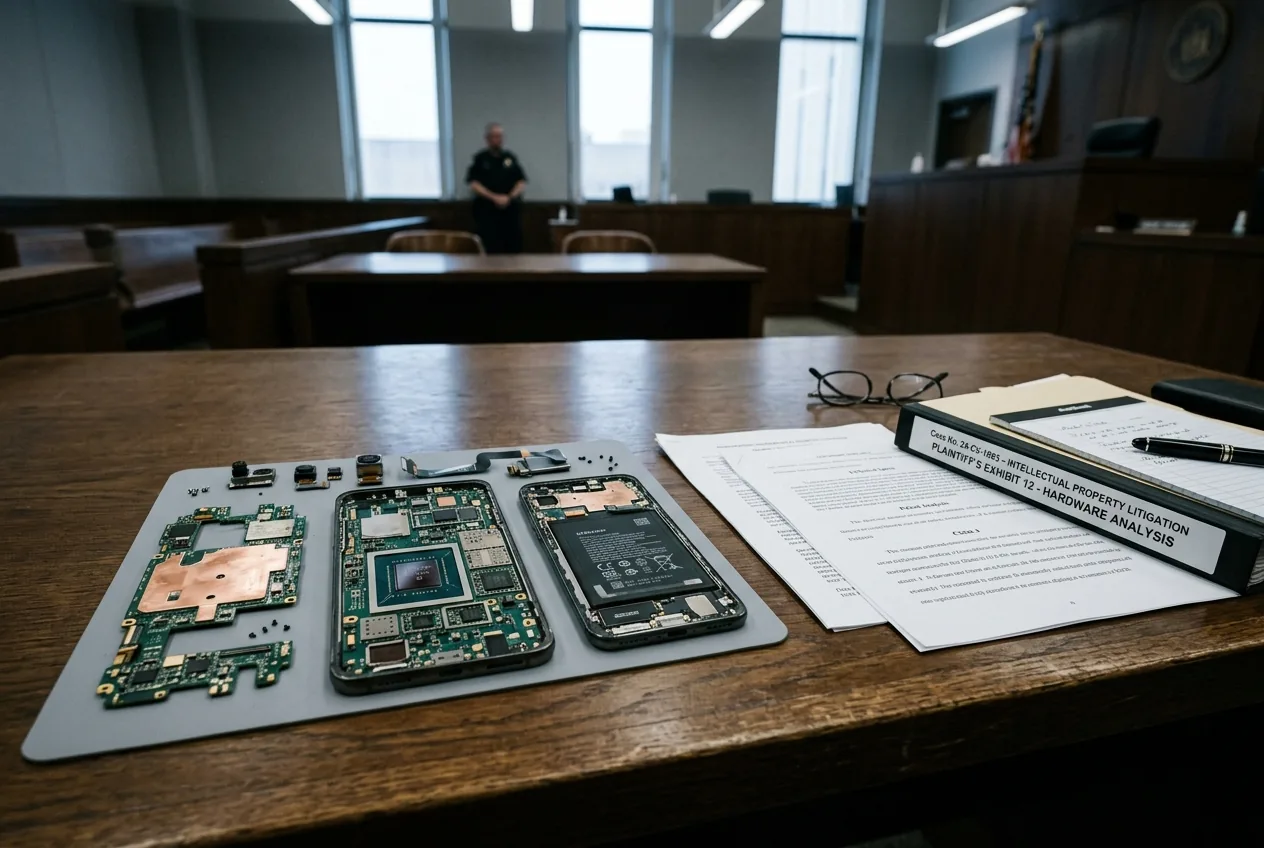
The fragile peace between consumer hardware titan Apple and generative artificial intelligence pioneer OpenAI has dissolved into open legal warfare. In a complaint filed in the U.S. District Court for the Northern District of California, Apple accuses OpenAI of systematically siphoning trade secrets and proprietary technical data to bootstrap its own physical hardware ambitions. The lawsuit demands immediate injunctive relief to halt OpenAI’s use of the contested material, the repatriation of all related intellectual property, and unspecified monetary damages.
The litigation signals a dramatic rupture in a high-profile industrial alliance. Only months after the two companies unveiled an intricate integration that brought ChatGPT into Apple’s operating systems and Siri ecosystem, the relationship has curdled into a high-stakes courtroom conflict. Coming against the backdrop of Tim Cook’s planned retirement from Apple in September 2026, the lawsuit underscores a determined push by Cupertino to protect the manufacturing, thermal, and silicon moats that define the closing era of Cook’s fifteen-year tenure.
The Engineering Divide: Poaching Talent and Hardware Blueprints
At the center of Apple’s filing is the allegation that OpenAI crossed the line between standard talent acquisition and the unlawful appropriation of proprietary engineering documentation. While high-tech firms in Silicon Valley routinely exchange executive and research talent, the complaint alleges that OpenAI deliberately targeted engineers embedded in Apple’s specialized hardware, advanced materials, and edge-silicon teams to bypass years of iterative research and capital expenditure.
Developing consumer electronics capable of hosting low-latency, localized neural networks presents brutal mechanical and electrical constraints. Unlike running large language models across massive server racks with kilowatt-scale cooling distribution, compact consumer devices operate within microscopic power budgets and severe thermal envelopes. Apple has spent billions optimizing custom silicon packaging, specialized system-on-chip architectures, and proprietary heat-dissipation techniques. If former engineers carried structural simulations, board topologies, or power-delivery methodologies into OpenAI’s experimental hardware division, the competitive injury to Apple is both immediate and measurable.
Apple’s legal team argues that the proprietary information at stake covers not just general algorithmic architectures, but the precise mechanical, acoustic, and thermal blueprints required to build next-generation physical interfaces. By allegedly deploying Apple’s confidential internal designs, OpenAI is accused of drastically compressing the prototyping timeline for its upcoming consumer hardware pipeline, sidestepping the costly trial-and-error cycles that define industrial manufacturing.
OpenAI’s Pivot Toward Physical Form Factors
For OpenAI, the ambition to control dedicated consumer hardware represents a strategic necessity. While the company achieved global dominance through cloud-hosted web interfaces and application programming interfaces, relying entirely on smartphones, browsers, and third-party hardware platforms leaves it vulnerable to gatekeeper levies and distribution chokeholds. Building native devices has emerged as its primary avenue to achieve unmediated consumer immersion.
Hardware development, however, demands an entirely different operational discipline than training transformer models. It requires complex tooling fabrication, yield optimization, clean-room assembly verification, and global supply chain logistics—domains where software startups possess virtually zero institutional memory. OpenAI’s hardware push, widely linked to collaborations with elite industrial design veterans and intensive hiring across mechanical engineering disciplines, has placed the startup on a direct collision course with consumer electronics incumbents.
When an artificial intelligence firm transitions from pure software to ambient or handheld consumer devices, it immediately encounters the fundamental laws of physics that Apple has spent four decades navigating. Micro-speaker enclosure acoustics, multi-sensor integration, battery chemistry management, and sub-millimeter component tolerances cannot be solved purely through compute scale. If OpenAI sought to fast-track these mechanical solutions by accessing Apple’s internal engineering specifications, the resulting product line stands on legally precarious ground.
Tim Cook’s Operational Moat Faces Its Final Test
The timing of the lawsuit intersects directly with executive succession dynamics inside Apple Park. With Tim Cook scheduled to retire in September 2026, Apple is navigating one of the most critical transitions in modern corporate history. Cook’s reputation as CEO was cemented not by visionary interface design, but by establishing the most ruthless, precise, and profitable global manufacturing and supply chain engine the world has ever seen.
Allowing an external software partner to absorb that proprietary hardware playbook unchecked would represent an existential erosion of Cook’s industrial legacy. Throughout his leadership, Apple has treated its component vendors, internal design parameters, and supply chain routing as state secrets. The Cupertino giant has repeatedly demonstrated a willingness to dismantle partnerships—no matter how commercially lucrative on the surface—whenever a partner threatens its underlying device ecosystem.
Cook’s impending exit makes the legal action a defensive consolidation. The Apple leadership team preparing to inherit the company cannot afford to let Apple Intelligence or Siri serve merely as passive shells for third-party models, especially if the providers of those models intend to release competitive physical hardware built with Cupertino’s own engineering insights. The lawsuit sends a direct signal to the broader tech sector: Apple’s hardware ecosystem will not be cannibalized from within.
Can Apple Prove Trade Secret Misappropriation?
Proving trade secret theft under both the federal Defend Trade Secrets Act and California’s Uniform Trade Secrets Act involves steep evidential hurdles. California legal precedent strongly protects employee mobility, categorically barring non-compete agreements and rejecting the "inevitable disclosure" doctrine, which assumes that a departing worker will inherently reveal proprietary concepts to a direct competitor.
Macro Ripples Across Silicon Valley and Public Markets
The legal fracture between Apple and OpenAI introduces sharp volatility into the broader technology sector. For institutional investors, the lawsuit casts a shadow over OpenAI’s future capitalization and planned initial public offerings, as unresolved intellectual property disputes of this magnitude inevitably complicate enterprise valuations and investor disclosures.
At the same time, shifting platform dynamics are reverberating through competing tech giants. Alphabet, which has spent years refining its integrated hardware and AI roadmap through its Pixel lineup and custom Tensor silicon, stands to benefit if OpenAI’s hardware efforts are stalled by federal injunctions. The legal uncertainty also complicates Microsoft’s multi-billion-dollar relationship with OpenAI, highlighting the precariousness of building commercial enterprise strategies atop aggressive startup initiatives.
The era of frictionless software-hardware co-opetition in artificial intelligence appears to be closing. As foundational model builders realize that software intelligence must eventually take physical form to capture the next wave of economic value, they will increasingly collide with the entrenched manufacturing giants that built the modern world. Apple’s offensive against OpenAI is not merely a dispute over employee departures; it is the opening salvo in a brutal conflict over who will control the physical architecture of physical computing for the next decade.




Comments
No comments yet. Be the first!