In mechanical engineering, brute force is rarely an engineering achievement; it is usually an admission of inefficient design. When designing a drivetrain or an automated gantry system, bolting on an oversized motor where a precise, lightweight servo would suffice introduces parasitic mass, thermal throttling, and needless capital expense. For the past four years, frontier artificial intelligence has largely operated on the opposite philosophy: throw maximum compute at a singular, monolithic parameter space, harvest emergent capabilities, and force every operational problem through the same computationally expensive pipeline.
The debut of the GPT-5.6 generation—divided systematically into the Sol, Terra, and Luna tiers—signals that this brute-force epoch is reaching its economic and architectural limits. OpenAI is no longer presenting frontier intelligence as a universal hammer. Instead, the company is treating inference as a layered mechanical assembly, offering three distinct compute-and-latency profiles designed to accommodate everything from deep theoretical synthesis to real-time, deterministic control loops.
For enterprise developers and hardware systems engineers, this transition marks the point where generative models stop behaving like speculative research artifacts and start integrating into the rigorous constraints of physical infrastructure, industrial automation, and edge-to-cloud telemetry.
Deconstructing the Triad: Sol, Terra, and Luna
The GPT-5.6 release splits capabilities along explicit vectors: parameter density, inference latency, memory bandwidth overhead, and tokens-per-watt consumption. Rather than forcing enterprises to accept trade-offs via prompt-level downsampling or aggressive dynamic quantization on a single flagship model, OpenAI has stratified the underlying weights and execution topologies.
Sol occupies the computational apex. It is engineered for long-horizon planning, multi-step formal verification, and intensive symbolic reasoning. In practical terms, Sol functions as an asynchronous analytical engine. Operating with extended reasoning buffers and advanced mixture-of-experts (MoE) routing, it trades immediate throughput for algorithmic fidelity. In tests involving complex mechanical kinematics, recursive failure-mode analysis, and complex code compilation across distributed systems, Sol represents the peak of OpenAI's synthetic reasoning capabilities. However, its high computational footprint and latency profile inherently confine it to the cloud tier, making it an engine for strategy rather than immediate execution.
Terra serves as the operational baseline—the direct answer to enterprise requests for a dependable, high-throughput workhorse. Balancing parameter scale against execution speed, Terra optimizes token economics for structured workflows: live data ingestion, enterprise ERP automation, synthetic telemetry monitoring, and intermediate document synthesis. It maintains enough contextual fidelity to grasp domain-specific ontologies without incurring the multi-second time-to-first-token delays characteristic of flagship reasoning networks. For manufacturing supply chains tracking raw-material routing or logistics hubs managing dynamic dispatching, Terra provides the pragmatic middle ground between cognitive depth and operational velocity.
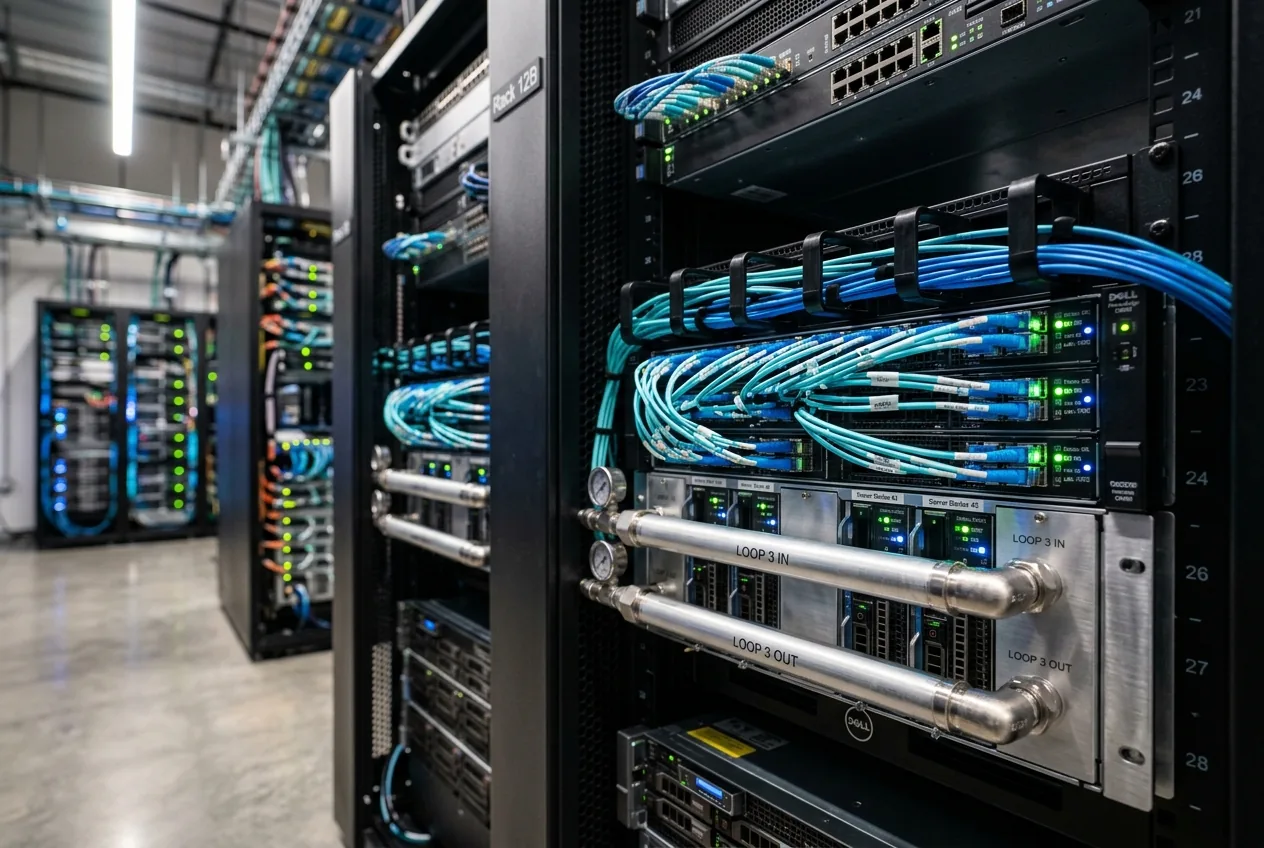
Luna represents the most critical tactical shift for embedded and physical systems. Stripped of extraneous parameter baggage and optimized for extreme quantization—likely down to 4-bit and 8-bit execution profiles—Luna is built for low-latency, high-frequency tasks. With response envelopes aimed squarely at the sub-50-millisecond threshold, this model is designed to operate on local hardware accelerators, rack-mounted factory-floor servers, and ruggedized edge appliances. Luna is not built to write philosophical treatises; it is calibrated for instantaneous classification, real-time sensor anomaly detection, voice-interface mediation, and closed-loop robot supervisory commands.
The Reality of Memory Bandwidth and Inference Economics
To understand why OpenAI split GPT-5.6 into three distinct engines, one must look past software benchmarks and examine silicon realities. The limiting factor in modern frontier AI is not compute in the abstract; it is memory bandwidth. Modern accelerator clusters—whether driven by Nvidia's H100, H200, or the newer Blackwell B200 platforms—are fundamentally constrained by high-bandwidth memory (HBM) throughput when generating tokens sequentially.
When a robotic cell or automated warehouse management system sends a continuous stream of telemetry to a monolithic model, the hardware must read trillions of parameters out of memory for every single generated token. Doing this on a Sol-class network for simple state verification is economically unsustainable. It strains power grids, burns through cooling capacity, and inflates API costs to levels that collapse industrial return-on-investment calculations.
Will Multi-Tier Orchestration Break Fragile Industrial Pipelines?
While the architectural logic of the GPT-5.6 family is sound, translating a tiered model ecosystem into reliable production code introduces severe integration challenges. In software engineering, state management across distinct systems is notoriously fragile. Distributing reasoning across Luna, Terra, and Sol requires an orchestration layer capable of routing queries dynamically without introducing its own point of computational failure.
If a factory floor relies on Luna for immediate sensory parsing, developers must define deterministic handover protocols. At what point does a failure threshold prompt Luna to escalate a task to Terra? If Terra encounters an ambiguous state and defers to Sol, how does the system manage the latency discrepancy without stalling mechanical hardware waiting for a response? In physical systems, inconsistent timing—known as jitter—can be catastrophic. If an automated assembly line experiences unpredictable token generation delays while shifting between models, the physical line must either slow down or risk mechanical collision.
Furthermore, prompt and context parity between the tiers remains an unresolved challenge. A prompt optimized for the nuanced, high-parameter comprehension of Sol may fail silently or produce hallucinations when truncated and processed by Luna's distilled architecture. Engineering teams will need to validate distinct prompt sets, schemas, and guardrails for each individual model tier, complicating continuous integration and deployment pipelines.
The Maturation from Research Phenomenon to Industrial Standard
For technology leaders, the emergence of this tiered architecture demands a reassessment of current AI roadmaps. The winning systems will not be those that simply subscribe to the largest, most expensive API endpoints available. Instead, competitive advantage will belong to the engineers who master model orchestration—routing the right tokens through the right silicon at the precise moment they are needed, balancing cost, speed, and intelligence with mechanical precision.




Comments
No comments yet. Be the first!