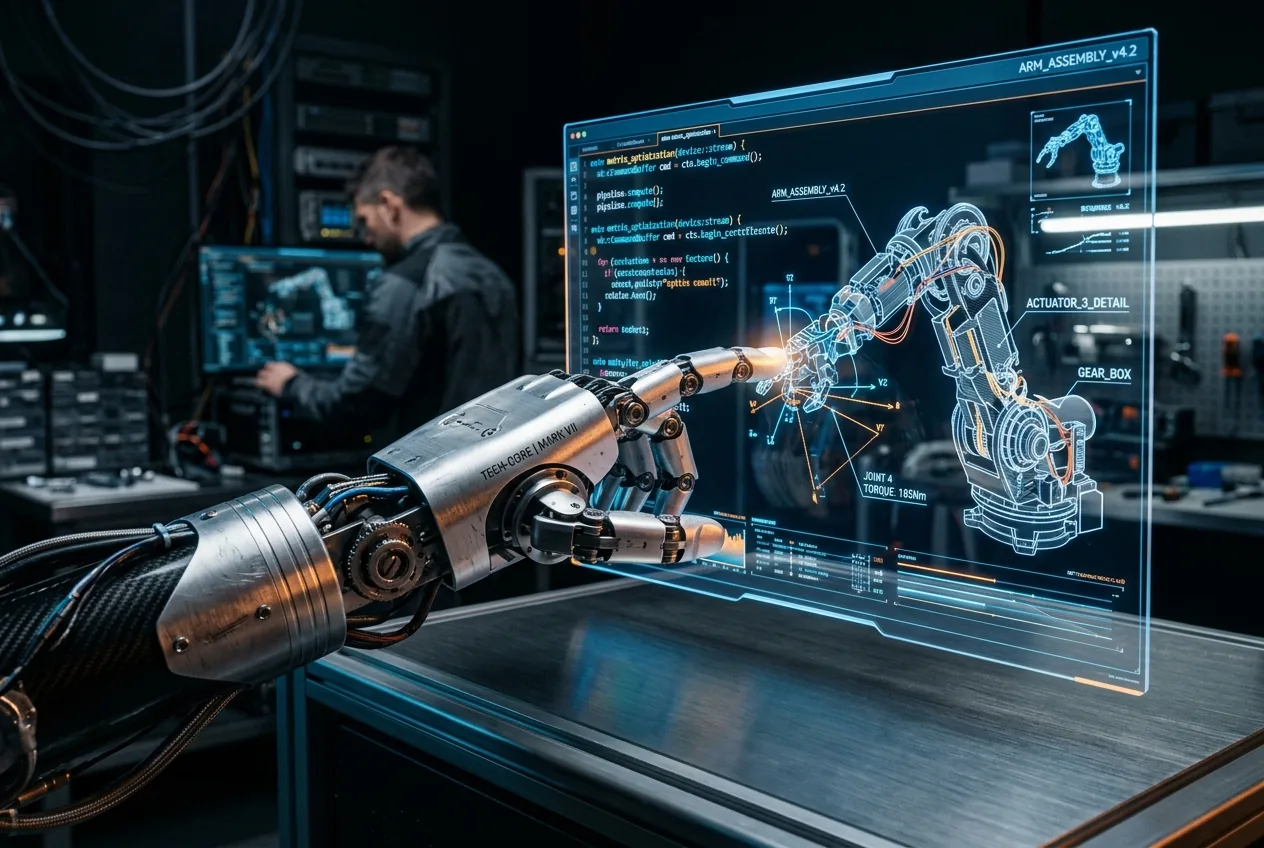
In a decisive move to consolidate its market share against rising competition from Anthropic and specialized coding assistants, OpenAI has officially launched GPT-5.5 Instant. Replacing the GPT-5.3 Instant model as the default engine for ChatGPT, this update represents more than a mere incremental version bump. It signals a strategic pivot toward high-efficiency, low-latency inference and, more crucially, a robust return to dominance in the developer and industrial sectors.
The rollout, which is expected to reach all global users within 48 hours, arrives at a critical juncture. As of May 2026, the artificial intelligence sector has moved beyond the "novelty chat" phase into an era defined by autonomous agentic capabilities—models that do not just talk, but act. GPT-5.5 Instant is designed specifically for this transition, offering a refined balance between raw reasoning power and the speed required for real-time application interaction.
The engineering of accuracy and conciseness
The model’s performance gains are particularly localized in the "hard sciences": medicine, law, finance, and engineering. Historically, "Instant" models favored speed at the expense of nuance, often leading to verbose but shallow responses. GPT-5.5 reverses this trend. OpenAI has emphasized that the model is now more concise, a direct response to user feedback regarding token-bloat. In mechanical engineering queries—an area of personal focus—the model demonstrates a sharper grasp of structural constraints and material properties, moving away from generic summaries toward specific, actionable data points.
Furthermore, the model now possesses a more sophisticated autonomous decision-making engine for web browsing. It independently determines when a query requires real-time data versus when it can rely on its internal weights. This efficiency in tool-use is a prerequisite for the next generation of AI integration, where latency in calling external APIs can be the difference between a functional agent and a broken workflow.
The Codex resurgence and computer-use capabilities
Perhaps the most aggressive shift in the current landscape is OpenAI’s reclamation of the programming sector. For several months, Anthropic’s Claude Code had been the preferred tool for developers, but recent data suggests the tide has turned. Following a major update to Codex in mid-April, which granted the AI agent the ability to interact directly with computer operating systems, OpenAI saw downloads of its Codex solution skyrocket from 5 million to 86 million in just five days. In the same period, Anthropic’s tool saw a decline from 11.8 million to 7.2 million downloads.
The integration of an internal browser within the application further streamlines this process. Users can now provide instructions directly on web pages, which the assistant then executes. This reduces the cognitive load on the user and positions ChatGPT not as a destination, but as a sophisticated overlay for the entire digital workspace.
How personalization and memory redefine the user interface
The utility of an AI model is increasingly tied to its ability to retain context across vast datasets. GPT-5.5 Instant introduces enhanced memory and personalization features that allow it to better utilize data from saved chats, uploaded files, and connected Gmail accounts. This is not merely about remembering a user’s name; it is about the model understanding the specific technical jargon, past project constraints, and preferred formatting of a professional’s workflow.
For Plus and Pro plan holders, these personalization updates are already appearing in the web version, with mobile support to follow. Critically, OpenAI has introduced more granular controls over this data. Users can now see exactly which pieces of information the model used to generate a response and have the ability to update, delete, or disable specific data points. From a data sovereignty perspective, this is a necessary evolution for corporate adoption, where the fear of sensitive information being "lost" in the weights of a neural network has long been a barrier to entry.
The practical implication is a move toward a truly "personal" assistant. When the model can cross-reference an engineering specification from a PDF in your Google Drive with a previous discussion about thermal loads, the speed of iteration increases exponentially. This level of integration is what the industry refers to as RAG (Retrieval-Augmented Generation) at scale, and GPT-5.5 Instant appears to be the first model to make it seamless for the end-user.
The trillion-dollar hardware and payment ecosystem
This autonomous commerce layer completes the circuit. We now have the model (GPT-5.5), the hardware (Samsung’s $1 trillion infrastructure), and the payment rails (Solana/Google) to support a fully decentralized, agentic economy. The efficiency of the model in reducing errors means fewer costly mistakes in these automated transactions, further incentivizing businesses to shift toward AI-led operations.
Is the military the ultimate testbed for AI integration?
The stakes for model accuracy are nowhere higher than in the defense sector. Simultaneously with OpenAI’s launch, US Army Secretary Dan Driscoll has been convening with top contractors to accelerate the integration of AI into weaponry. The Army is looking for the same things the private sector wants: faster inference, lower error rates, and the ability to operate across complex interfaces. However, in a military context, the "agentic" ability to see a screen and click a button translates to autonomous target recognition and tactical decision-making.
The use of models like GPT-5.5 in these high-stakes environments remains a point of intense debate. While the 52.5% reduction in incorrect answers is impressive for a coder or a lawyer, in a kinetic environment, even a 1% error rate can have catastrophic consequences. The Army’s push to integrate these technologies suggests that the strategic advantage of AI speed is beginning to outweigh the risks of its inherent unpredictability. As OpenAI continues to refine the "Instant" series, the pressure to prove that these models can operate reliably in "zero-fail" environments will only grow.




Comments
No comments yet. Be the first!