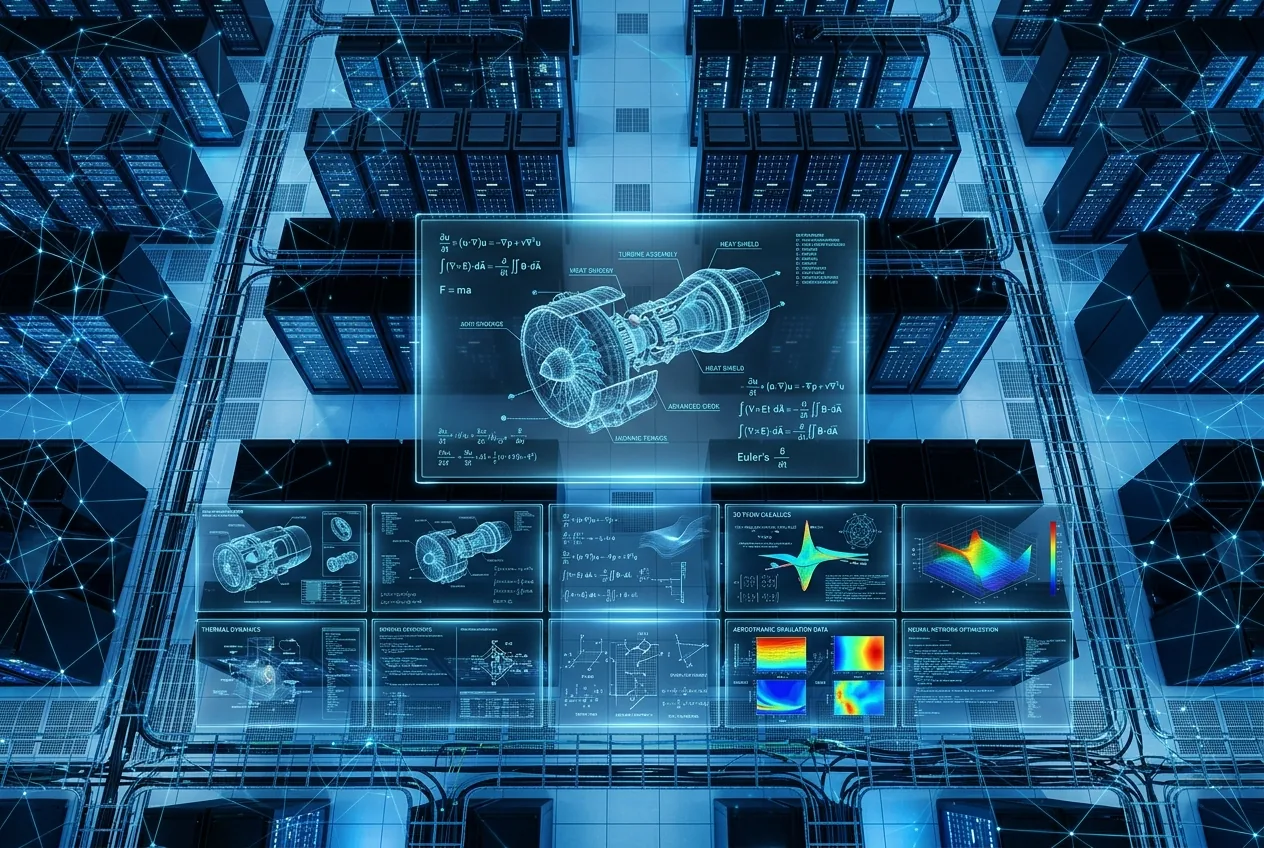
In a rapid hardware-software alignment that signals a new phase of the generative AI cycle, OpenAI has begun the rollout of GPT-5.5 Instant. This model, which succeeds the GPT-5.3 Instant architecture, is being positioned not merely as an incremental update but as a structural recalibration of how large language models (LLMs) handle specialized data and agentic tasks. As of May 6, 2026, the model has become the default engine for ChatGPT, with a full global deployment expected to conclude within 48 hours. For those of us monitoring the intersection of mechanical engineering and automated systems, this update represents a vital step toward the reliability required for industrial-grade integration.
Technical Precision in Specialized Verticals
The efficacy of GPT-5.5 Instant is particularly pronounced in the fields of medicine, law, and finance. Historically, LLMs have struggled with the rigid nomenclature and logical constraints of these sectors. However, the 5.5 architecture utilizes a refined attention mechanism that prioritizes factual density. In practice, this means the model is less likely to drift into linguistic patterns that sound plausible but lack technical grounding. In mathematics and natural sciences, where precision is non-negotiable, the model exhibits a higher success rate in solving multi-step differential equations and analyzing structural engineering queries.
Codex and the Rise of Computer-Use Agents
Perhaps the most significant industrial takeaway from the recent OpenAI updates is the dramatic surge in Codex adoption. As OpenAI strengthened its position in the programming vertical—a niche where competitors like Anthropic’s Claude Code had previously gained ground—the number of Codex downloads spiked from 5 million to 86 million in a single week. This 1,620% increase in five days suggests a massive migration of developers toward the OpenAI ecosystem, likely driven by the model's new 'computer-use' capabilities.
The integrated AI agent for programming has evolved beyond a simple code generator. It now possesses the ability to interact directly with the operating system: it can 'see' the screen through vision-processing layers, execute mouse clicks, and input text across various third-party applications. This moves the AI from a sandbox environment into the actual workflow of a mechanical or software engineer. When paired with the new GPT-5.5 Instant backbone, these agents can theoretically manage complex CAD software or navigate proprietary industrial databases without requiring a human-mediated API for every step.
The reduction in downloads for rival tools, such as Claude Code, which fell from 11.8 million to 7.2 million in the same period, indicates that the market is currently favoring OpenAI’s integrated approach. The addition of a native browser within the coding environment allows users to leave instructions directly on a web page, which the assistant then executes. This is a crucial development for the automation of supply chain management and logistics, where interacting with various web-based portals is a daily necessity.
The Economic Engine: Samsung and the Trillion-Dollar Benchmark
The release of GPT-5.5 Instant does not exist in a vacuum; it is part of a broader economic surge centered on AI infrastructure. On May 6, 2026, Samsung’s market capitalization surpassed the $1 trillion mark following a 15% surge in share price. This milestone makes Samsung the second semiconductor powerhouse to hit this valuation, trailing only TSMC. The market’s reaction is a direct consequence of the escalating demand for high-bandwidth memory (HBM) and the advanced processing units required to run models of the 5.5 Instant caliber.
As models become more 'instant' and more accurate, the hardware requirements for edge computing and data center throughput scale exponentially. Samsung’s pivot toward AI-dedicated silicon is a response to the reality that software like GPT-5.5 is only as fast as the physical gates through which the electrons flow. For those of us in the industrial sector, this valuation confirms that the AI hype has successfully transitioned into a capital-intensive infrastructure build-out. We are no longer just talking about chatbots; we are talking about the physical rebuilding of global compute capacity.
Military Integration and Strategic Automation
The pragmatic utility of these improved error rates is already being explored at the highest levels of national security. US Army Secretary Dan Driscoll has recently convened a summit with top defense contractors to discuss the integration of AI into modern weaponry and command systems. While GPT-5.5 Instant is a consumer and enterprise-facing model, the underlying breakthroughs in error reduction (the aforementioned 52.5% improvement) are exactly what military planners require.
In a theater of operations, an AI that hallucinates is a liability. The push toward 'weaponry integration' suggests that the US Army is looking for models that can handle the mathematics of ballistics, the logistics of supply lines, and the real-time analysis of satellite imagery with near-zero error margins. The shift toward more concise, natural, and accurate responses in GPT-5.5 Instant mirrors the requirements of a command-and-control interface where clarity and speed are the primary metrics of success.
Programmable Payments for an Autonomous Future
Finally, we must consider how these advanced agents will operate within the global economy. A collaborative effort between the Solana Foundation and Google Cloud has resulted in the launch of , a specialized payment system designed for AI bots. As models like GPT-5.5 Instant and the updated Codex gain the ability to navigate the web and use computer applications, they will inevitably need to conduct transactions—whether it is purchasing cloud compute time, paying for data access, or procuring digital assets.
The system allows AI agents to hold and move value autonomously, within pre-defined programmatic constraints. This is the missing link for a truly automated industrial supply chain. Imagine a Codex-driven agent identifying a shortage in a manufacturing component, navigating to a supplier’s portal, and using a Solana-based payment rail to finalize the order—all without human intervention. The synergy between OpenAI’s increased model accuracy and the blockchain’s programmable trust layers suggests that we are moving toward an era of 'Machine Commerce.'
From the perspective of a mechanical engineer, the launch of GPT-5.5 Instant is a clear indicator that the era of 'experimental' AI is ending. We are entering a period of refinement where the focus is on reliability, integration, and economic utility. The 52.5% reduction in errors is not just a software patch; it is a signal that the tools are finally becoming robust enough for the workshop, the factory floor, and the global market.




Comments
No comments yet. Be the first!