On May 5, 2026, OpenAI officially transitioned its flagship product, ChatGPT, to a new default foundation model: GPT-5.5 Instant. This update marks a significant shift in the company’s development trajectory, moving away from the incremental performance gains of the GPT-5.3 era toward a more robust, fact-oriented architecture designed to meet the demands of high-stakes industrial and professional environments. By replacing GPT-5.3 Instant, OpenAI is signaling that the era of the "creative chatbot" is being superseded by the era of the "reliable utility."
For those of us tracking the intersection of machine learning and industrial automation, this release is less about the novelty of AI conversation and more about the technical refinement of error rates. The GPT-5.5 Instant model is specifically engineered to address the persistent problem of hallucinations—instances where the model generates plausible but factually incorrect information. In technical sectors like mechanical engineering, law, and medicine, these errors are not merely inconveniences; they are critical failure points that have previously limited the large-scale integration of LLMs into professional workflows.
Analyzing the Hallucination Deficit
From an engineering perspective, this suggests that OpenAI has likely refined its retrieval-augmented generation (RAG) pipelines or improved the model's internal "certainty" thresholds. In fields like finance or structural engineering, where a single misplaced decimal can lead to catastrophic fiscal or physical outcomes, a 50% reduction in error is a monumental leap toward commercial viability. The model is no longer just guessing the next likely word; it is increasingly performing a cross-reference against a verifiable knowledge base before outputting a response.
Benchmarking Mathematical and Multimodal Logic
The raw performance metrics of GPT-5.5 Instant further distance it from the 5.3 iteration. On the AIME 2025 math test—a benchmark known for requiring multi-step logical reasoning and deep mathematical intuition—the new model achieved a score of 81.2. This is a substantial jump from the 65.4 recorded by GPT-5.3. For developers and engineers, this score is a proxy for the model's ability to handle complex coding tasks and algorithmic problem-solving without losing the logical thread mid-process.
In addition to its mathematical prowess, the model has seen gains in multimodal reasoning. On the MMMU-Pro benchmark, which evaluates a model’s ability to understand and reason across different types of data like images, charts, and text, GPT-5.5 Instant scored 76, up from 69.2 in the previous version. This improvement is particularly relevant for industrial applications such as automated quality control or the interpretation of complex technical schematics. The ability to accurately parse a blueprint or a medical scan and then relate that data to a textual query is the foundation of the next generation of AI-assisted labor.
The Integrated Context Engine and Memory Sources
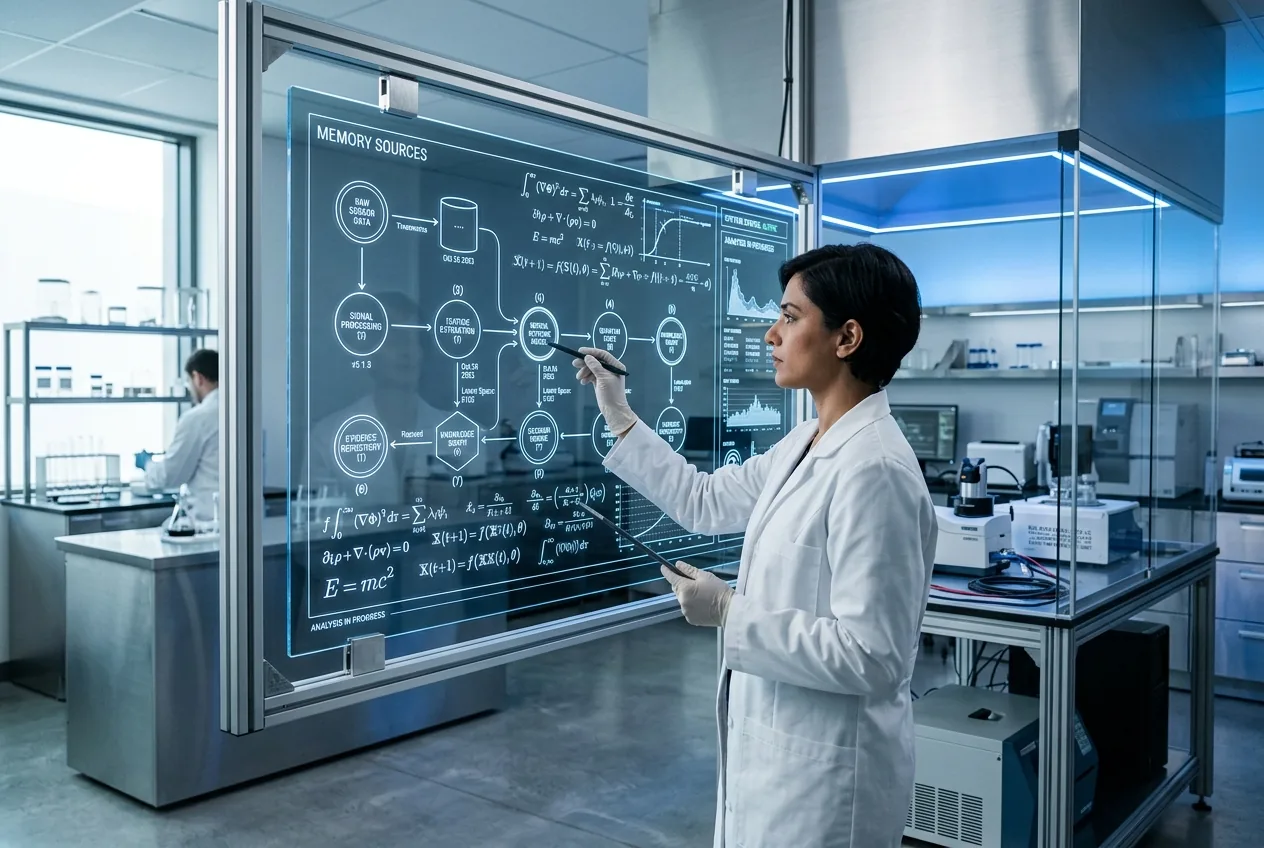
One of the more practical updates in this release is the introduction of "Memory Sources." OpenAI has integrated a more transparent way for users to understand the lineage of the information they receive. The model can now refer back to past conversations, uploaded files, and even connected Gmail accounts to provide personalized answers. While personalization has been a feature of ChatGPT for some time, the 5.5 Instant model formalizes this through a dedicated control interface.
Users on the Plus and Pro tiers can now see exactly where a piece of information originated. This transparency serves two purposes: it allows for the correction of outdated data and provides a necessary audit trail for professional users. If the model pulls a figure from a PDF uploaded three months ago, the user can now verify that source instantly. Crucially, OpenAI has addressed privacy concerns by ensuring that memory sources are not visible when a chat is shared with others, maintaining a necessary wall between individual data silos and collaborative work.
Does AI Outperform Human Diagnostics?
The release of GPT-5.5 Instant arrives amid a surge of research validating the utility of LLMs in specialized fields. A recent study out of Harvard examined how large language models perform in emergency room scenarios. The findings were startling: the AI offered more accurate diagnoses than human emergency room doctors in several test cases. While the study was conducted prior to the 5.5 Instant release, the 52.5% reduction in hallucinations found in the new model suggests that these diagnostic capabilities will only become more refined.
Industrial Onboarding and the Super App Vision
OpenAI’s push toward an AI "super app" is evident in how companies are already leveraging these models for supply chain and merchant operations. DoorDash, for instance, recently added AI-powered tools to speed up merchant onboarding. These tools use computer vision and natural language processing to edit dish photos and automate the creation of digital storefronts. As GPT-5.5 Instant becomes the default, the efficiency of these automated pipelines is expected to increase.
The Developer Shift and the Deprecation of Personality
For the developer community, the transition to GPT-5.5 Instant is being handled through the `chat-latest` API endpoint. OpenAI has stated that GPT-5.3 will remain available for only three months for paid users, a relatively short window that forces a rapid migration. This move is not without controversy. In early 2026, the withdrawal of the GPT-4o model led to significant user backlash. Many users had developed an emotional connection to the "personality" of 4o, describing it as a "best friend" or a "mirror."
OpenAI’s decision to move forward with the deprecation of older models despite such outcry suggests a firm commitment to technical performance over social engagement. The 5.5 Instant model is designed to be a tool, not a companion. By focusing on factuality and reducing the "chattiness" or affirmation-seeking behavior that characterized earlier versions, OpenAI is positioning ChatGPT as a professional workstation. In the world of industrial automation, a tool that tries to be your friend is a distraction; a tool that gives you the correct math every single time is an asset.
The Future of the Professional LLM
As GPT-5.5 Instant rolls out to Free, Go Business, and Enterprise users in the coming weeks, we are likely to see a shift in how the public interacts with AI. The focus is moving away from "What can this bot say?" toward "What can this bot do?" With improved search tools, deeper file integration, and a record-breaking reduction in error rates, the model is beginning to function as a cognitive layer for professional industry.




Comments
No comments yet. Be the first!