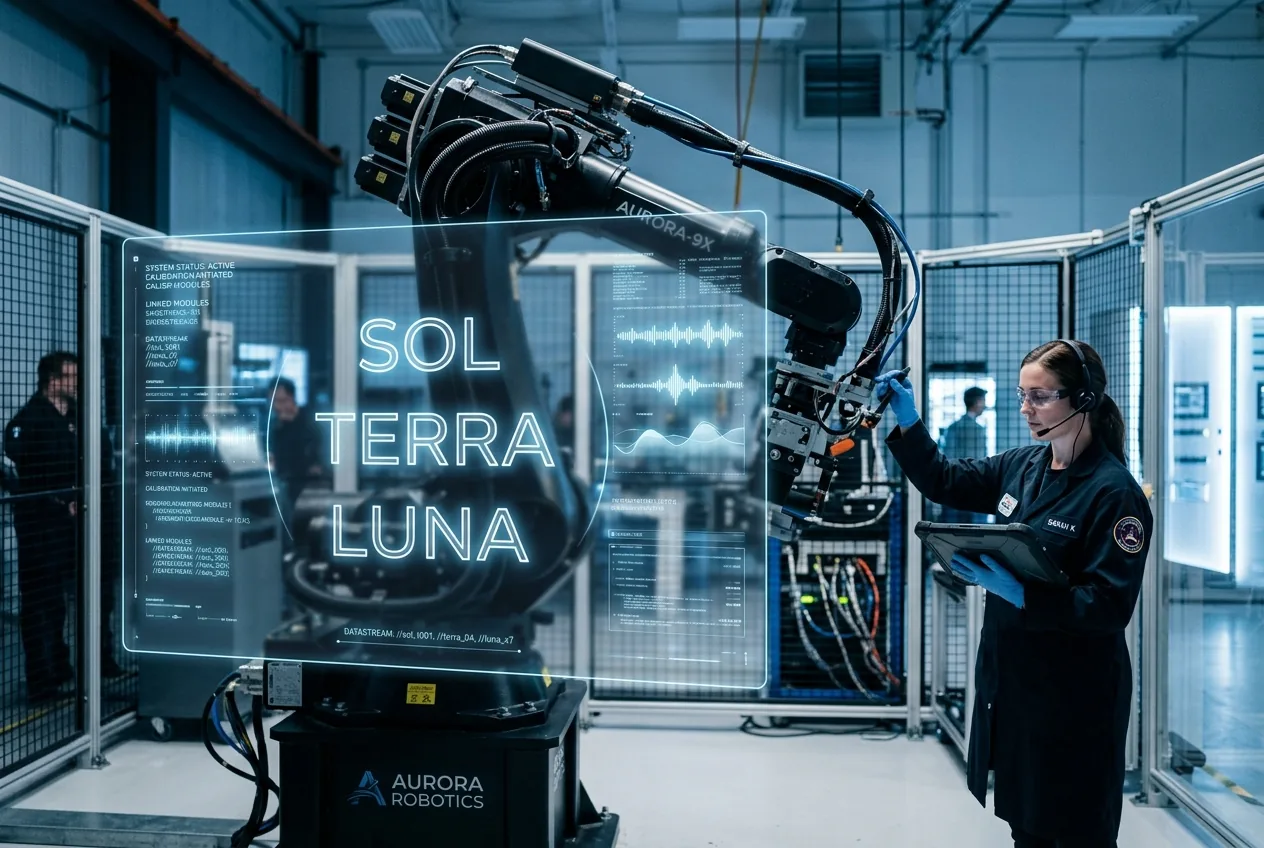
The friction between rapid artificial intelligence development and federal oversight has reached a significant inflection point. OpenAI has announced the public release of its GPT-5.6 suite—specifically the Sol, Terra, and Luna models—ending a two-week period of restricted access requested by the U.S. government. This transition from a “trusted partner” rollout to a global deployment signals a shift in how the Trump administration intends to manage the frontier of large language models (LLMs) while balancing national security concerns against the pressure of international competition.
The models, which OpenAI describes as its most robust to date, represent a departure from the incremental updates of the previous year. GPT-5.6 Sol, the flagship of the series, has been engineered with a specific focus on high-stakes technical domains. According to technical documentation and preliminary reports, the Sol architecture shows marked improvements in complex coding tasks, biological synthesis modeling, and autonomous cybersecurity defense. These are not merely iterative improvements in prose generation; they are tools designed for industrial-scale automation and sophisticated engineering workflows.
The mechanics of the regulatory bottleneck
This period of observation has now concluded with a green light from the U.S. Department of Commerce. The decision to lift these limits suggests that the government’s 60-day window for developing evaluation protocols is being accelerated by the realities of the global market. OpenAI’s leadership has been vocal about the risks of protracted government intervention. In a recent blog post, the company argued that keeping the best tools away from developers and cyber-defenders creates a strategic vulnerability rather than a safeguard. By allowing broad access, the administration is effectively betting that decentralized innovation will outpace the risks inherent in the technology.
The lifting of these controls follows a similar trajectory seen with Anthropic, OpenAI’s primary competitor. Anthropic recently saw the restoration of access to its Claude Fable 5 and Mythos 5 models after a weeks-long clash with federal regulators over export control directives. The synchronized release of these top-tier models suggests that the federal government is wary of stifling domestic industry while Chinese firms like Alibaba and Baidu continue to narrow the gap in transformer-based architectures.
Inside the GPT-5.6 architecture: Sol, Terra, and Luna
From a mechanical engineering and industrial automation perspective, the GPT-5.6 series is significant because of its specialized branching. Unlike previous models that attempted to be a “jack of all trades,” the Sol, Terra, and Luna models appear to be optimized for different computational environments and utility requirements. Sol is the heavy-lifter, requiring significant hardware resources to manage its massive parameter count, but delivering high-precision results in scientific modeling and logic-heavy programming.
Terra is likely the mid-range model, optimized for throughput and efficiency in enterprise applications where latency is a critical factor. In the context of supply chain management and predictive maintenance, Terra provides the necessary balance of reasoning and speed. Luna, the smallest of the three, is designed for edge computing and mobile integration, allowing for local execution of complex tasks without the constant need for high-bandwidth cloud connectivity. This tiered approach allows industries to select the specific hardware-software balance that suits their operational overhead.
The technical specifications of Sol are particularly noteworthy for those in the robotics sector. The model demonstrates a refined understanding of spatial reasoning and physical system constraints. When integrated into robotic control systems, the GPT-5.6 backbone can translate high-level natural language instructions into precise actuator movements with a lower error rate than previous iterations. This is achieved through a training regime that emphasized multi-modal sensor data, allowing the model to “understand” the relationship between digital instructions and physical consequences.
Is GPT-Live the end of the latency problem?
Alongside the release of the 5.6 models, OpenAI has debuted GPT-Live, a new generation of voice-based AI. The primary innovation here is the move toward full-duplex communication. Previous voice models operated in a turn-based fashion: the user speaks, the model processes, and then the model responds. GPT-Live is capable of listening and speaking simultaneously, mimicking the flow of natural human conversation. This requires a massive reduction in inference latency and a fundamental change in how the model manages audio tokens.
In an industrial setting, the utility of a zero-latency voice interface cannot be overstated. Technicians working on complex machinery or assembly lines often have their hands occupied. A voice assistant that can process interruptions and provide real-time feedback during a task significantly improves safety and efficiency. If a technician notes a vibration in a turbine while the AI is reading a maintenance checklist, GPT-Live can pivot its response instantly, much like a human co-worker would. This move toward real-time interactivity is the final bridge between static software and active industrial partnership.
The rollout includes two versions: GPT‑Live‑1 and GPT‑Live‑1 mini. The “mini” variant is particularly impressive, as it maintains much of the conversational fluidity of its larger sibling while running on significantly less power. For wearable tech and specialized field devices, this efficiency is the difference between a tool that lasts a full shift and one that drains its battery in two hours.
Geopolitics and the AI arms race
The pressure to release GPT-5.6 is inextricably linked to the broader geopolitical landscape. There is a growing consensus among technology analysts that the Trump administration’s initial crackdown on AI models provided a strategic opening for international competitors. Specifically, the delay in deploying Claude Fable 5 and GPT-5.6 allowed Chinese state-backed entities to claim a temporary lead in the publication of open-weights models and commercial APIs. By lifting the limits now, the U.S. is attempting to re-establish dominance in the AI infrastructure layer.
The economic viability of these models depends on their widespread adoption across the global supply chain. If U.S. companies are barred from exporting or deploying their best technology, the vacuum is quickly filled by regional alternatives. This is why the Department of Commerce’s approval is more than just a safety check; it is a signal to the markets that the U.S. will not allow regulatory bottlenecks to undermine its technological lead. The move acknowledges that in the current era, speed is as much a security feature as code-auditing is.
Furthermore, the debate over the “5% stake” proposal—where OpenAI would potentially offer the government a portion of its equity in exchange for infrastructure support—continues to simmer in the background. While some venture capitalists argue such a deal “makes zero sense,” it highlights the increasingly blurred line between private tech companies and national strategic assets. GPT-5.6 is no longer just a chatbot; it is part of the national industrial infrastructure, as vital to modern manufacturing as the electrical grid or the interstate highway system.
The industrial road ahead
As GPT-5.6 becomes available to the global developer community on Thursday, the focus will shift from regulatory debates to real-world implementation. For mechanical engineers and roboticists, the challenge is now one of integration. How do we take the reasoning capabilities of Sol and the real-time interaction of GPT-Live and bake them into the next generation of automated factories? The hardware is largely ready; the bottleneck has been the intelligence required to manage the complexity of modern production.
OpenAI’s move to end government-requested limits is a pragmatic acknowledgment that the genie cannot be put back in the bottle. Instead of attempting to contain the technology through restriction, the strategy has shifted toward accelerated deployment and robust, real-time monitoring. For the curious observer and the industrial professional alike, the release of GPT-5.6 marks the beginning of a new chapter where AI moves out of the lab and onto the factory floor, fully liberated from the constraints of the recent regulatory chill.




Comments
No comments yet. Be the first!