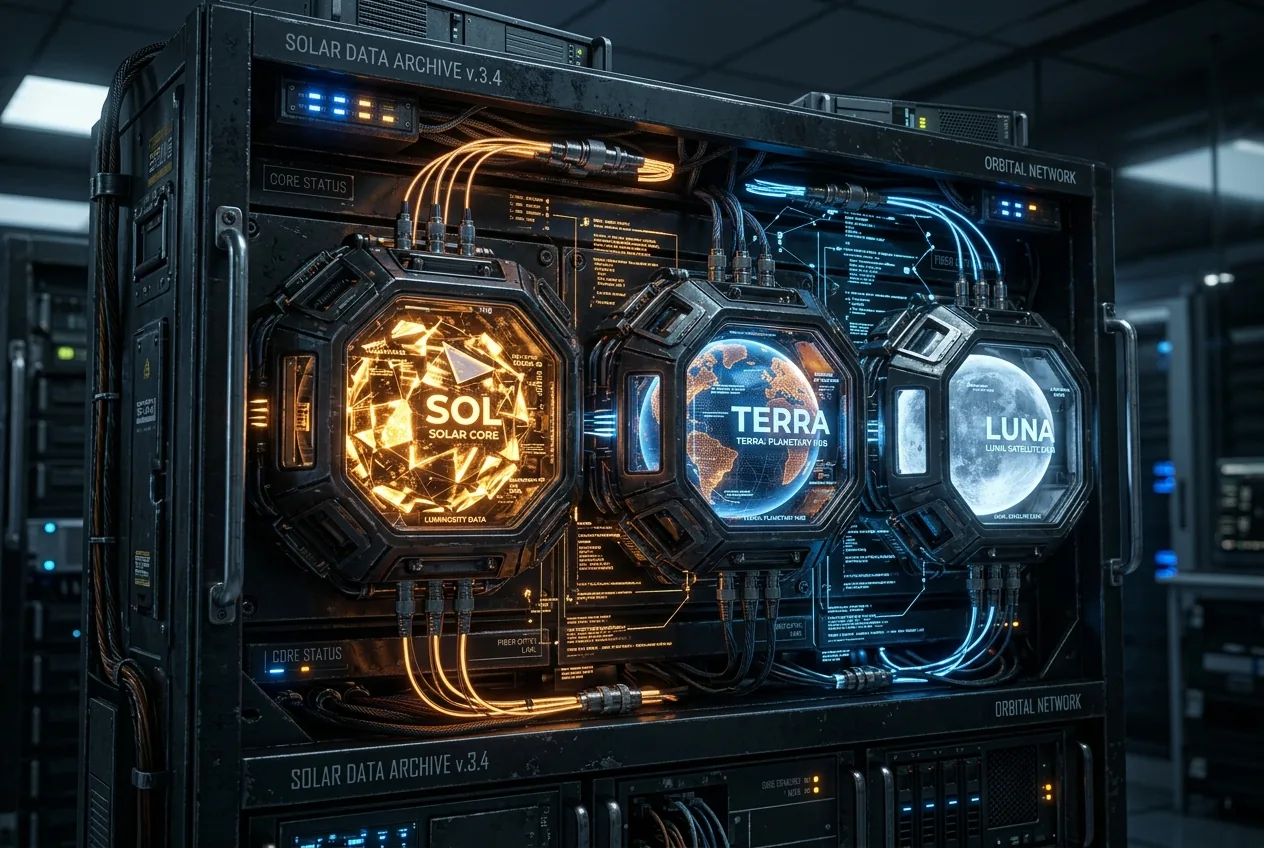
The artificial intelligence landscape is moving away from the era of monolithic, one-size-fits-all models and toward a more modular, industrially focused architecture. On Thursday, OpenAI is scheduled to release its GPT-5.6 series, a trio of models—internally codenamed Sol, Terra, and Luna—that signal a significant shift in how large language models (LLMs) are deployed for enterprise and technical workloads. While the hype cycle often focuses on general-purpose chat capabilities, the engineering reality of GPT-5.6 is rooted in solving the "three horsemen" of industrial AI adoption: latency, token efficiency, and agentic reliability.
For those of us tracking the intersection of hardware and high-level software, this release is less about "smarter" conversation and more about the mechanical efficiency of the inference process. OpenAI is no longer just selling a brain; they are selling a suite of specialized engines tailored for different levels of industrial torque. The introduction of Sol as the flagship, Terra as the mid-tier workhorse, and Luna as the high-efficiency edge-capable model represents a pragmatic response to the soaring costs of compute and the growing demand for AI that can actually execute tasks rather than just describe them.
The Architectural Tiers: Sol, Terra, and Luna
The core of Thursday's release is the tiered structure, which allows developers and enterprise architects to map specific tasks to the appropriate computational cost. Sol, the top-tier model, is designed for what OpenAI refers to as "agentic workflows." In technical terms, this means the model possesses a higher degree of reasoning depth required for complex multi-step processes, such as code reviews, architectural planning, and deep data synthesis. Early benchmark data indicates that Sol is particularly potent in coding environments, where it has reportedly outperformed competitors like Anthropic’s Fable 5 in PR (Pull Request) review accuracy and logic consistency.
Terra serves as the balanced middle ground. It is likely optimized for high-throughput tasks where Sol’s reasoning depth would be overkill and cost-prohibitive. For industrial applications, Terra is the model most likely to handle routine documentation, standard customer service routing, and moderate-level data transformation. The value proposition here is the performance-to-price ratio; if Sol is the heavy-duty excavator of the lineup, Terra is the versatile skid steer loader—capable of a wide range of tasks with a lower operational footprint.
Luna, the smallest of the three, is perhaps the most interesting from a mechanical engineering perspective. Small, high-efficiency models are critical for low-latency applications and potential edge-side deployment. Luna is designed for speed and cost-effectiveness, likely targeting tasks that require near-instantaneous responses, such as real-time translation or basic automated sorting systems in logistics. By offering Luna, OpenAI is acknowledging that for many industrial use cases, a 175-billion-parameter model is a liability, not an asset. Speed and throughput are the metrics that matter on the factory floor or in a high-speed supply chain interface.
Decoding the Token Advantage and Latency Gains
From an analytical standpoint, the most impressive claims surrounding GPT-5.6 aren't about its vocabulary, but its efficiency. Data suggests that GPT-5.6 Sol achieved significant gains in token efficiency, particularly in coding tasks. In internal and external benchmarks, Sol reportedly used roughly 3x fewer tokens per PR review compared to previous iterations, while delivering a 2x reduction in median latency. For a global enterprise running millions of automated checks per day, a 3x reduction in token usage is not just a marginal improvement—it is a massive reduction in the cost of goods sold (COGS) for their AI-driven processes.
Microsoft 365 Integration: The Preferred Model Strategy
The strategic partnership between OpenAI and Microsoft enters a new phase with the GPT-5.6 release. Microsoft has already designated GPT-5.6 as the "preferred model" for Microsoft 365 Copilot, integrating it across Word, Excel, PowerPoint, and the newly highlighted "Cowork" feature. This move is technically significant because it indicates that Microsoft is prioritizing the Sol and Terra tiers for its high-end productivity tools to ensure that Copilot can handle more complex, multi-app workflows.
However, the "preferred model" label carries a certain level of ambiguity. Recent reports indicate that Microsoft has been increasingly utilizing its own internal models (MAI) to power certain features in Word and Excel as a cost-saving measure. By branding GPT-5.6 as the "preferred" choice, Microsoft is likely using Sol for the high-reasoning tasks—like generating complex Excel formulas from natural language or synthesizing data across multiple documents—while relegating simpler tasks to less expensive internal models. This hybrid approach is the only way to make the economics of Copilot sustainable at scale, especially given that paid adoption currently sits at roughly 20 million seats out of a 450-million-user base.
Can 'ChatGPT Work' Bridge the Agency Gap?
One of the most touted features of the GPT-5.6 update is "ChatGPT Work," a program designed to let the AI take charge of file orchestration and management. From a systems engineering perspective, this represents a shift from "Generative AI" to "Agentic AI." Instead of merely generating text about a file, the model is being given the permissions and the logic to manipulate the file system itself—moving data between documents, updating spreadsheets based on email inputs, and organizing project folders.
The challenge here is reliability. For an AI to "take charge of files," it must have a near-zero failure rate in its logical execution. A model that accidentally deletes a directory or miscalculates a cell reference in a financial model is a liability in a professional environment. The success of ChatGPT Work will depend entirely on whether the Sol model's increased reasoning depth can translate into the kind of precision required for industrial-grade automation. If OpenAI can prove that GPT-5.6 can reliably operate as a digital clerk, it will be the first step toward true robotic process automation (RPA) powered by natural language.
The Economic Hurdle: Adoption and Real-World Utility
Despite the technical milestones, the broader challenge for OpenAI and its partners is adoption. Current data shows that only about 1% of Microsoft’s commercial accounts are active weekly users of Copilot. This suggests that while the technology is impressive, it has not yet become an essential tool in the daily workflow of the average professional. The high cost of subscription ($30 per user per month for many) combined with the learning curve of effective prompting has created a bottleneck.
Furthermore, the competition is not standing still. Anthropic's Fable 5 and Google’s Gemini iterations are also targeting this same enterprise efficiency. The battle for the "preferred model" status in major software suites is essentially a battle for the underlying infrastructure of the modern workplace. OpenAI’s decision to release a tiered family of models suggests they recognize that the market is no longer looking for a generalist, but for a specialized toolset that can be integrated into existing industrial and digital pipelines with predictable costs and performance metrics.
As Thursday’s rollout begins, the focus will likely remain on the flashy features of Sol, but the real story for those of us in the technical sectors is the viability of Luna and Terra. These are the models that will define whether AI can move from the cloud to the edge, and from a curiosity to a core component of the global supply chain and industrial economy. GPT-5.6 isn't just an update; it's a recalibration of OpenAI's engineering priorities toward the pragmatic, the efficient, and the automated.




Comments
No comments yet. Be the first!