The landscape of artificial intelligence is shifting from the experimental to the industrial. OpenAI, the organization that catalyzed the current generative AI boom, has reportedly moved to file confidential paperwork with the U.S. Securities and Exchange Commission (SEC) for an initial public offering. This move, which could see the company debut on public markets as early as this week, represents a pivotal moment for the technology sector. With a targeted valuation reaching toward the $1 trillion mark, OpenAI is no longer just a research lab; it is becoming a cornerstone of global digital infrastructure.
For those of us tracking the mechanical and economic frameworks of the robotics and AI industries, this filing is the logical conclusion of an incredibly capital-intensive trajectory. The transition from a private entity to a public one is rarely just about liquidity for early investors; in the case of OpenAI, it is a strategic necessity driven by the sheer scale of the hardware required to sustain its growth. As the company scales its operations, the costs of compute, energy, and specialized silicon have reached a level that necessitates the depth of public capital markets.
The Mechanics of a Confidential Filing
The decision to file a confidential S-1 registration statement allows OpenAI to begin the vetting process with the SEC without immediately exposing its sensitive financial data to competitors or the public. This maneuver provides the company with significant flexibility, allowing it to adjust its timing based on market volatility or technological milestones. CEO Sam Altman has indicated to staff that while the company aims to go public within the next twelve months, the exact window remains dependent on a variety of strategic factors.
Infrastructure Costs and the Trillion-Dollar Valuation
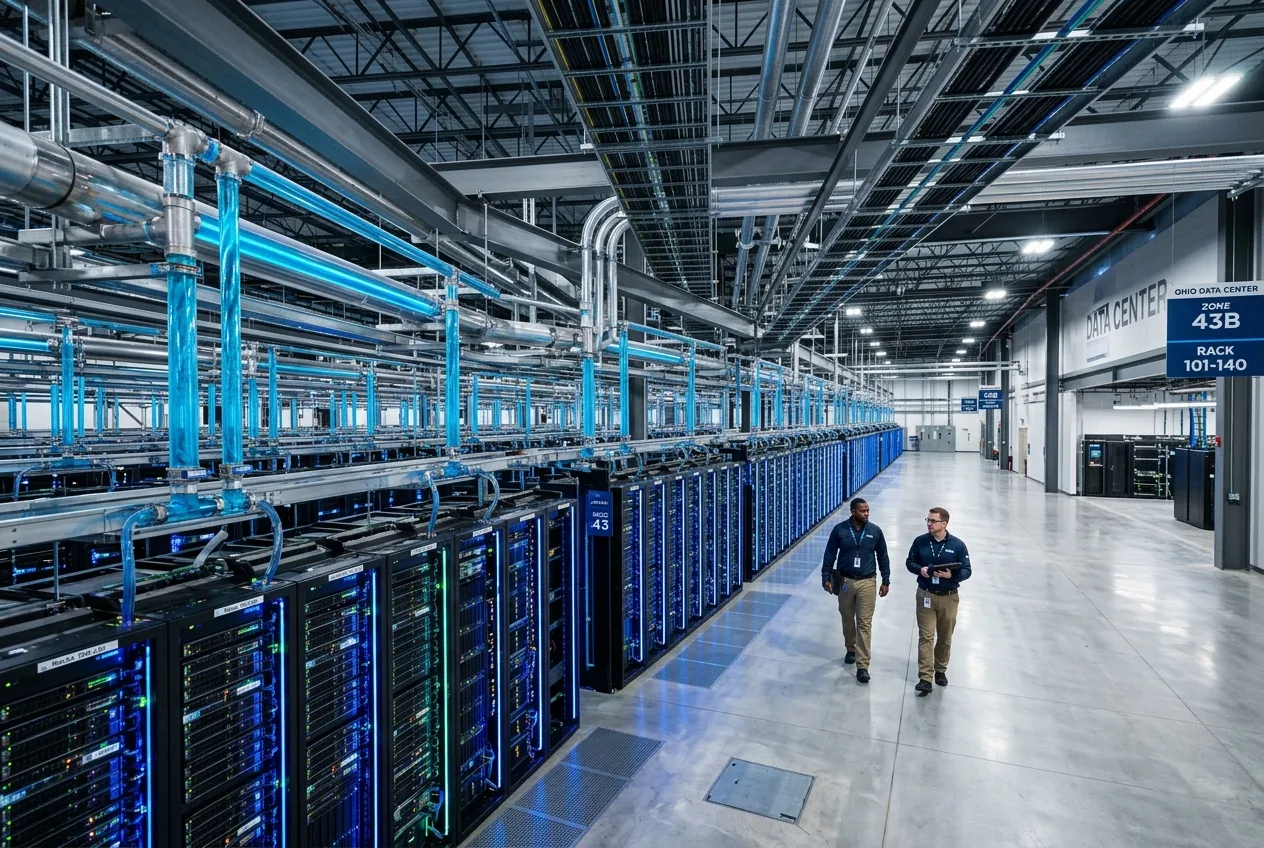
The primary driver behind OpenAI’s push for capital is the staggering cost of the physical infrastructure required to train and deploy next-generation models. OpenAI has recently signaled its intent to develop a massive data center project in Ohio in partnership with Nvidia, a project with a rumored price tag of $500 billion. This level of investment is unprecedented in the history of computing. It reflects a shift toward what many are calling the "industrialization of intelligence," where the limiting factors are no longer just code and algorithms, but power grids, cooling systems, and semiconductor supply chains.
OpenAI’s current financial standing shows a company with massive scale but equally massive burn rates. The company is reportedly generating more than $2 billion in monthly revenue, translating to an annualized run-rate of over $20 billion. With 800 million weekly active users, the platform’s reach is undeniable. However, despite this rapid expansion, internal projections suggest that OpenAI may not achieve true profitability until 2030. This long horizon toward a positive bottom line is precisely why a public listing is so attractive; it provides a way to fund the interim years of heavy capital expenditure through equity rather than debt or venture rounds.
A Competitive Race with Anthropic and SpaceX
OpenAI is not the only giant currently testing the appetite of the public markets. Its primary rival, Anthropic, has reportedly filed its own confidential IPO paperwork just days prior. Anthropic is entering the fray with a reported $965 billion valuation and a claimed $47 billion annualized revenue run-rate. The close proximity of these filings suggests a race for the "first-mover advantage" in the public AI space. Analysts suggest that the first of these companies to successfully list and report a profitable quarter will set the benchmark for the rest of the industry.
The market must also contend with the looming IPO of SpaceX, which is targeting a valuation of $1.75 trillion. The simultaneous arrival of these three mega-caps—OpenAI, Anthropic, and SpaceX—will be a historic test of investor demand. There is a genuine concern among economists that the sheer volume of capital required to absorb these listings could strain the market. If OpenAI lists against a more structurally sound or profitable Anthropic, it may face downward pressure on its valuation. The industrial utility of the underlying technology will be the ultimate arbiter of which company survives the transition to the scrutiny of quarterly earnings reports.
Governance and the Shift to a Public Benefit Corporation
One of the most complex aspects of OpenAI’s transition is its evolving governance structure. Originally founded as a non-profit, the company has undergone several restructurings to accommodate the influx of billions of dollars from Microsoft and other investors. As it moves toward an IPO, OpenAI is reportedly shifting toward a Public Benefit Corporation (PBC) model. This legal framework allows the company to balance its fiduciary duty to shareholders with its original mission of ensuring that artificial general intelligence (AGI) benefits all of humanity.
From a pragmatic standpoint, the PBC model provides a layer of protection against the short-termism often found in public markets. It allows the leadership to continue making massive, multi-year investments in infrastructure and safety research without being purely beholden to the next quarter’s profit margins. This structural change is likely a prerequisite for the IPO, as it reconciles the company’s high-cost research objectives with the requirements of being a publicly traded entity. For investors, it means betting on a company that is legally mandated to prioritize long-term technological stability over immediate cash flow.
Why is OpenAI Going Public Now?
The timing of this IPO filing is not accidental. Several factors have converged to make this the optimal moment for a move toward the public markets. First, the legal landscape has cleared significantly following the resolution of high-profile lawsuits, including the case brought by Elon Musk. With these legal overhangs removed, the company is in a much stronger position to undergo the rigorous due diligence required for a public debut.
Second, the technological roadmap suggests that we are approaching a period of diminishing returns for existing scaling laws, requiring even more massive leaps in compute power to achieve the next breakthrough. By securing a public listing now, OpenAI ensures it has the war chest necessary to fund the transition to more advanced architectures, such as recursive self-improvement models. The move is a recognition that the "startup" phase of AI is over; the industry is entering an era of heavy industrialization where the winners will be determined by who can most efficiently manage the bridge between complex hardware and the global market.
As we look toward the potential public debut this Friday or in the coming months, the focus remains on the viability of the AI business model. OpenAI’s $20 billion revenue is a testament to the utility of its tools, but the $500 billion infrastructure requirements represent a massive engineering challenge. The public markets will soon have the opportunity to vote with their capital on whether they believe this new industrial revolution is worth the trillion-dollar price tag. For those of us focused on the intersection of robotics and industry, the arrival of OpenAI on the stock exchange marks the beginning of AI’s life as a utility, as essential—and as capital-intensive—as power or steel.




Comments
No comments yet. Be the first!