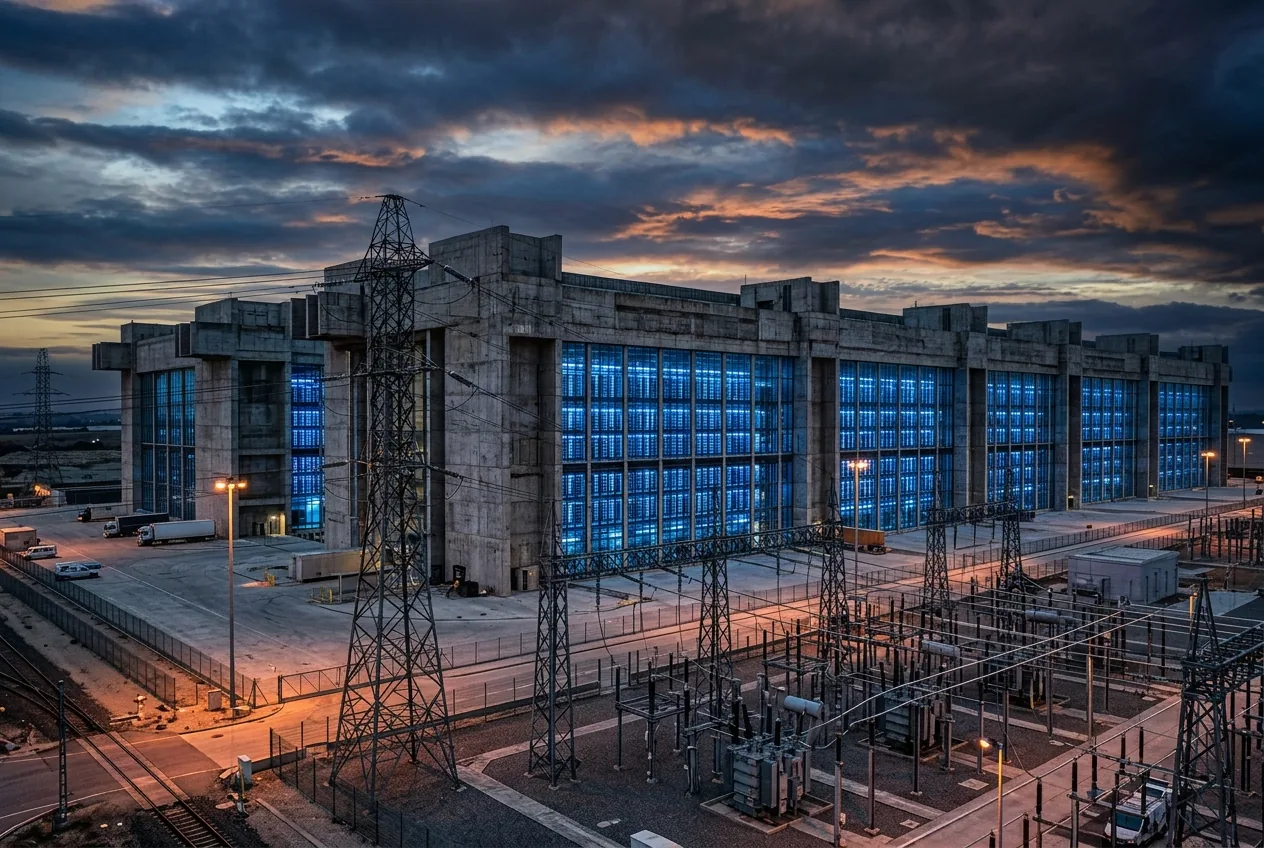
In an unprecedented blurring of sovereign power and venture capital, OpenAI has entered preliminary discussions with the Trump administration to transfer a 5% equity stake in the company directly to the federal government. Valued at roughly $42.6 billion based on the company’s recent $852 billion internal valuation, the prospective allotment would position the American public as a direct equity owner in one of the most commercially aggressive computing ventures in history. Far from an isolated gesture, the negotiations—confirmed across multiple reports—suggest an industrial calculus where frontier artificial intelligence firms trade equity for regulatory clearance, energy grid priority, and geopolitical shelter.
Chief Executive Sam Altman has carried the proposal across standard ideological lines, briefing not only President Donald Trump, Commerce Secretary Howard Lutnick, and Treasury Secretary Scott Bessent, but also Senator Bernie Sanders. The dialogue outlines an ambitious public-private architecture modeled partly on the Alaska Permanent Fund and partly on the sovereign wealth funds of petro-states. Under the framework, the upside of transformative automation would funnel directly into state coffers, ostensibly distributing technological dividends back to citizens while tethering the machine learning industry into the federal apparatus.
Yet behind the rhetoric of wealth distribution lies a pressing industrial reality. Frontier artificial intelligence is no longer software running lightly over consumer internet pipes; it is a heavy-industry discipline starved for gigawatts, sub-nanometer silicon, and federal approvals. As the Trump administration leans heavily into direct state equity as standard industrial policy, OpenAI’s proposal marks the formal arrival of state-backed compute capitalism in the United States.
The Blueprint of Equity-Driven Statecraft
The concept of Washington holding significant equity in domestic industry was once dismissed as state interventionism contrary to American capital markets. That doctrine dissolved over the past eighteen months. Under the current administration, the Department of Commerce and the Treasury have repeatedly tied federal industrial support, critical mineral access, and export protections to direct ownership stakes.
When President Trump publicly questioned why the government should not take equity in frontier AI labs during an unscripted address last month, he was not floating an abstract thought experiment. He was pointing directly to a tested, revenue-generating mechanism. For an administration focused on tangible returns and national security re-shoring, trading market access and regulatory exemptions for billions of dollars in enterprise value represents the logical evolution of modern tradecraft.
Frontier Clearances and the Squeeze on Compute
OpenAI’s sudden willingness to surrender equity is closely tied to intensifying bottlenecks in Washington. Over the past six months, regulatory bodies and defense reviews have systematically stalled the public rollout of next-generation foundation models. Both OpenAI’s impending GPT-5.6 release and frontier architectures from competitor Anthropic have faced federal delays over severe concerns surrounding automated offensive cyber capabilities, biosecurity parameters, and algorithmic resilience.
In late June, the White House formally requested that OpenAI limit the general commercial release of GPT-5.6, restricting deployment exclusively to a narrow tranche of vetted, government-approved enterprise partners. Concurrently, congressional committees have scrutinized the massive geographic footprints of next-generation data centers, which threaten municipal water supplies and place severe burdens on regional electrical grids. Expanding multi-gigawatt facilities requires unprecedented cooperation from federal utility regulators, public lands administrators, and the Department of Energy.
Designing the American AI Sovereign Wealth Fund
The mechanics of how such an equity stake would operate remain a subject of intense debate among economists and legal scholars. The administration’s prevailing design leans toward a sovereign holding vehicle that captures automated productivity gains and redeploys them into public programs or direct citizen disbursements. This framework borrows heavily from concepts long championed by Senator Bernie Sanders, who introduced the American AI Sovereign Wealth Fund Act with an eventual target capitalization of $7 trillion.
The structural objective is straightforward: establish a non-dilutive federal repository that gathers equity from the commanding heights of domestic automation. As automated systems and embodied robotic agents displace labor across logistics, engineering, programming, and administrative operations, traditional payroll and income tax bases will inevitably contract. Replacing lost human tax receipts with corporate dividends from state-owned shares of dominant model providers offers a hedge against fiscal degradation.
OpenAI explicitly laid the groundwork for this exchange in an industrial policy white paper titled Industrial Policy for the Intelligence Age, which argued that universal public wealth funds represent the only equitable solution to concentrated technological wealth. Under this mechanism, every American citizen would nominally hold an undivided interest in corporate returns, decoupled from individual stock market participation. Yet executing such a fund introduces complex corporate governance questions. A 5% voting or non-voting block held by the Treasury would make Washington the single most powerful voice at shareholder meetings, directly influencing board appointments, international customer selection, and open-source model releases.
The Multi-Lab Precedent and Supply Chain Ripples
Should the White House formalize an agreement with OpenAI, competitive dynamics will compel the rest of the domestic frontier ecosystem to consider matching the terms. Reports indicate that discussions have already touched on establishing a standardized 5% public ownership mandate for any domestic AI developer seeking tier-one defense infrastructure classification or federal compute subsidies.
For competitors like Anthropic—also quietly laying the groundwork for an IPO while navigating regulatory scrutiny over model safeguards—the precedent creates a sharp dilemma. Refusing to offer equity could leave rivals on the outside of high-margin defense procurement pipelines, federal energy land allocations, and expedited model review channels. Conversely, yielding equity directly to the state complicates private valuations, alarms overseas sovereign wealth investors, and threatens to turn the development of foundation models into a state-directed enterprise.
The downstream consequences for physical automation and industrial robotics are equally profound. Foundation models are migrating rapidly out of software sandboxes and into physical end-effectors, multi-axis robotic workcells, and automated warehouse fleets. If the algorithmic engines driving industrial automation become partially nationalized assets, the deployment of robotic labor shifts from a pure capital expenditure decision into a component of domestic industrial strategy. Tax write-offs, domestic assembly mandates, and compute subsidies could become strictly conditional on using federally aligned intelligence platforms.
The Structural Compromises of State Ownership
Treating high-variance, speculative technology companies like capital-intensive public utilities carries structural liabilities that balance-sheet enthusiasts often overlook. Unlike rare earth mines or semiconductor fabrication plants, whose physical assets hold enduring strategic value regardless of corporate execution, software-driven frontier models exist in a hyper-competitive, structurally unstable environment. Algorithmic breakthroughs, open-weight model proliferation, and architectural efficiencies can wipe away competitive moats in months.
If the federal government assumes significant equity stakes in leading AI labs, it risks developing a protective bias toward those specific enterprises. Regulators tasked with policing model safety, workplace automation disruption, and antitrust compliance would simultaneously sit in offices accountable for maximizing the yield of the government’s corporate portfolio. A government that profits directly from OpenAI’s market capitalization may find itself structurally disincentivized from enforcing rigorous competitive antitrust measures against it.
The boundary separating private enterprise from sovereign authority is dissolving along the compute supply chain. The dialogue between Sam Altman and the Trump administration signals that the compute race has fully crossed the threshold from Silicon Valley disruption into state-directed industrial reality. The machine intelligence infrastructure of the next century is not simply being financed by private capital markets—it is being carved into the sovereign balance sheet of the United States.




Comments
No comments yet. Be the first!