The artificial intelligence industry has spent the last two years locked in a state of high-performance refinement. Since the debut of GPT-4, the major players—OpenAI, Anthropic, and Google—have largely focused on optimizing existing architectures. We have seen the rise of post-training, reinforcement learning from human feedback (RLHF), and inference-time scaling, but the core engines driving these models have remained relatively static. That period of refinement appears to be ending. Reports originating from industry insiders and technical analysts suggest that OpenAI is preparing to deploy GPT-6, a model codenamed Astra, boasting a staggering 10 trillion parameters. This represents a five-fold increase in scale over its predecessor and a direct challenge to the current dominance of Anthropic’s high-end offerings.
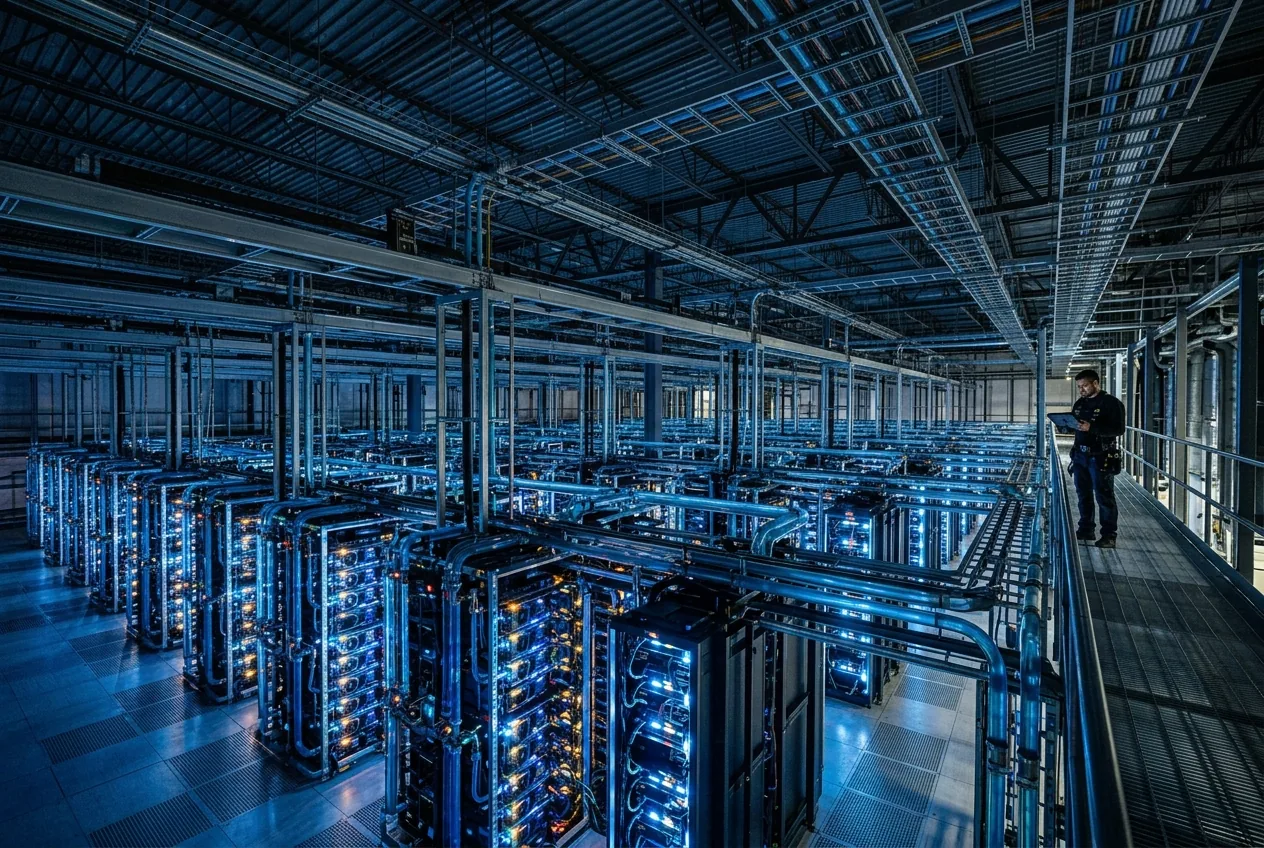
For those of us tracking the mechanical and industrial requirements of AI, this shift is more than just a software update; it is a massive engineering undertaking. Training a 10-trillion parameter model requires a level of computational density and thermal management that pushes the limits of current data center infrastructure. If these rumors hold true, OpenAI is moving beyond the "pre-training wall" that many critics believed would stall the progress of large language models. This isn't just a tweak to the algorithm; it is a complete replacement of the underlying engine that has powered OpenAI’s products since the spring of 2024.
The Technical Leap from GPT-4 to Astra
Speculation surrounding Astra indicates it was built on a new pre-training foundation that surpasses previous datasets. Reports mention a training corpus of approximately 10 trillion tokens, paired with a context window that could reach 1.5 million tokens. For industrial applications, this expanded context window is the most critical metric. It allows for the ingestion of massive technical manuals, entire codebases, or complex supply chain manifests into the model’s active memory, providing a level of operational continuity that previous iterations simply could not match. This isn't just about the model being "smarter"; it is about the model having a larger workspace for complex logical reasoning.
The urgency behind this launch is largely attributed to the competitive pressure from Anthropic. In the high-stakes game of AI development, OpenAI has felt the heat as Anthropic’s Fable and Opus models gained ground in reasoning benchmarks. The strategy for August appears to be a "forced launch," moving forward despite regulatory scrutiny and internal safety pauses. This suggests that the leadership at OpenAI views the current market position as a zero-sum game where being second to the next frontier of scale is an existential risk.
Is the Scaling Law Reasserting Its Dominance?
The project codenamed Doug is described as an "epic behemoth" set for a late-year release. Unlike Astra, which is designed to capture immediate market attention and counter Anthropic’s Fable 5.1, Doug is reportedly being trained on Nvidia’s next-generation Vera Rubin architecture. If Astra is a five-fold increase over GPT-4, Doug is rumored to be an order of magnitude more complex. This dual-track strategy reveals OpenAI’s roadmap: use Astra to stabilize the market in August, and use Doug to secure an undisputed lead by November.
The transition to Vera Rubin chips is a significant technical detail. These chips represent the next evolution beyond the Blackwell architecture, offering higher memory bandwidth and more efficient HBM3e integration. Leveraging this hardware suggests that OpenAI has secured a preferential supply chain position, allowing them to utilize chips that have not yet seen widespread deployment. From a mechanical engineering perspective, the power draw for these clusters will be unprecedented, likely requiring advanced liquid cooling solutions to maintain the stability of the hundreds of thousands of GPUs involved in the training process.
The Rivalry with Anthropic and the Horse Racing Strategy
The timing of the GPT-6 leak coincides with Anthropic’s preparation for Fable 5.1. Industry analysts have likened this to the "Tian Ji’s horse racing" strategy—a classical Chinese military metaphor where one uses various tiers of assets to counter an opponent’s moves. Anthropic reportedly held back its most powerful model, Opus 5, to serve as a hidden reserve. By launching Fable 5.1 in August, they intend to meet Astra head-on, forcing OpenAI to reveal its hand before the end of the year.
This competitive pressure has effectively ended the quiet period of AI development. For two years, the industry relied on post-training optimizations because they were cheaper and safer. Now, the battle has returned to the core engine. The "pre-training wall" was essentially a bottleneck of data quality and hardware reliability. By resolving these issues through projects like Garlic—a smaller validation experiment that paved the way for Doug—OpenAI appears to have found a path forward. The focus is no longer just on how the model reasons, but on the sheer breadth of its initial world-model, established during that massive 10-trillion token pre-training phase.
The implications for industrial robotics and supply chain automation are profound. A model with the logical depth of Astra can serve as a central controller for complex robotic fleets, handling edge cases that current systems find baffling. In my work mapping the interface of robotics and industry, the primary hurdle has always been the lack of generalized reasoning in unstructured environments. A 10-trillion parameter model, trained on a more diverse set of multimodal data, could provide the "brain" needed to bridge the gap between a robot that performs a scripted task and one that can adapt to a shifting factory floor.
A Shift in the AI Power Structure
As OpenAI and Anthropic gear up for this decisive battle, the third member of the traditional "Big Three"—Google—appears to be undergoing a period of structural instability. The recent departure of Jeff Dean, a cornerstone of Google’s AI research for nearly three decades, alongside the transition of DeepMind’s Demis Hassabis to a Chairman role, signals a changing of the guard. Google, once the birthplace of the Transformer architecture, is increasingly seen as a talent pipeline for its more agile competitors.
This leaves the track clear for a two-way race toward Artificial Superintelligence (ASI). While Google’s Gemini 3 remains a formidable competitor, the momentum has shifted toward the laboratories that are willing to take the massive financial and technical risks associated with 10-trillion parameter models. The cost of training Doug alone is likely in the billions of dollars, factoring in hardware procurement, energy consumption, and the acquisition of high-quality proprietary data.
Whether GPT-6 arrives in August as a fully polished product or a "forced" release remains to be seen. However, the technical specifications alone tell us that the era of incremental gains is over. We are entering a phase of brute-force scaling, backed by the most sophisticated mechanical and computational infrastructure ever assembled. For those of us in the field, the question isn't just whether the scaling laws work, but how we will manage the sheer industrial power required to keep them functioning. As we look toward the end of the year, the arrival of Astra and Doug will determine the ceiling of AI capabilities for the next decade.




Comments
No comments yet. Be the first!