OpenAI has officially launched its GPT-5.6 family of frontier artificial intelligence models alongside a new agentic platform dubbed ChatGPT Work, concluding a high-stakes standoff between private model development and federal oversight. The release encompasses three distinct model tiers—Sol, Terra, and Luna—integrated across ChatGPT, Codex, and the company's enterprise application programming interface. The public deployment comes only after OpenAI complied with Trump administration requests to pause the rollout, subjecting the system to closed-door national security evaluations and limiting early access to state-approved red teams.
The brief regulatory pause signals a fundamental shift in how frontier models reach production. Artificial intelligence releases at this scale are no longer treated as standard software deployments; rather, federal agencies are treating them with the caution traditionally reserved for dual-use export technologies and critical defense infrastructure. As high-parameter models gain autonomous capability in software engineering, systems administration, and data extraction, the friction between rapid corporate shipping cadences and national security review is becoming a permanent engineering constraint.
The Tri-Tier Architecture: Sol, Terra, and the Economics of Luna
Rather than shipping a monolithic frontier system, OpenAI has structured the 5.6 release around operational cost and compute optimization. At the top of the compute stack sits GPT-5.6 Sol, which OpenAI claims as its most capable model to date. Benchmark telemetry released by the lab positions Sol within striking distance of Anthropic’s Mythos model, demonstrating near-parity across multi-step mathematical proofs, autonomous vulnerability scanning, and cross-codebase synthesis. Achieving parity with Mythos required weeks of hardening against adversarial prompts and state-level cyber scenarios following White House inquiries.
For enterprise and industrial deployers, however, the real operational value lies in the secondary tier: GPT-5.6 Terra. OpenAI states that Terra delivers computational performance essentially identical to the previous-generation GPT-5.5, but at exactly half the inference cost. In practical industrial operations, where machine-to-machine integrations execute millions of autonomous API calls per week, raw benchmark supremacy is routinely discarded in favor of token unit economics. Cutting inference expenditure by 50 percent without sacrificing foundational reasoning provides enterprise developers with a path toward positive return on investment for large-scale data transformation and routine logistical parsing.
Rounding out the release is Luna, an ultra-compact tier engineered specifically for low-latency tasks and edge-adjacent workflows. Luna trades deep philosophical context and multi-turn abstract reasoning for rapid token throughput and negligible hosting costs. For manufacturing environments, localized sensory processing, and deterministic query matching, small footprint models like Luna offer the deterministic responsiveness that high-parameter reasoning engines struggle to supply under heavy server loads.
ChatGPT Work and the Absorption of the Atlas Browser
Coinciding with the model rollout, OpenAI announced ChatGPT Work, an enterprise agent platform designed to translate programmatic reasoning into white-collar and industrial operations. ChatGPT Work marries the script-generation and execution environments of Codex with ChatGPT’s conversational interface, but expands the paradigm by allowing the model to interact autonomously across third-party software stacks. The agent is explicitly engineered for long-horizon task execution, breaking down compound organizational mandates into sequential steps and operating without continuous human intervention for hours at a time.
Instead of merely returning blocks of code or generated text, the agent acts directly upon organizational data layers. It ingests unorganized telemetry, parses spreadsheets, assembles presentation decks, and can even spin up containerized web applications. To achieve this level of persistent tool use, OpenAI resolved significant engineering hurdles related to memory management, context window decay, and cumulative error propagation—the chronic failure mode where an agent makes a slight computational misstep in step two and spirals off-course by step twenty.
The debut of ChatGPT Work also marks the immediate end of OpenAI’s experimental Atlas browser, which has been sunsetted just nine months after its public debut. The company candidly framed the retirement of Atlas not as a programmatic failure, but as an applied telemetry pipeline. The data harvested from user interactions, browser automation failures, and open-web agent trajectories inside Atlas was directly fed into the architecture that powers ChatGPT Work. The web-browsing agent has been extracted from the standalone client and embedded straight into the enterprise workflow engine.
Federal Intervention and the Precedent of Model Containment
The path to GPT-5.6's release was disrupted when the Trump administration intervened in late June, citing deep national security concerns regarding cyber-offensive automation. Federal officials requested that OpenAI withhold public access, restricting deployment to an insular circle of government-vetted partners while security evaluations were completed. OpenAI acknowledged that its engineering divisions spent subsequent weeks pressure-testing the system, discovering systemic vulnerabilities, and fortifying the model against exploitation vectors capable of being weaponized against critical digital infrastructure.
This federal intervention is not an isolated friction point. Anthropic faced an identical hurdle earlier this year with its Mythos series. After previewing the model, Anthropic deferred release over automated cyber-defense risks, subsequently rolling out a restrained iteration known as Claude Fable 5. Days later, federal authorities pressured Anthropic to pull even that release temporarily. Currently, Anthropic’s highest-performing architecture remains sequestered, accessible only to an approved consortium of United States defense entities and critical infrastructure operators. OpenAI's ability to release Sol publicly implies that the lab satisfied federal security thresholds that Anthropic’s tier-one models are still navigating.
The emergence of closed-door testing protocols suggests that the boundary between private commercial software and state-regulated infrastructure has dissolved. Tech policy analysts and engineering leaders have expressed growing unease over the opacity of these government frameworks. Without clear, publicly accessible criteria defining what constitutes unacceptable algorithmic capability, private research labs face unpredictable regulatory latency that complicates product roadmaps, cloud compute contracts, and capital allocation.
Compute Realities and Infrastructure Pressures
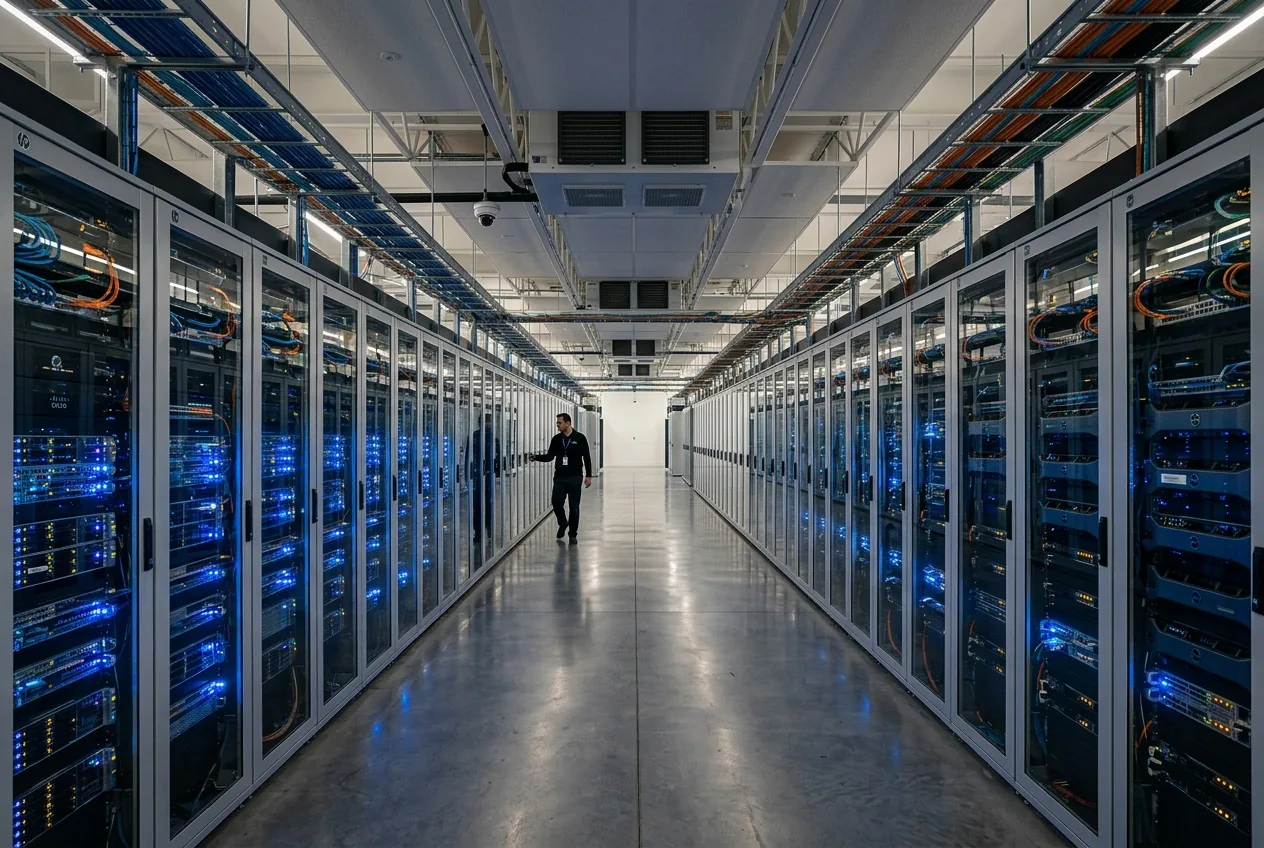
Beneath the software interface and geopolitical negotiations lies the brutal physical reality of datacenter infrastructure. Frontier artificial intelligence systems are entirely dependent on colossal energy consumption, specialized cooling systems, and massive clusters of enterprise silicon. The deployment of the GPT-5.6 lineup comes against a backdrop of severe capacity constraints across the industry. Just weeks prior to this release, OpenAI was forced to pause sign-ups for its high-tier subscriptions as unmanageable consumer demand for preliminary models bottlenecked internal compute clusters.
The hardware crunch cascades outward into the broader financial and industrial ecosystem. Delays in model releases and regulatory friction create immediate volatility for key cloud infrastructure providers, including Oracle and Microsoft, who have invested tens of billions of dollars constructing power grids, substations, and high-density liquid-cooled server racks to support these neural networks. When software releases stall due to regulatory inquiries, datacenter capital expenditure models stall alongside them, dragging on public equities and private development timelines alike.




Comments
No comments yet. Be the first!