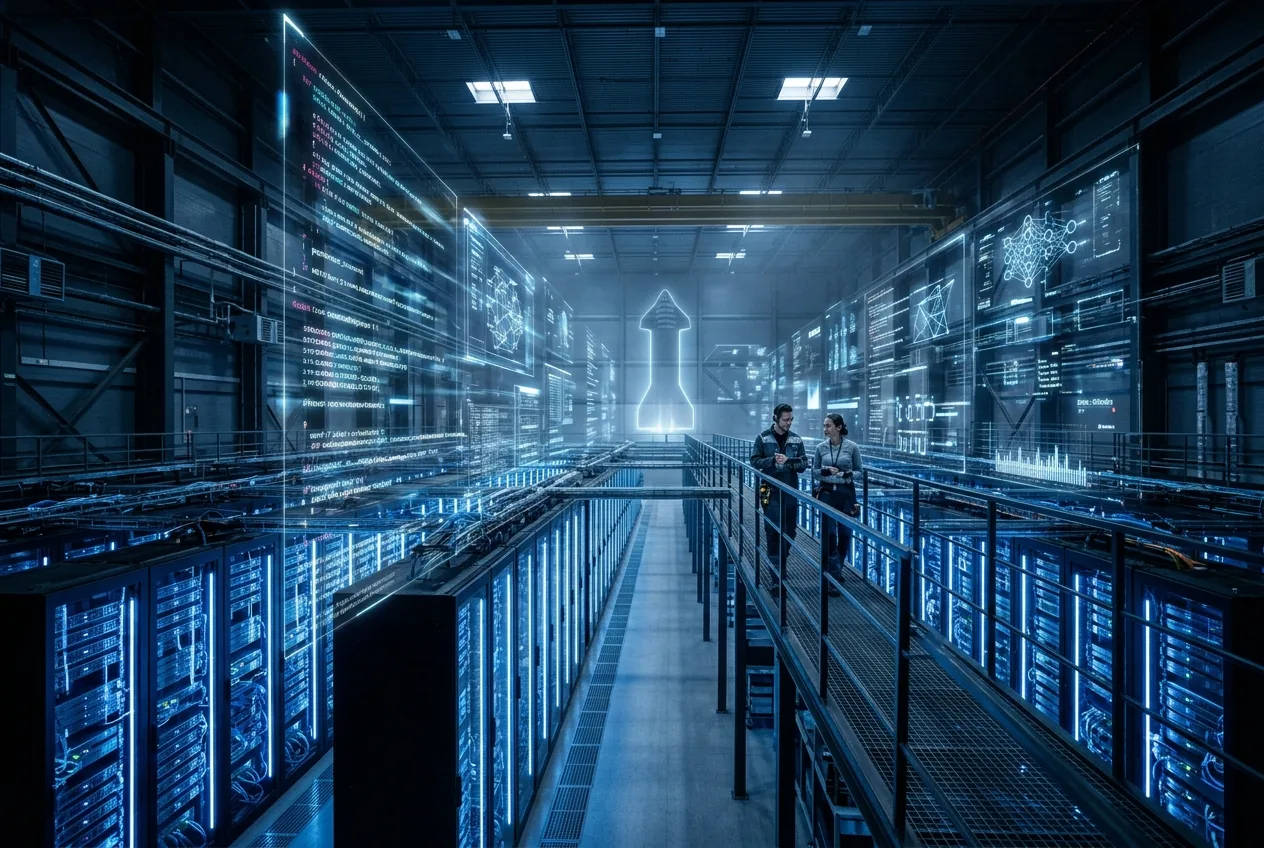
In a move that fundamentally redefines the scope of the modern aerospace and technology sectors, SpaceX has announced the acquisition of Anysphere, the startup behind the AI-powered coding editor Cursor. The $60 billion all-stock transaction represents the first major M&A maneuver for SpaceX since its blockbuster initial public offering, signaling that Elon Musk’s firm is no longer content with merely dominating the launch and satellite markets. By absorbing one of the most successful generative AI startups in the developer tools space, SpaceX is positioning itself as a primary contender in the multi-trillion-dollar enterprise AI market.
The deal, disclosed in a Form 8-K filing with the U.S. Securities and Exchange Commission, comes on the heels of SpaceX’s valuation surging past $2.9 trillion. For an organization that recently pitched IPO investors on an addressable market worth nearly $28.5 trillion, the acquisition of Cursor is a pragmatic step toward capturing the high-margin software revenue that usually eludes hardware-centric companies. By integrating Cursor’s agentic coding capabilities into its existing xAI ecosystem, SpaceX aims to close the gap with established AI heavyweights like OpenAI and Anthropic.
The Engineering Logic Behind the Acquisition
From a technical perspective, the acquisition of Cursor is more than a simple expansion of the product portfolio; it is a tactical vertical integration of development infrastructure. Cursor has gained significant traction among software engineers by moving beyond simple autocomplete functions to provide what it calls a "unified workspace for building software with agents." Unlike traditional Integrated Development Environments (IDEs), Cursor’s architecture is designed to understand entire codebases, allowing AI agents to navigate complex file structures and execute multi-step engineering tasks autonomously.
For SpaceX, the utility of such a tool is twofold. Internally, the sheer volume of software required to manage Starlink’s global constellation and the flight systems of Starship demands a level of automation that exceeds current manual capabilities. Externally, the acquisition provides SpaceX’s xAI division—which was absorbed into the parent company in February 2026—with a massive dataset of developer interactions, design decisions, and coding requests. This data is the lifeblood of Grok, SpaceX’s flagship AI model, and its specialized coding variant, Grok Build. By combining Cursor's user interface with xAI’s compute resources, the company plans to release a new class of "agentic" coding models that can theoretically handle architectural-level engineering challenges with minimal human oversight.
The synergy between these two entities has been in development for several months. Before the buyout was finalized, SpaceX and Cursor engineers were reportedly jointly training models that are expected to debut later this year. This collaboration aims to rectify a historical bottleneck for Cursor: the lack of massive-scale compute power. While Cursor had the talent and the user base, it lacked the data centers and the hardware access that SpaceX now possesses through its aggressive infrastructure investments and its recent $26 billion cloud leasing deals with other industry players.
The Economic Viability of a $60 Billion Stock Deal
To the casual observer, a $60 billion price tag for a coding startup might seem like an overvaluation. However, when analyzed through the lens of SpaceX’s current market standing, the deal is a masterclass in leveraging equity. Following its IPO, SpaceX shares have climbed more than 56% to trade above $211. By using an all-stock transaction, SpaceX is able to acquire a company generating approximately $2.6 billion in annualized B2B revenue without depleting its cash reserves. As billionaire investor Bill Ackman noted, the high valuation of SpaceX means that the dilution for existing shareholders is relatively minor compared to the strategic advantage gained.
The deal structure also includes protective measures that reflect the high-stakes nature of the AI race. SpaceX has agreed to a $10 billion termination fee if the deal collapses under specific conditions, though that figure drops to $4 billion if the failure is due to antitrust hurdles. This tiered penalty structure indicates a high degree of confidence from both parties that the merger will pass regulatory scrutiny. For Anysphere’s backers, which include Andreessen Horowitz, Nvidia, and Google’s parent company Alphabet, the deal represents a massive exit that values the startup significantly higher than its previous $50 billion funding talks.
Financially, the move places SpaceX on a collision course with the world's largest companies. If current stock gains hold, SpaceX is on track to overtake Amazon in market capitalization, trailing only a handful of tech giants like Microsoft and Apple. The transition from a rocket manufacturer to an integrated hardware-software powerhouse is essential for maintaining this valuation. While launch services provide a steady floor, it is the enterprise AI applications—which SpaceX estimates could be worth up to $22.7 trillion—that provide the ceiling for future growth.
Addressing the Risks of Agentic Autonomy
Furthermore, the acquisition raises questions about SpaceX’s role as a service provider to other AI companies. Recently, SpaceX struck multibillion-dollar deals to lease out its vast data center capacity to Anthropic and Google. While these agreements currently stand, they include 90-day termination clauses. If usage of Grok and Cursor reaches a critical mass, SpaceX has the option to reclaim that computing power for its own internal projects, effectively turning its current partners into potential competitors for resources. This flexibility allows the company to act as both an infrastructure provider and a primary consumer, a dual role that maximizes its leverage in the AI supply chain.
As the acquisition moves toward its expected close in the third quarter of 2026, the focus will shift to how quickly Cursor’s specialized tools can be scaled to meet the needs of the Fortune 500. For the engineering community, the union of Musk's industrial scale and Cursor's agile software development marks a new era. The goal is no longer just to help developers write code faster, but to build an ecosystem where the software can essentially write and maintain itself, freeing human engineers to focus on higher-level systems architecture and innovation. For SpaceX, the final frontier is no longer just orbit; it is the fundamental logic that governs the digital and physical worlds.




Comments
No comments yet. Be the first!