The transition of OpenAI from a niche research collective to a prospective public entity marks the end of the first era of generative AI and the beginning of the industrial AGI age. While the financial media often focuses on the valuation—a figure likely to eclipse any previous tech debut—the real story lies in the physical and mechanical requirements of the software OpenAI is building. For those of us focused on the intersection of robotics and industrial automation, an IPO is not merely a liquidity event; it is a declaration that the capital expenditure required to reach Artificial General Intelligence (AGI) has surpassed the capacity of private venture markets. It is a pivot from ‘move fast and break things’ to ‘scale massive and build things.’
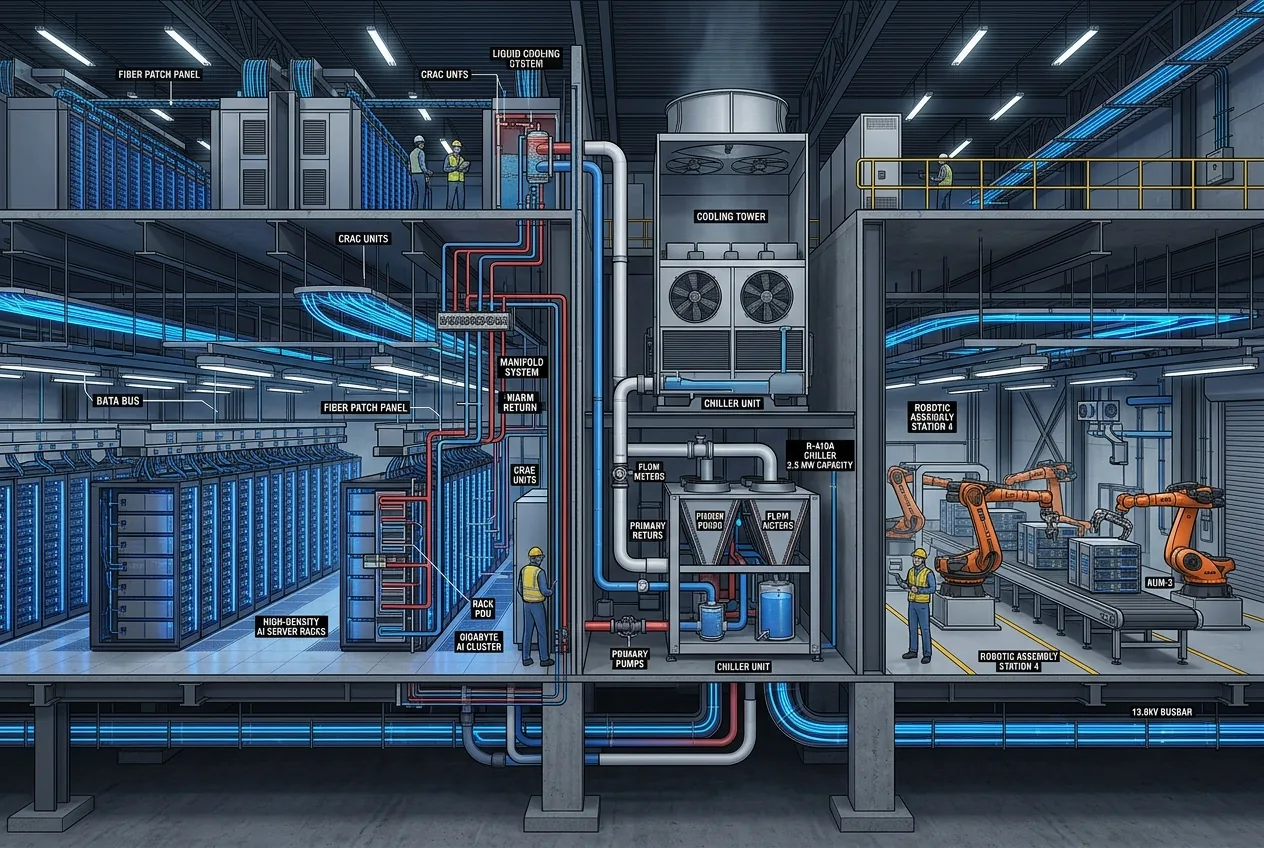
To understand the necessity of this shift, one must look at the brutal physics of the scaling laws. The relationship between compute power, data volume, and model performance remains linear on a logarithmic scale, meaning that to achieve the next order of magnitude in intelligence, the underlying hardware infrastructure must grow exponentially. This is no longer a matter of writing better code in a vacuum. It is a matter of securing hundreds of thousands of high-end GPUs, building bespoke power substations, and cooling massive data centers. OpenAI is no longer just a software company; it is an architect of the world’s most complex mechanical and thermal systems.
The Architecture of the Compute-Industrial Complex
The core driver behind a public offering is the sheer cost of inference and training. In the early days of GPT-2 and GPT-3, training runs were measured in millions of dollars. Today, training a frontier model is measured in billions. This capital is deployed into physical assets: NVIDIA H100 and B200 clusters, high-bandwidth memory (HBM), and sophisticated liquid-cooling manifolds. As a mechanical engineer, I see OpenAI’s trajectory as a mirroring of the early 20th-century automotive industry. Just as Ford had to vertically integrate steel production and rubber plantations to make the Model T viable, OpenAI is now forced to integrate deeply into the energy and semiconductor supply chains.
Will Public Accountability Stifle Research Autonomy?
The most significant tension in OpenAI’s public filing is the conflict between its original non-profit mission and the fiduciary duties of a publicly traded corporation. For years, the ‘capped-profit’ model served as a buffer, theoretically allowing the company to prioritize safety and AGI alignment over quarterly earnings. However, the move to a traditional corporate structure suggests that the pragmatic need for capital has won out over the experimental governance structures of the past. From a technical standpoint, this is a double-edged sword.
On one hand, public scrutiny demands a level of operational transparency that has been sorely lacking in the ‘black box’ of frontier model development. Investors will demand clarity on unit economics—specifically, the energy-to-intelligence ratio. How much electricity is consumed for every million tokens generated, and how does that translate to margin? This pressure will likely force OpenAI to focus more on efficiency and optimization, potentially leading to breakthroughs in small-language models (SLMs) and more efficient transformer architectures that can run on edge devices without a constant cloud tether.
On the other hand, the pressure for constant growth could divert resources from long-term safety research toward immediate commercial applications. In the robotics sector, we have seen this before: companies often abandon the difficult work of general-purpose manipulation to focus on simpler, more profitable repetitive tasks. If OpenAI is forced to chase short-term revenue, the dream of a truly general-purpose robotic brain might be delayed in favor of better chatbots for customer service. The engineering challenge is to ensure that the drive for profitability does not come at the expense of the rigorous testing required for systems that interact with the physical world.
The Move Toward Embodied AI and Physical Robotics
Perhaps the most compelling reason for OpenAI to seek massive public funding is its burgeoning interest in embodied AI. We are seeing a strategic shift where the ‘brain’ (the LLM) is being integrated into various ‘bodies’ (humanoid and industrial robots). This was recently evidenced by OpenAI’s renewed partnership with Figure AI and their internal robotics team’s expansion. Developing the software for a robot is an entirely different beast than developing a text-based AI. It requires real-time processing, low-latency feedback loops, and an understanding of Newtonian physics that current models only approximate.
For a robot to function in a dynamic industrial environment, it must process multimodal data—visual, tactile, and auditory—simultaneously. This requires localized compute and highly optimized inference engines. By going public, OpenAI can fund the acquisition of robotics firms or invest heavily in the specialized hardware needed to bridge the gap between digital reasoning and physical action. This is where my focus as a mechanical engineer sharpens: the bottleneck for the next decade will not be the code, but the actuators, the sensors, and the battery energy density required to keep an AI-powered humanoid operating for an eight-hour shift.
The industrialization of AI also means solving the ‘data wall’ problem. We are running out of high-quality human-generated text to train on. The next frontier of data is physical data—videos of robots performing tasks, tactile sensor logs, and synthetic data generated within high-fidelity physics simulators. Building these simulators and collecting this data at scale is an infrastructure project on par with the interstate highway system. An IPO provides the permanent capital base necessary to undertake such a multi-decade project.
Energy Sovereignty and the Data Center Problem
No discussion of OpenAI’s future is complete without addressing the elephant in the room: energy. The power requirements for the next generation of AI clusters are staggering, often exceeding the capacity of local grids. We are already seeing tech companies explore the purchase of decommissioned nuclear plants or investing in fusion startups like Helion Energy. For OpenAI, being a public company allows it to enter into long-term power purchase agreements (PPAs) and infrastructure bonds that are typical of utility companies rather than software startups.
This transition toward energy verticalization is a pragmatic response to a supply chain constraint. If the goal is AGI, and AGI requires a gigawatt-scale data center, then OpenAI must become, in part, an energy company. This has profound implications for global logistics and national security. A public OpenAI becomes a ‘national champion’ for the United States, a critical piece of infrastructure that the government will likely protect and regulate in equal measure. The mechanical complexity of managing these massive thermal loads and ensuring 99.999% uptime is an engineering challenge that requires a mature, well-funded corporate structure.
Ultimately, the filing for an IPO represents the maturation of the AI industry. It is a transition from the era of the ‘research paper’ to the era of the ‘product.’ For those of us in the mechanical and industrial fields, this is a welcome shift. It moves the conversation away from philosophical debates about consciousness and toward the practical realities of torque, throughput, and thermal management. OpenAI is ready to stop being a laboratory and start being a factory—a factory that produces the most valuable commodity in the 21st century: intelligence.




Comments
No comments yet. Be the first!