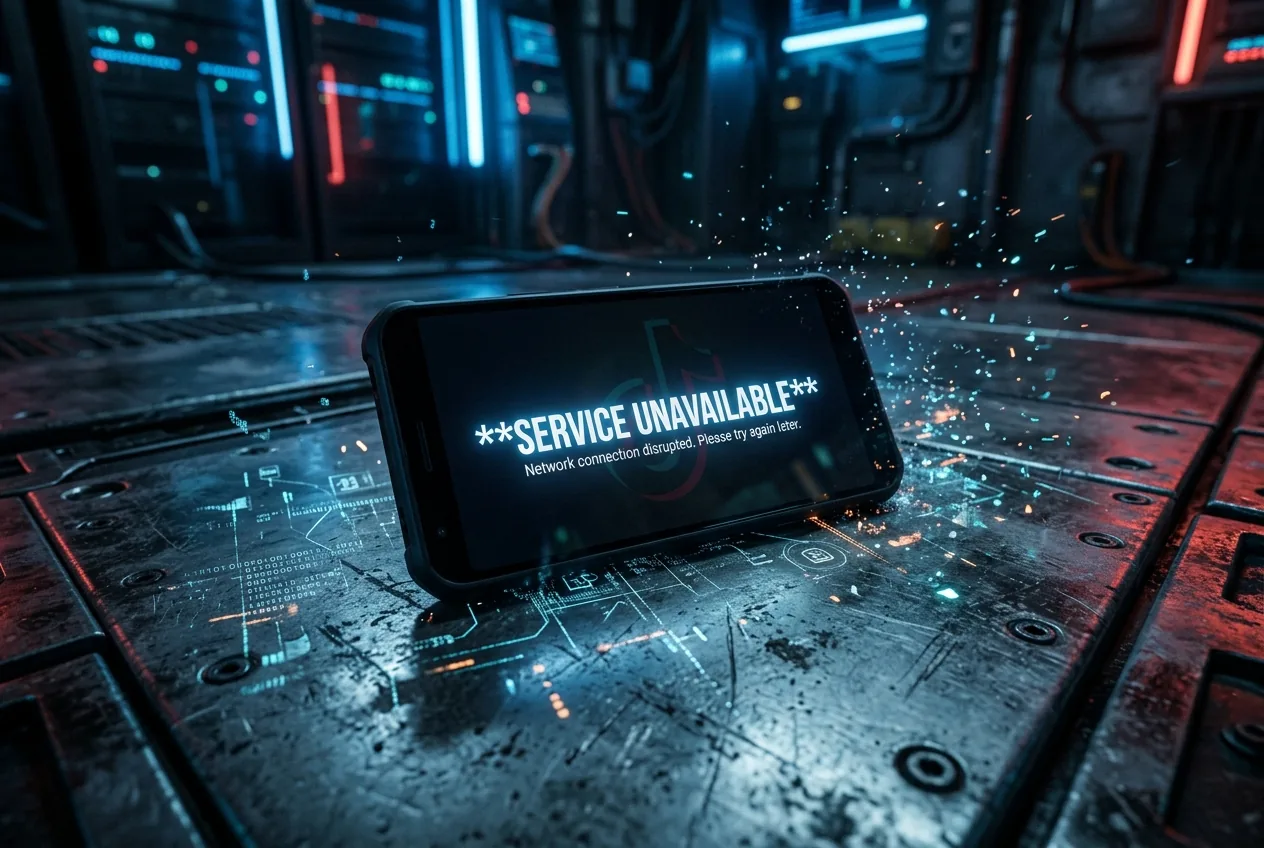
On the evening of Saturday, January 18, 2025, the digital landscape of the United States underwent a seismic shift. TikTok, the cultural juggernaut that has served as the primary information and entertainment hub for 170 million Americans, effectively ceased operations. The platform, owned by Beijing-based ByteDance, began displaying a static termination notice to its massive user base, signaling the enforcement of a federal law that had been looming over the company for months. Simultaneously, the application vanished from the Apple App Store and Google Play Store, marking one of the most significant government-mandated removals of a commercial software product in history.
The timing of the shutdown—occurring just 48 hours before the inauguration of President-elect Donald Trump—created a volatile intersection of legislative finality and executive uncertainty. For technical observers and market analysts, the event is more than a social media outage; it is a stress test for the legal and digital infrastructure of the United States. As the "off switch" was flipped, the vacuum left behind has already begun to trigger a realignment of the creator economy and a desperate scramble for acquisition, headlined by a last-minute merger proposal from the AI-driven search startup Perplexity.
The Legislative Kill Switch and Judicial Sanction
The White House, through Press Secretary Karine Jean-Pierre, maintained that the responsibility for the platform’s future now rests with the incoming administration. While the Biden administration provided the legal framework for the ban, the actual enforcement phase has intersected with the transition of power, creating a unique window of opportunity for political intervention. The abruptness of the shutdown suggests that ByteDance opted for a hard stop to illustrate the severity of the ban’s impact, potentially to put pressure on the incoming executive branch to follow through on promises of a reprieve.
The Trump Reprieve and the 90-Day Extension
However, the technical logistics of a 90-day reprieve are complex. Once an app is removed from the stores and its backend services are throttled or geo-fenced, bringing it back to full functionality requires a coordinated effort between the developer and the infrastructure providers. If the Trump administration issues an executive stay on the ban, Apple and Google would need to be legally cleared to re-list the application. Furthermore, the 170 million users who found themselves locked out on Saturday night would need to re-authenticate, a process that could see significant attrition as users migrate to competing platforms like Instagram Reels, YouTube Shorts, or the emerging Chinese-owned alternative, RedNote.
The economic stakes of this pause are staggering. Analysts estimate TikTok’s US operations to be worth upwards of $50 billion. A 90-day window provides a breathing room for potential suitors, but it also maintains a state of limbo that is damaging to the platform’s advertising revenue. Marketing firms, which have relied on TikTok’s hyper-efficient algorithm to reach younger demographics, have reportedly been in a "hair on fire" panic, shifting budgets to Meta and Snap as a hedge against a permanent blackout.
The Perplexity Pivot: A New Era for AI and Social Video?
In a move that surprised both the tech industry and the financial sector, Perplexity AI—a startup positioned as a direct competitor to Google Search—submitted a bid on Saturday to merge with TikTok US. This proposal represents a radical departure from traditional social media acquisition strategies. While previous interest in TikTok came from retail giants like Walmart or software conglomerates like Oracle, the Perplexity bid suggests a future where social video is integrated into the next generation of artificial intelligence.
Why would an AI search company want a short-form video platform? The answer lies in the data. TikTok’s primary asset is not just its user base, but its vast corpus of multi-modal data—millions of hours of video where users explain concepts, review products, and discuss news. For an AI company like Perplexity, this data is a goldmine for training Large Language Models (LLMs) to understand human speech, gesture, and visual context in real-time. A merger could transform TikTok from a passive entertainment app into a multi-modal search engine where AI processes video content to answer user queries with unprecedented precision.
Furthermore, TikTok’s recommendation algorithm is arguably the most sophisticated piece of consumer-facing software in existence. Integrating this "interest engine" with Perplexity’s generative search capabilities could create a new category of digital service. However, the bid faces steep hurdles. Regulatory scrutiny regarding AI monopolies and the existing national security concerns surrounding ByteDance’s code base remain significant obstacles. Nevertheless, the bid underscores the reality that TikTok is no longer viewed simply as a toy for Gen Z, but as a critical piece of industrial-grade data infrastructure.
Economic Fallout and the Scramble for the 'TikTok Refugee'
As the app went dark, the immediate beneficiary was the competition. Shares in Meta and Snap have seen significant gains as investors anticipate a massive influx of daily active users and advertising dollars. However, the migration isn't just going to established American giants. RedNote (Xiaohongshu), often described as China’s answer to Instagram, has seen a surge in downloads from US users, many of whom have tagged themselves as "TikTok refugees." This irony—users fleeing a Chinese-owned app due to security concerns only to land on another Chinese-owned platform—highlights the difficulty of regulating the globalized digital economy.
For the millions of small businesses that utilize TikTok as their primary storefront, the shutdown is a direct hit to their supply chains and customer acquisition pipelines. The platform’s ability to drive viral sales is a mechanical function of its algorithm that is not easily replicated on platforms with different social graphs. The loss of this infrastructure, even for a few days, represents a disruption to the digital commerce sector that could have lingering effects on the first-quarter economic data for 2025.
As the Monday inauguration approaches, all eyes are on the transition team. The technical reality is that the "ban" is currently in effect. TikTok is offline, the stores are empty, and the servers are quiet. Whether the incoming administration can—or will—successfully reverse this process via a 90-day reprieve remains the most pressing question in the technology sector. For now, the US digital landscape is navigating a unprecedented silence, proving that in the modern era, the most powerful tool in a government's arsenal may not be the law itself, but the ability to disconnect the network.


Comments
No comments yet. Be the first!