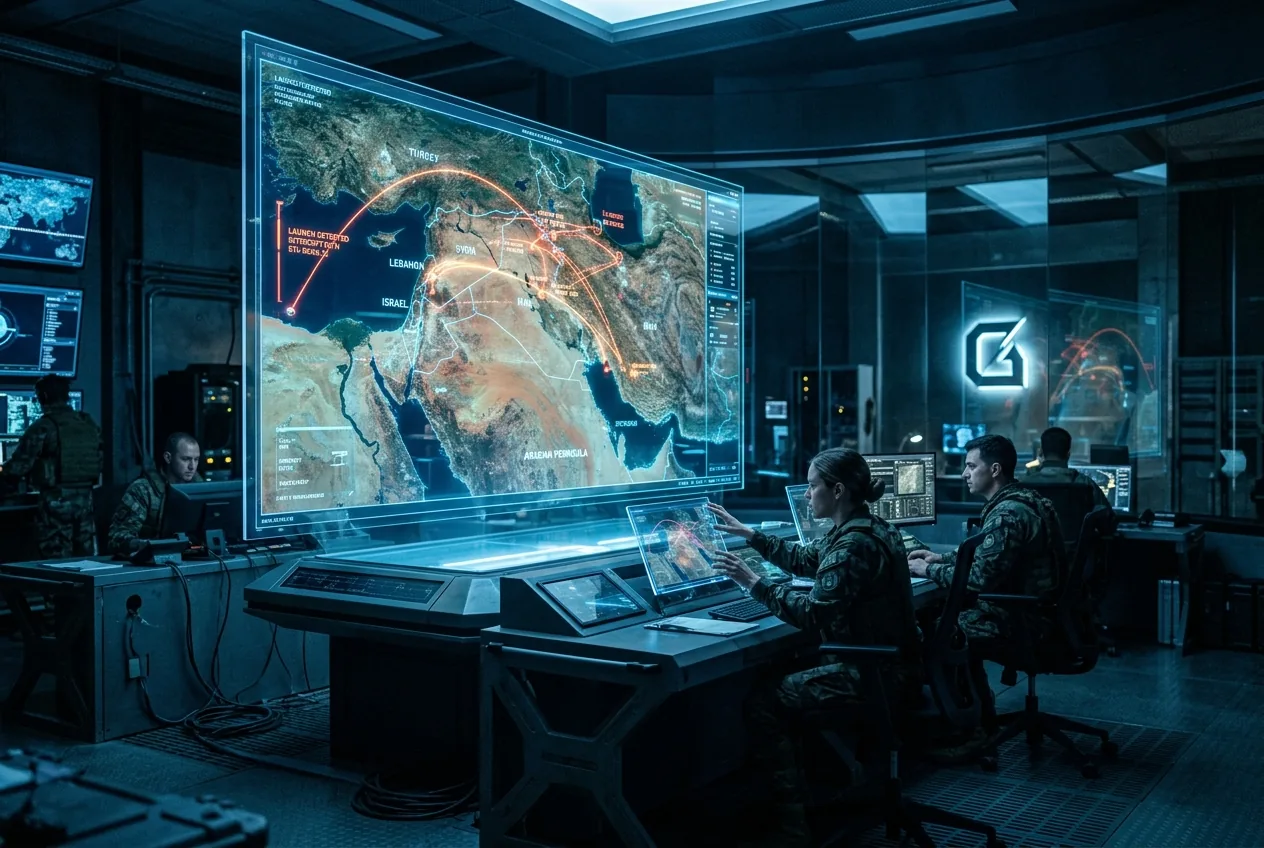
In the theater of modern conflict, the line between silicon valley innovation and kinetic military operations is blurring at an unprecedented rate. Recent reports circulating through global defense networks have suggested a startling development: the use of xAI’s Grok, an artificial intelligence model integrated into the X platform, as a strategic layer in the deployment of 2,000 missiles targeting Iranian infrastructure. While the Pentagon has historically been reticent regarding specific software partnerships, the sheer scale of the alleged operation invites a rigorous technical post-mortem. To understand how a Large Language Model (LLM) could find itself at the center of a geopolitical firestorm, we must look beyond the headlines and into the hardware-software stack of contemporary electronic warfare.
At its core, the claim that an LLM like Grok facilitated a mass missile strike requires us to distinguish between various types of artificial intelligence. In the industrial and military sectors, AI is rarely a monolithic entity. Instead, it is a tiered system of specialized algorithms. A generative AI like Grok is designed for pattern recognition, natural synthesis, and real-time information retrieval from a massive stream of unstructured data. To translate that capability into a kinetic strike involving thousands of projectiles, one would need to bridge the gap between high-level strategic reasoning and low-level tactical execution. This is where the technical feasibility of the reports becomes a subject of intense engineering debate.
The Architecture of Autonomous Targeting
To fire 2,000 missiles with any degree of precision requires a logistics and targeting engine capable of processing terabytes of sensor data in real-time. Modern missile systems, such as the Integrated Battle Command System (IBCS), rely on a mesh network of radar, satellite imagery, and signals intelligence (SIGINT). For an AI to "help" in this process, it would likely function as a cognitive layer, synthesizing disparate data points to identify vulnerabilities in an adversary’s integrated air defense system (IADS). Grok’s unique advantage—and perhaps why it has been linked to such operations—is its access to the X platform’s real-time global feed.
In a conflict scenario, social media often acts as a decentralized sensor network. Geotagged posts, video uploads of mobile launcher movements, and real-time reports of atmospheric conditions provide a layer of "Open Source Intelligence" (OSINT) that traditional military satellites might miss due to orbital timing or cloud cover. An AI tuned for rapid ingestion and sentiment analysis could, theoretically, provide a "target list" derived from public-facing data. However, the engineering challenge remains the "hallucination" problem inherent in LLMs. In a mechanical engineering context, we demand a five-sigma reliability rating for safety-critical systems. Entrusting a 2,000-missile salvo to a model that can occasionally generate factually incorrect prose represents a significant deviation from established military protocol.
The Starlink Precedent and the Musk Infrastructure
The involvement of Elon Musk’s technology in global conflict is not a new variable. The deployment of Starlink in Ukraine provided the world with a case study on how commercial satellite internet could become the backbone of a national defense strategy. Starlink’s low-earth orbit (LEO) constellation provided the low-latency communication necessary for drone strikes and secure command-and-control. If Grok is indeed being utilized by the Pentagon or its allies, it is likely being hosted on or interfaced with this same robust hardware infrastructure. From a technical standpoint, the synergy between a high-speed data network (Starlink) and a real-time analytical engine (Grok) creates a powerful, albeit controversial, toolset.
The Pentagon’s interest in commercial AI is formalized through initiatives like Project Maven and the Replicator program. These projects aim to integrate commercially available computer vision and predictive analytics into the Department of Defense's workflow. The reported use of Grok suggests a shift toward utilizing LLMs for strategic decision-making support. Rather than pulling the trigger, the AI acts as a digital staff officer, modeling the likely outcomes of a massive strike, predicting retaliatory trajectories, and optimizing fuel-to-payload ratios across a diverse fleet of delivery vehicles. This is where the economic and technical viability of the AI shines: reducing the "OODA loop" (Observe, Orient, Decide, Act) from hours to milliseconds.
Can a Chatbot Manage a Missile Salvo?
We must address the skepticism surrounding the use of a "chatbot" in warfare. The term itself is a misnomer when applied to the underlying transformer architecture of Grok. The transformer model is essentially a massive mathematical engine for predicting the next most logical step in a sequence. In language, that's a word; in ballistics, that could be a coordinate or a timing window. If the Pentagon fed Grok classified telemetry data instead of public tweets, the model could be fine-tuned to recognize patterns in radar evasion or to optimize the staggered launch times of 2,000 missiles to overwhelm an Iron Dome or S-400 defense system.
The bottleneck in such an operation is not the AI’s processing power, but the data transmission and the mechanical reliability of the launchers. Firing 2,000 missiles is a massive logistical undertaking. It requires the synchronization of sea-based platforms, land-based mobile launchers, and aerial assets. If an AI managed this, it was likely through a custom API (Application Programming Interface) that allowed the model to communicate directly with tactical battle management software. For an engineer, the most impressive part of this claim isn't the AI's intelligence, but the integration layer that allowed it to control physical hardware at such a scale.
Geopolitical Implications and the AI Arms Race
The reported strike on Iran marks a significant escalation in the use of autonomous and semi-autonomous systems in the Middle East. Iran has long invested in its own drone and missile technology, utilizing indigenous AI for navigation in GPS-denied environments. By introducing a top-tier Western AI into the equation, the conflict transitions from a battle of industrial capacity to a battle of algorithmic efficiency. The question for policymakers is no longer how many missiles a nation possesses, but how effectively their AI can allocate those resources.
There is also the matter of international law. The United Nations has repeatedly debated the ethics of Lethal Autonomous Weapons Systems (LAWS). If Grok—a commercial product designed for public use—is being repurposed for large-scale kinetic strikes, it creates a massive legal grey area. Who is responsible if the AI misidentifies a civilian target? The developer, the military commander, or the owner of the platform? As we move toward a world where AI-driven strikes of this magnitude become possible, the lack of a technical and legal framework for accountability is a glaring vulnerability.
Furthermore, the psychological impact of AI involvement cannot be overstated. The narrative that a machine-learning model orchestrated a strike of 2,000 missiles acts as a form of electronic deterrent. It suggests an adversary that does not sleep, does not hesitate, and can process information at a scale that human commanders cannot match. Whether or not Grok was the primary agent in this operation, the mere association of the brand with such a massive military action signals a new era of "software-defined warfare."
Technical Specs: The Cost of an Algorithmic Strike
From a pragmatic perspective, the cost-benefit analysis of using AI in this manner is compelling. Traditional battle planning for an operation of this scale would take weeks of human coordination, involving hundreds of officers. An AI-augmented system can run thousands of simulations in the time it takes a human to read a single briefing. By optimizing the flight paths of 2,000 missiles, the AI can ensure maximum impact with minimum waste, potentially saving billions in ordinance costs while achieving the same strategic objective. In the cold calculus of military engineering, efficiency is the ultimate metric.
However, we must also consider the "brittleness" of AI. In my experience with mechanical systems, the more complex a machine becomes, the more ways it can fail. AI models are notoriously susceptible to adversarial attacks—small changes in input data that cause the model to fail in spectacular and unpredictable ways. If an adversary were to flood the data stream with false information, an AI-managed missile strike could be diverted or neutralized before the first launch. Relying on an LLM for a 2,000-missile operation is a high-risk, high-reward strategy that pushes the boundaries of what is technically responsible.




Comments
No comments yet. Be the first!