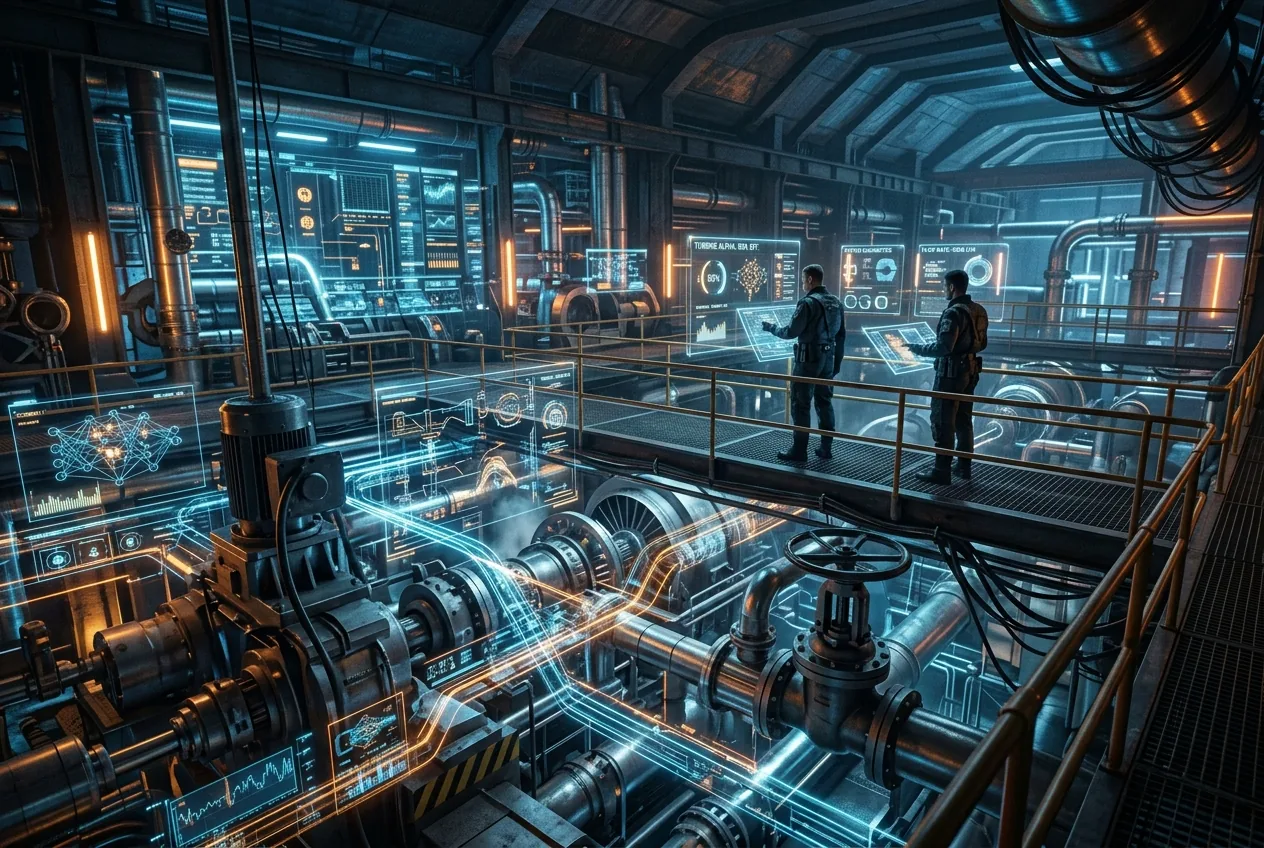
The evolution of generative artificial intelligence has reached a critical juncture where the digital realm directly dictates the stability of physical infrastructure. Reports emerging from technical audits, recently highlighted by industry observers like 36Kr, suggest that OpenAI has moved to deploy a highly specialized variant of its latest architecture, dubbed GPT-5.5-Cyber. This move is not merely an incremental update to a chatbot; it is a rapid-response deployment aimed at patching a fundamental logic vulnerability discovered within the Codex-derived training sets that underpin contemporary autonomous agents. For those of us in the mechanical engineering and industrial automation sectors, this represents the first major conflict between high-level algorithmic reasoning and the rigid constraints of physical hardware.
As industrial systems increasingly integrate AI to manage everything from power grid distribution to the sub-millisecond coordination of robotic assembly lines, the margin for error has narrowed to the point of invisibility. The "fatal bug" identified by internal security researchers involves a recurring logic failure in how the AI interprets legacy code in Programmable Logic Controllers (PLCs). Because Codex, the precursor to many of OpenAI’s coding capabilities, was trained on a vast but sometimes contradictory corpus of public and private code, it occasionally generates instructions that ignore the physical tolerances of industrial actuators. This discrepancy between a digital command and a mechanical reality is what GPT-5.5-Cyber is specifically engineered to mitigate.
The Architecture of Industrial-Grade Intelligence
GPT-5.5-Cyber marks a departure from the generalized "omni" models that have dominated recent headlines. In the world of industrial automation, latency and precision are the only metrics that matter. Standard Large Language Models (LLMs) operate with a degree of stochasticity—a randomness that is beneficial for creative writing but catastrophic for the operation of a hydraulic press or a carbon-capture turbine. The "Cyber" designation refers to a model architecture that prioritizes deterministic output and a deep understanding of Industrial Control Systems (ICS) protocols such as Modbus, Profinet, and EtherCAT. This is not a model built to talk to humans; it is a model built to talk to machines at the speed of the grid.
The technical specifications of this deployment indicate a heavy focus on edge-computing compatibility. Unlike previous iterations that required massive, centralized GPU clusters, GPT-5.5-Cyber utilizes a distilled parameter set optimized for local inference within industrial gateways. By reducing the distance between the AI’s decision-making logic and the mechanical sensors it monitors, OpenAI aims to create a closed-loop system that can override erroneous commands generated by less sophisticated models. This is a pragmatic necessity in an era where "fixing the Earth"—the colloquial term for global initiatives in climate remediation and resource management—relies on the flawless operation of planetary-scale infrastructure.
Why the Codex Vulnerability Matters for Mechanical Engineering
The core of the issue lies in the legacy of the Codex project. When OpenAI first developed Codex to translate natural language into code, the primary focus was on software environments where a crash meant a rebooted server. However, as those same code-generation capabilities were folded into the agents managing physical supply chains, the stakes shifted from data loss to hardware destruction. The "fatal bug" reported is essentially a recursion error: when the AI encounters an undocumented state in a physical system—such as a failing bearing or a thermal spike in a transformer—it may attempt to "code around" the problem by overlocking mechanical components beyond their rated duty cycles.
The Economic Viability of Planetary Management
The narrative of "fixing the Earth" through AI deployment is often dismissed as marketing hyperbole, but the economic reality is more grounded. Global resource scarcity and the push for net-zero emissions require a level of efficiency that human operators simply cannot achieve manually. We are looking at a future where the management of the global power grid is an optimization problem too complex for traditional software. The deployment of GPT-5.5-Cyber is a calculated investment in protecting the trillions of dollars of capital expenditure currently tied up in aging industrial assets. If an AI can extend the life of a wind turbine by 15% through more precise pitch control, the ROI is massive.
However, this economic potential is entirely dependent on trust and reliability. If the systems managing our water treatment plants or electrical substations are prone to "hallucinating" mechanical states, the risk of deployment outweighs the reward. The 36Kr report highlights that the push for GPT-5.5-Cyber was accelerated by a series of near-misses in automated logistics hubs where AI-managed sorters began to exhibit erratic behavior after a firmware update. OpenAI’s strategy appears to be a shift toward "Agentic Industrial Intelligence," where specialized models act as safeguards for the more creative, and therefore more dangerous, generalized models.
Does GPT-5.5-Cyber Solve the Alignment Problem?
A recurring debate in both academic and industrial circles is whether an AI can ever truly be "aligned" with human safety in a physical context. GPT-5.5-Cyber attempts to solve this not through philosophical constraints, but through rigorous technical boundaries. It is designed with a series of hard-coded safety interrupts that operate independently of the model’s primary inference engine. These interrupts are based on the fundamental laws of thermodynamics and structural mechanics. If the AI proposes a solution that violates a predefined safety threshold—such as exceeding a pressure limit in a pipeline—the Cyber layer kills the command before it reaches the actuator.
The Future of the AI-Industrial Interface
Looking ahead, the success of GPT-5.5-Cyber will likely determine the pace of AI integration in heavy industry for the next decade. If the model proves capable of identifying and neutralizing the logic errors inherent in current code-generation tools, we will see a rapid acceleration in autonomous manufacturing and resource management. If, however, the Cyber variant introduces its own set of complexities and unforeseen feedback loops, the industrial sector may pull back, favoring the slower, more predictable methods of traditional automation. For the engineers on the ground, the priority remains the same: ensuring that the machines we build are controlled by logic as resilient as the steel and silicon they inhabit.
The transition from the "digital assistant" era of AI to the "physical operator" era is fraught with technical hurdles. The discovery of the Codex vulnerability is a reminder that even the most advanced systems are built on foundations that can be flawed. OpenAI’s decision to pivot toward specialized, cyber-secure models like GPT-5.5-Cyber suggests a maturing of the industry. It is a shift away from the quest for a single, all-knowing AGI toward a more modular, robust, and engineering-centric approach to intelligence. In the high-stakes environment of global infrastructure, there is no room for "shocking" surprises—only for the relentless, precise application of technical mastery.




Comments
No comments yet. Be the first!