The capital requirements of frontier artificial intelligence have broken away from the traditional financial playbook of Silicon Valley. What began as a contest between competing deep learning architectures has hardened into a massive, capital-intensive industrial buildout reminiscent of transcontinental railroad construction or the dawn of the commercial electrical grid. OpenAI is now reportedly laying the groundwork for an eventual public market debut that could target a historic valuation in the neighborhood of one trillion dollars, while its primary independent rival, Anthropic, continues to vacuum up institutional and hyperscaler capital in rounds that value the safety-focused enterprise at dozens of billions.
These figures are not simply reflections of speculative exuberance; they represent the staggering price of entry for frontier compute. For engineers and infrastructure planners tracking the physical supply chains that underpin machine learning, the financial maneuvering signals a structural transition. Training next-generation models and deploying persistent, autonomous software agents across industrial supply chains requires a level of physical compute, power generation, and specialized fabrication that private venture capital alone can no longer underwrite. The leap toward the public markets is becoming an engineering necessity.
The Staggering Thermodynamics of Frontier Model Scaling
To understand why an enterprise software company would require the market capitalization of an established energy supermajor or a legacy aerospace conglomerate, one must look at the physical constraints of contemporary compute clusters. The scaling laws governing large transformer models show that continuous improvements in reasoning and generalized multimodal capabilities demand compute allocations that expand exponentially rather than linearly. Training runs for next-generation frontier systems are no longer measured simply in millions of dollars of cloud credits, but in tens of thousands of specialized accelerators operating synchronously for months at a time.
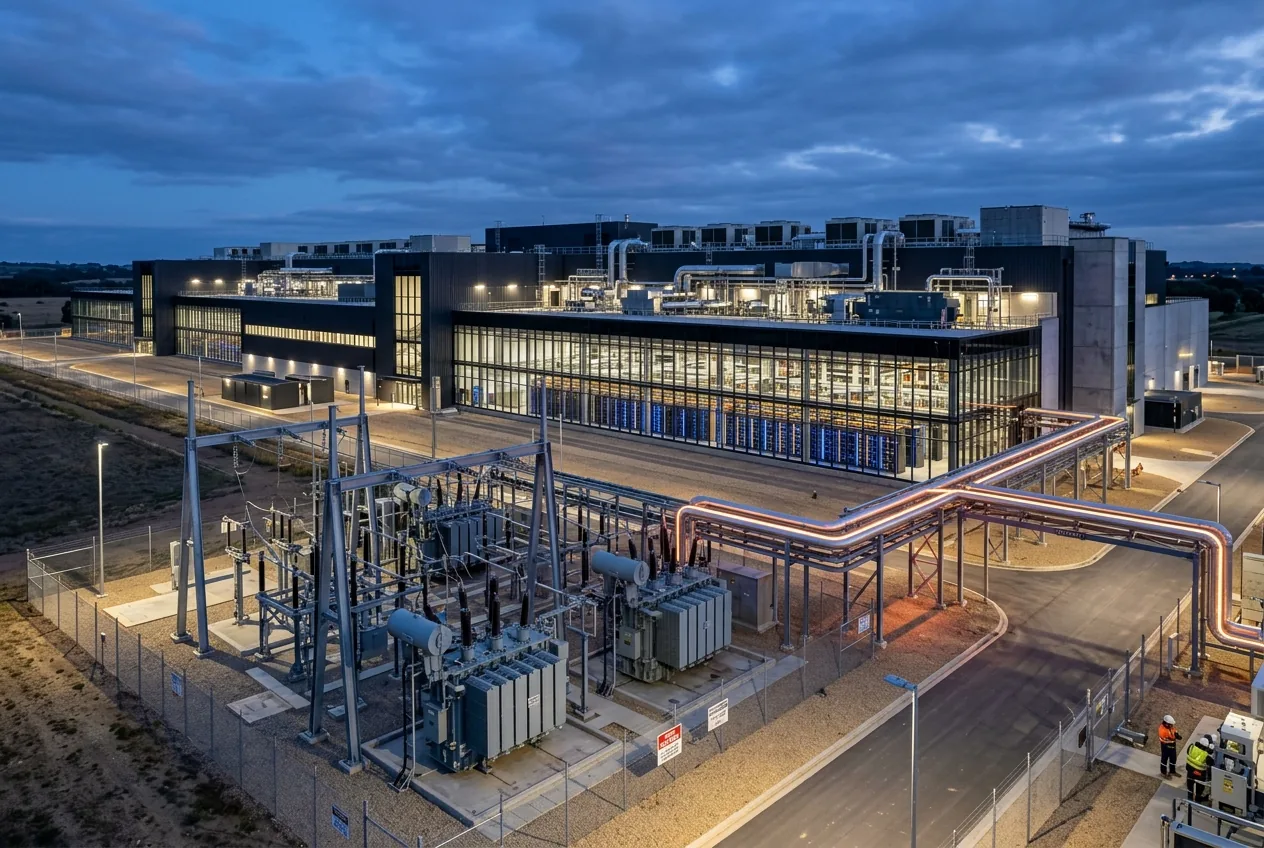
At this threshold, engineering constraints migrate from software optimization to thermodynamic realities. Modern data center designs are shifting away from traditional air-cooled server racks toward direct-to-chip liquid cooling architectures designed to dissipate thermal loads exceeding one hundred kilowatts per rack. System architects must contend with parasitics, fluid dynamics, and the high-volume procurement of advanced packaging technologies like chip-on-wafer-on-substrate from specialized fabrication plants. The capital that OpenAI and Anthropic are pursuing is largely earmarked for this relentless hardware turnover, where silicon amortizes over three to four years while physical facility deployments require twenty-year capital expenditure planning.
Dismantling the Capped-Profit Architecture for Wall Street
A trillion-dollar listing requires structural mechanics that Wall Street institutional investors can actually parse. OpenAI’s origin as a 501(c)(3) research laboratory, which subsequently grafted on a complex capped-profit subsidiary overseen by a non-profit board of directors, was fundamentally designed to prevent excessive capital accumulation and maintain human-aligned governance. However, operating within that Byzantine structure has grown increasingly friction-laden as the organization’s operational costs surged into billions of dollars per annum.
Anthropic, conversely, has leaned into its status as a public benefit corporation from day one, leveraging its Constitutional AI framework as both a safety safeguard and a premier corporate selling point. By positioning its Claude models as dependable, enterprise-grade cognitive engines designed to operate within rigorous regulatory parameters, Anthropic has secured colossal balance sheet commitments from cloud hyperscalers seeking direct access to its model weights. The race between these two entities is no longer just about whose model performs higher on graduate-level benchmark exams, but who can engineer a sustainable corporate balance sheet capable of surviving an infrastructure supercycle.
The Energy Grid Bottleneck and Industrial Integration
This reliance on dedicated electrical infrastructure highlights a growing divergence between speculative software valuation and operational reality. A trillion-dollar software firm cannot rely solely on consumer productivity plugins or conversational coding interfaces to justify its multiples. It must become deeply integrated into foundational industries: automated fabrication, autonomous logistics dispatch, complex structural simulation, and material science discoveries that feed physical manufacturing pipelines.
In factory environments, for example, the integration of vision-language-action models is beginning to untether robotic workcells from rigid, pre-programmed kinematic routines. Instead of weeks spent manually calibrating a six-axis arm for a new assembly variant, multimodal agents are beginning to interpret unstructured sensory data and generate operational code dynamically. When capital allocators look at OpenAI and Anthropic, they are betting that these models will not merely assist white-collar analysis, but will serve as the central nervous system for the physical industrial plant. If AI platforms fail to bridge that divide into real-world physical automation, the enterprise revenue required to service high-billion and trillion-dollar capital bases may fail to materialize in time.
The Impending Reckoning with Margin Realities
As the public listing horizon approaches for OpenAI and venture capital rounds balloon for Anthropic, institutional capital will inevitably demand clear visibility into net margins. Today, the foundational model ecosystem remains locked in an aggressive price war, where input and output token costs have plummeted by orders of magnitude through architectural efficiencies like model distillation and quantized inference. While falling token costs accelerate developer adoption, they also compress unit margins precisely when physical capital expenditures are reaching historic zeniths.
The central question facing these frontier labs is whether their proprietary models can sustain an enduring economic moat. The rapid convergence of open-weight alternatives, capable of running on edge hardware or localized enterprise servers at negligible ongoing licensing fees, applies continual downward pressure on proprietary API pricing. For an organization carrying tens of billions of dollars in hardware depreciation and data center lease obligations, defending software-like eighty percent gross margins may prove mathematically impossible.
The road to a public debut will force an unprecedented level of disclosure regarding actual inference overhead, corporate compute burn rates, and client concentration risks. Investors will no longer be evaluating theoretical futures outlined in academic research papers; they will be dissecting physical bills of materials, sovereign energy contracts, and chip replacement schedules. OpenAI and Anthropic are constructing the computational engines of the modern era, but the transition into the public markets will test whether the physics of industrial computing can peacefully coexist with the relentless yield demands of Wall Street.




Comments
No comments yet. Be the first!