The trajectory of OpenAI has long defied the standard evolution of Silicon Valley startups. Founded as a non-profit research laboratory with the altruistic goal of ensuring artificial general intelligence (AGI) benefits all of humanity, the organization has spent the last two years grappling with the immense capital requirements of the generative AI era. Recent reports indicating that OpenAI has submitted a draft S-1 filing to the Securities and Exchange Commission (SEC) mark the beginning of the end for its idiosyncratic governance structure. This move is not merely a financial milestone; it is a fundamental pivot toward an industrial-scale corporate model designed to sustain the most expensive compute infrastructure in human history.
For an organization that recently closed a $6.6 billion funding round at a $157 billion valuation, the transition to a public benefit corporation (PBC) is a pragmatic necessity. The existing "capped-profit" model, which placed a ceiling on investor returns and gave ultimate authority to a non-profit board, has become an impediment to the level of investment required for the next phase of development. To build the massive data centers and secure the hundreds of thousands of Blackwell-architecture GPUs necessary for future models, OpenAI needs the friction-less access to capital markets that only a traditional corporate structure provides.
The Economic Viability of AGI Development
The core challenge facing OpenAI is the staggering cost of its technical roadmap. Unlike traditional software companies where marginal costs approach zero, the development of frontier models like GPT-4, o1, and the forthcoming GPT-5 involves astronomical hardware and energy expenditures. Industry analysts estimate that training runs for the next generation of models could exceed $1 billion each, not including the ongoing costs of inference and the recruitment of specialized talent in machine learning and mechanical engineering. By filing a draft S-1, OpenAI is signaling to the market that it is ready to operate under the transparency and rigor of a publicly traded entity, a move likely intended to reassure institutional investors about its long-term stability.
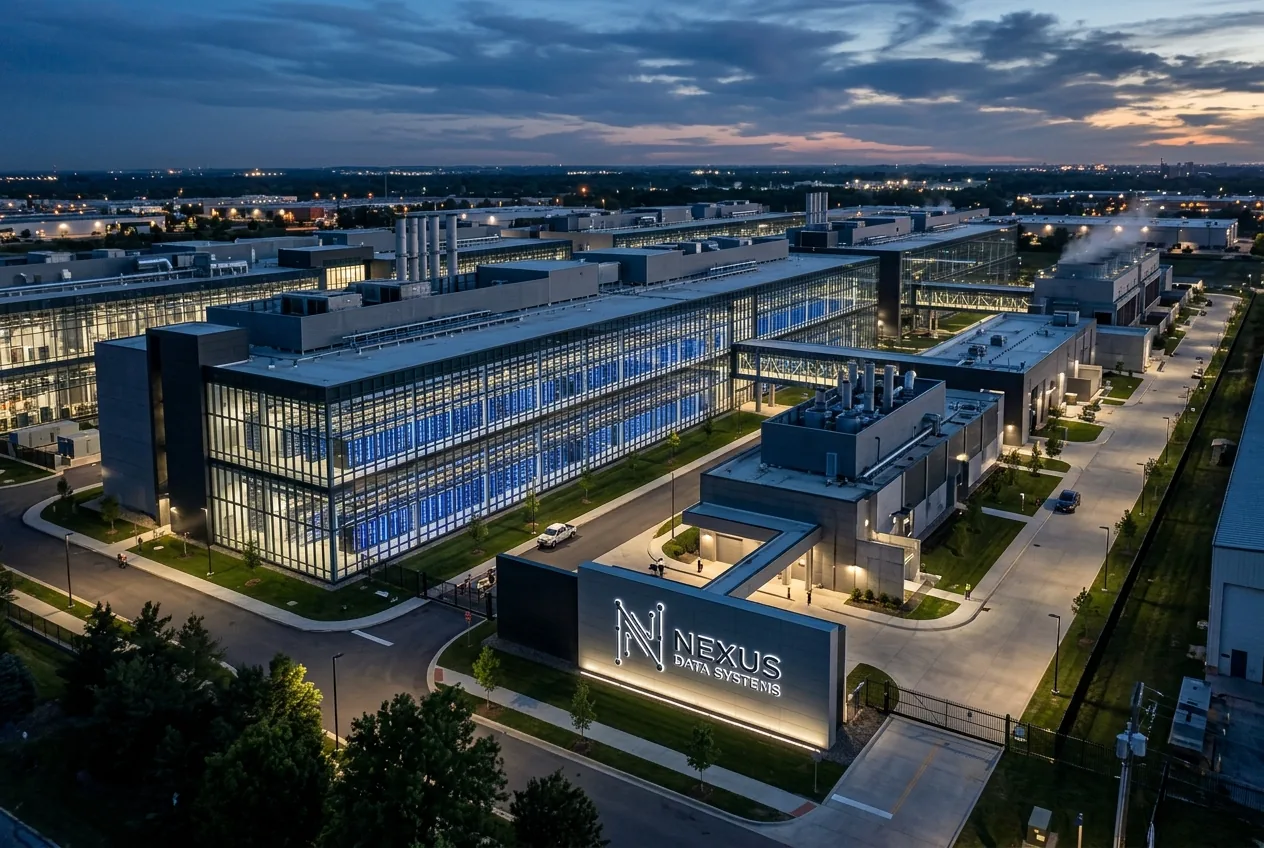
From an engineering perspective, the sheer scale of the "Stargate" supercomputer project—a joint venture with Microsoft rumored to cost upwards of $100 billion—illustrates why the non-profit oversight was no longer viable. Such a project requires complex debt financing, multi-decade depreciation schedules, and power purchase agreements that are difficult to manage within a research-first non-profit framework. The shift to a PBC allows OpenAI to maintain a mission-driven focus on safety while providing the fiduciary clarity required to manage assets on the scale of a global utility provider.
Restructuring the Governance Moat
The path to an Initial Public Offering (IPO) is fraught with structural hurdles. To complete the transition, OpenAI must navigate the legal complexities of transferring its primary intellectual property and assets from the non-profit’s control to the new for-profit entity. This process involves complex valuations and negotiations with state regulators, particularly in Delaware and California, to ensure that the non-profit’s original charitable mission is appropriately compensated for the assets it is relinquishing. For investors, this restructuring removes the "poison pill" of board-led interference that famously led to the temporary ousting of CEO Sam Altman in late 2023.
The new structure is expected to mirror that of other high-tech public benefit corporations, such as Anthropic or various renewable energy firms. This allows the company to balance profit-making with a commitment to societal impact. However, the pragmatic reality is that the PBC status serves as a middle ground that satisfies the massive capital demands of firms like Thrive Capital and SoftBank while retaining a vestige of the original organizational ethos. For the industrial sector, this means OpenAI will increasingly function as a Tier-1 technology supplier, moving away from experimental releases and toward stable, enterprise-grade APIs and hardware integrations.
Integrating AI into the Physical World
One of the most compelling reasons for OpenAI’s pursuit of a public valuation is its expanding footprint in robotics and industrial automation. While the company is best known for Large Language Models (LLMs), its recent investments in companies like Figure AI and 1X Technologies suggest a long-term play for the "brains" of humanoid robots. To achieve low-latency, real-time control of robotic actuators in a warehouse or manufacturing environment, OpenAI must invest heavily in specialized edge-computing hardware and multimodal models that can process visual and tactile data simultaneously.
The integration of the o1 reasoning model into physical systems represents a significant shift in industrial robotics. Traditional industrial robots operate on rigid, pre-programmed logic. In contrast, an OpenAI-powered system uses probabilistic reasoning to handle variability—such as identifying a damaged component on a conveyor belt or navigating an unmapped floor space. This level of autonomy requires a robust, high-availability infrastructure that can only be built with the hundreds of billions of dollars an IPO-bound company can command. The S-1 filing is, in many ways, an investment in the future of automated labor.
Can OpenAI Balance Safety with Public Market Pressure?
The most significant debate surrounding this filing is whether OpenAI can maintain its commitment to AI safety once it is beholden to quarterly earnings reports. Public markets are notoriously impatient, prioritizing short-term revenue growth over long-term research risks. Critics argue that the pressure to deliver returns will force OpenAI to accelerate product releases, potentially bypassing rigorous red-teaming protocols. This is particularly concerning as models gain more agency—the ability to execute code, manage financial accounts, or control physical machinery.
However, from a technical management standpoint, the move to public markets might actually increase safety through standardization and regulatory oversight. As a public entity, OpenAI will be subject to SEC disclosures regarding its risk profile, which will inevitably include the safety and reliability of its AI systems. Furthermore, the massive capitalization allows the company to hire dedicated safety engineering teams that are larger than the entire staff of most AI startups. The challenge will be in ensuring that the "Public Benefit" part of the PBC remains more than just a marketing label.
The Supply Chain of Intelligence
To understand OpenAI's move toward an IPO, one must look at the global supply chain for high-performance computing. The bottleneck for AI progress is no longer just algorithmic innovation; it is the availability of silicon and electricity. OpenAI’s strategy involves securing long-term contracts for energy—potentially including small modular reactors (SMRs)—and specialized chip fabrication. These are industrial-scale capital expenditures that require the financial tools of a public corporation, such as issuing corporate bonds or large-scale equity offerings.
Ultimately, the filing marks a maturation of the entire AI sector. The era of the "startup lab" is giving way to the era of the "AI conglomerate." As OpenAI moves through the confidential filing process, the tech industry will be watching closely to see how the company’s valuation holds up against the realities of its burn rate. But for those of us focused on the intersection of robotics and industrial utility, the message is clear: OpenAI is no longer just trying to build a smart machine; it is building the financial and physical infrastructure to power the planet’s autonomous future.




Comments
No comments yet. Be the first!