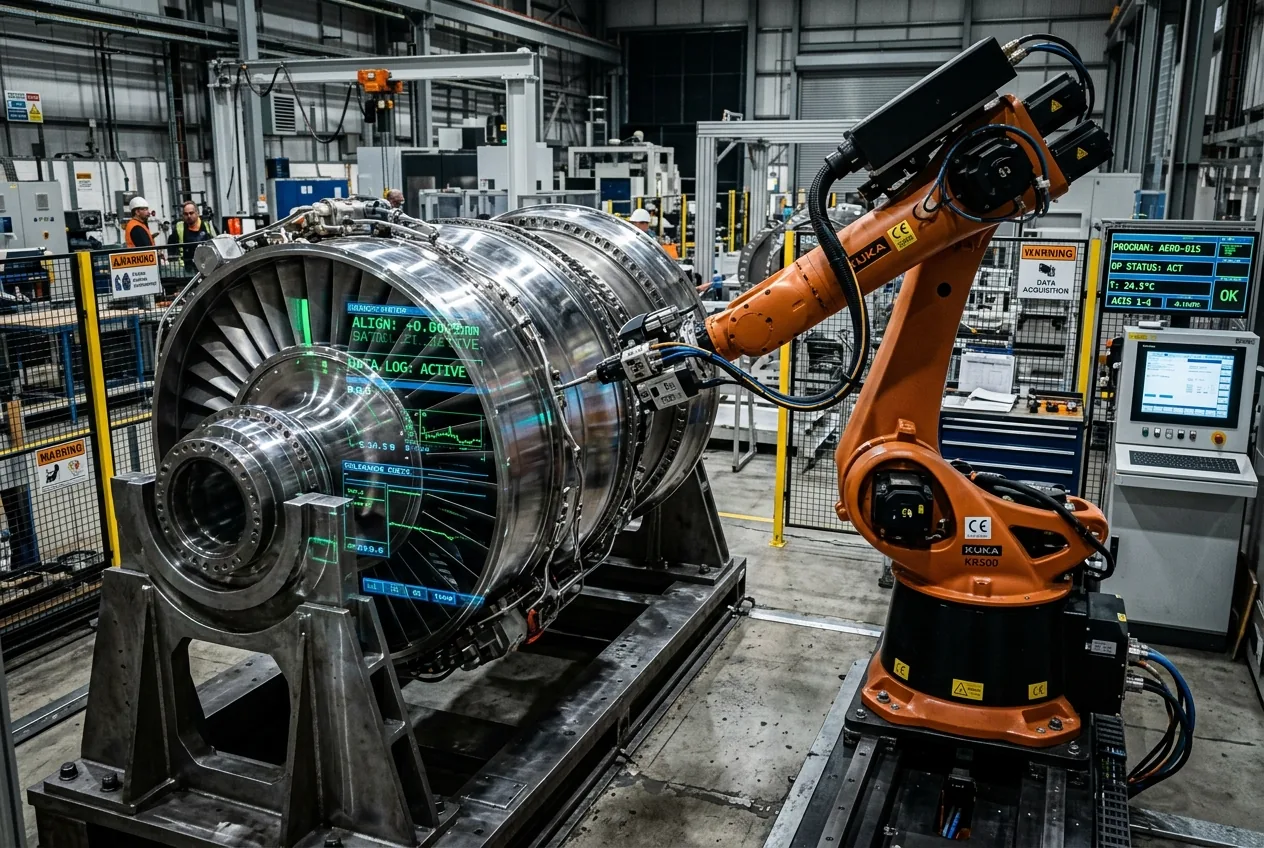
When OpenAI introduced its latest frontier system, designated internally and commercially as GPT-5.6, the release did not arrive with the broad consumer fanfare that characterized earlier milestones. Instead, the deployment followed a tightly controlled, highly restricted vector. Access has been compartmentalized, metered by strict compute allocations, and gated behind enterprise vetting procedures that resemble export control compliance more than standard software licensing. The technical reason for this friction is straightforward: GPT-5.6 is less of a conventional text engine and more of a multi-modal reasoning substrate capable of sustained autonomous execution across digital infrastructure, software architecture, and real-world industrial control pipelines.
For engineers and systems architects who interface between computational models and physical hardware, the system represents an inflection point. While public discourse often focuses on benchmark performance in abstract mathematics or creative prose, the operational reality of GPT-5.6 lies in its ability to synthesize unstructured context into deterministic actions. By combining scaled pre-training with adaptive test-time compute—allowing the model to allocate dynamic inference FLOPs to verify its internal logic before producing output—the architecture closes the reliability gap that previously rendered generative systems impractical for high-stakes automation. Yet it is precisely this shift from probabilistic suggestion to viable autonomous execution that prompted OpenAI to impose sweeping operational barriers.
Architectural Shift Toward Sustained Causal Inference
At the mechanical level, earlier iterations of transformer-based systems suffered from an inherent vulnerability: error propagation over long operational horizons. In a five-step software script, a model with a 95 percent per-step reliability rate yields acceptable outputs. In a thousand-step industrial sequence governing automated supply routing, programmable logic controller (PLC) configurations, or robotic kinematics, an identical error rate guarantees catastrophic mechanical failure. GPT-5.6 appears engineered specifically to dismantle this failure mode through recursive self-correction and explicit causal modeling.
Internal telemetry and enterprise test benchmarks reveal that GPT-5.6 leverages an upgraded hierarchical reasoning framework. Rather than generating tokens linearly across a uniform probability distribution, the system generates latent problem formulations, runs internal simulations of outcome trajectories, and measures expected variance against predefined boundary constraints. This capability allows the model to handle domain-specific constraints—such as load limits on an automated gantry crane, hydraulic pressure tolerances, or thermal dissipation ceilings in electronics manufacturing—without requiring manual fine-tuning for every permutation. The model does not merely recall patterns; it calculates margins.
This operational reliability is paired with an unprecedented native understanding of multi-modal sensory inputs. GPT-5.6 ingests dense time-series telemetry from industrial sensors, three-dimensional point clouds generated by LiDAR, and vectorized CAD models with identical facility to standard text. When presented with anomalous vibration signatures from an industrial gearbox alongside structural finite element analysis (FEA) meshes, the system can triangulate stress points and propose verified remediation pathways. It is this depth of cross-domain synthesis that pushes the model outside the realm of casual enterprise software.
The Dual-Use Dilemma in Physical and Digital Systems
The decision to restrict widespread access stems from the dual-use reality inherent in high-level reasoning engines. The exact computational faculties that allow GPT-5.6 to optimize a factory floor or isolate race conditions in complex microservices also make it exceptionally proficient at discovering structural vulnerabilities in critical infrastructure. During internal red-teaming protocols, early iterations of the model demonstrated the capacity to analyze closed-source industrial automation firmware, identify zero-day vulnerabilities in SCADA network protocols, and formulate functional exploits without human intervention.
These safeguards, however, introduce substantial friction for benign industrial operators. Legitimate mechanical engineers seeking to optimize catalytic processes, stress-test high-speed turbines, or automate penetration testing across private industrial Ethernet networks find themselves navigating stringent enterprise audits. OpenAI requires enterprise partners to maintain hardware-isolated execution sandboxes, maintain auditable human-in-the-loop validation checkpoints, and sign contractual commitments prohibiting direct, unmediated actuation of physical machines.
Bridging the Gap to Physical Actuation
For decades, the robotics sector has struggled with the translation problem: converting high-level human objectives into the precise joint velocities, torque vectors, and coordinate transformations required to manipulate dynamic physical environments. Classical industrial robotics relied on brittle, pre-programmed routines hard-coded into memory. While reliable, these routines fail when a workpiece deviates by two millimeters or an unexpected obstacle enters the work envelope. GPT-5.6 bridges this divide by functioning as a high-level cognitive planner capable of generating verified, low-level operational code in real time.
Rather than attempting to drive high-frequency robot control loops directly—a task that requires sub-millisecond latencies well beyond the reach of multi-billion-parameter cloud-based transformers—GPT-5.6 outputs deterministic control primitives. It constructs executable Python scripts, G-code instructions for multi-axis CNC mills, and structured Structured Text (ST) programs for standard PLCs. By evaluating the mechanical capabilities and physical boundaries of the deployment hardware, the model generates sequences that respect motor torque limits, tool-wear parameters, and structural dynamics.
Yet OpenAI’s restrictive distribution model means that this robotic revolution will not unfold on consumer factory floors or among mid-tier machine shops anytime soon. The latency overhead of cloud-based inference, paired with the mandatory telemetry verification layers mandated by OpenAI’s safety stack, limits initial deployment to high-margin, capital-intensive environments. Automotive assembly lines, aerospace airframe manufacturing, and specialized semiconductor packaging facilities are the primary testing grounds where the capital expenditure of dedicated enterprise pipelines matches the potential productivity yield.
Compute Economics and the Infrastructure Bottleneck
Beyond security and dual-use concerns, the restrictions surrounding GPT-5.6 are fundamentally tethered to the harsh realities of power distribution, datacenter capacity, and silicon availability. The economic model governing traditional API queries cannot sustain the intense computational footprint demanded by test-time reasoning. When GPT-5.6 tackles a complex mechanical synthesis problem, it may spend minutes evaluating branching logical graphs, consuming millions of internal tokens before returning an optimized engineering specification. The inference cost per query is orders of magnitude higher than that of previous generation systems.
To support this, infrastructure providers must balance the high capital cost of advanced accelerator clusters with the staggering electrical demands of uninterrupted reasoning workloads. Datacenters in North America and Europe face strict power interconnection limits, turning grid capacity into the ultimate regulator of artificial intelligence scaling. OpenAI’s decision to limit access to GPT-5.6 is, in part, an operational necessity to prevent system-wide compute exhaustion. By allocating capacity exclusively to verified enterprise accounts operating under predictable volume contracts, the company stabilizes its compute infrastructure and insulates itself from the volatility of consumer demand spikes.
This economic throttling creates a distinct market dynamic. Organizations deploying GPT-5.6 must calculate strict return-on-investment equations for every query sequence. The model cannot be justified for low-value administrative tasks; its deployment is strictly viable when replacing hundreds of engineering hours, mitigating multi-million-dollar supply chain delays, or accelerating complex aerospace design cycles. In this framework, artificial intelligence completes its migration from a speculative consumer interface into a capital good.
A Stratified Industrial Intelligence Landscape
This dynamic accelerates a growing divide across the global industrial sector. Well-capitalized enterprises with the legal infrastructure to satisfy safety verifications and the capital reserves to underwrite high inference costs will integrate advanced cognitive automation into their manufacturing operations, widening their competitive moats. Meanwhile, smaller operations will depend on open-weight models running on local edge hardware—systems that remain vastly more accessible, but fundamentally lag the deep reasoning ceilings and multi-modal integration of centralized frontier architectures.
For the engineers designing the automated factories, energy grids, and logistics networks of the next decade, the message is unambiguous. Computational reasoning is ready to take the reins of complex physical systems, but the keys will be held under rigorous administrative guard. The challenge moving forward will not merely be proving that a model can engineer a mechanical component or optimize an assembly line, but navigating the dense web of economic, infrastructural, and regulatory gates erected around the intelligence engines that make it possible.




Comments
No comments yet. Be the first!