When artificial intelligence research operated primarily on academic compute budgets and modest university clusters, corporate governance was largely a philosophical exercise. Today, with state-of-the-art model training measured in gigawatts, hundreds of thousands of specialized accelerators, and balance sheets that burn billions of dollars annually, philosophy inevitably yields to structural capital requirements. OpenAI’s regulatory documentation submitted to the Securities and Exchange Commission marks the beginning of the end for the most unusual corporate architecture in Silicon Valley history, formally laying the operational runway for public equity markets.
The move represents far more than an administrative pivot for Chief Executive Officer Sam Altman. It is a tacit admission that private venture capital, sovereign wealth funds, and synthetic cloud credits are no longer sufficient to bankroll the physical reality of artificial general intelligence. Building the next tier of frontier models requires capital expenditures that rival the transcontinental railroad or the interstate highway system. By taking the formal steps to convert its structure and clear regulatory hurdles with the SEC, OpenAI is preparing to tap deep institutional public equity to finance an unprecedented industrial buildup.
The Mechanics Behind OpenAI’s Capital Restructuring
Transitioning from a research-first non-profit overseer to a market-facing public corporation is an engineering challenge of legal and financial mechanics. The primary hurdle is resolving the valuation and ownership stake of the original non-profit foundation. Under Delaware corporate law and federal IRS guidelines, assets held by a charitable non-profit cannot simply be gifted or transferred to private equity holders without fair-market compensation. The non-profit foundation must be capitalized with equity commensurate with the value of the intellectual property it fostered, creating a philanthropic endowment that could rival the world’s largest charitable trusts.
Simultaneously, the SEC filings begin the arduous process of reconciling existing obligations to strategic backers, most notably Microsoft. Over multiple rounds of funding, Microsoft poured more than $13 billion into OpenAI’s commercial subsidiary, securing a 49 percent claim on profit distributions up to an agreed cap, along with exclusive commercial hosting arrangements on Microsoft Azure. Unwinding a profit-participation right and converting it into conventional common or preferred equity requires extensive disclosures regarding intellectual property assignments, revenue sharing, and cloud hosting minimums.
The Industrial Cost of Model Inference and Training
The core catalyst for this restructuring is not ideology; it is the thermodynamic and financial cost of computation. While software historically enjoyed near-zero marginal distribution costs, modern frontier AI behaves like an industrial manufacturing process. Every query routed through an advanced reasoning model like OpenAI’s o-series consumes tangible electricity, depreciates expensive hardware, and requires high-throughput memory bandwidth. The marginal cost of software is no longer zero, and scaling laws dictate that next-generation models demand exponential increases in compute during both the pre-training and inference phases.
Training runs for upcoming flagship models exceed hundreds of millions of dollars in direct electricity and silicon allocation alone, excluding the multi-billion-dollar depreciation cycles of the underlying datacenter facilities. Deploying these systems globally to hundreds of millions of active users strains server clusters running at peak thermodynamic capacity. OpenAI’s internal revenue, while climbing rapidly past multi-billion-dollar annualized run rates, is heavily offset by the staggering operational expenditures paid out to cloud providers and chipmakers like NVIDIA.
Venture syndicates, regardless of their fund size, cannot perpetually underwrite operating losses of this scale. A standard venture capital fund operates on a ten-year horizon with limited capital reserves. Public equity markets, by contrast, possess the liquidity depth necessary to absorb multi-billion-dollar debt issuances and secondary share offerings. By entering the SEC regulatory perimeter, OpenAI is positioning itself to issue public bonds, leverage corporate debt facilities, and use liquid public stock as currency for strategic hardware and infrastructure acquisitions.
Datacenter Infrastructure as a Balance Sheet Liability
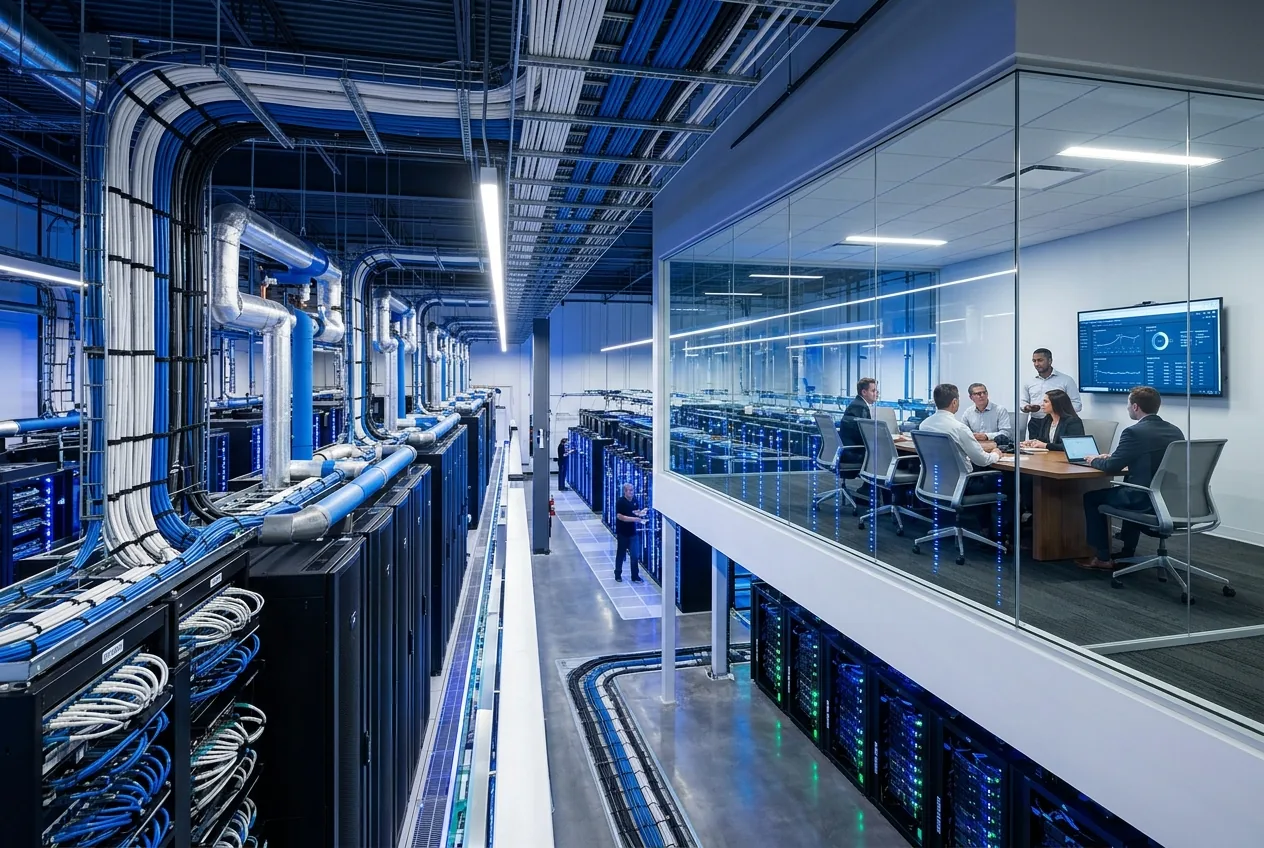
Beyond the silicon itself lies the physical envelope of modern computing: real estate, high-voltage substations, liquid-cooling distribution manifolds, and inter-datacenter fiber backbones. As OpenAI scales its ambitions toward multi-gigawatt computing projects—such as the conceptual hundred-billion-dollar "Stargate" supercomputing initiative—it transitions from a pure software enterprise into an infrastructure-heavy industrial operator. Public markets evaluate physical assets and infrastructure liabilities very differently than private venture investors do.
SEC disclosures will eventually compel OpenAI to reveal the true nature of its physical supply chain commitments. This includes long-term power purchase agreements (PPAs), contractual minimums for datacenter space, and liabilities associated with rapid hardware obsolescence. If an enterprise purchases tens of thousands of specialized accelerators with a functional economic life of three to four years, the amortization schedule alone introduces massive headwinds to net operating margin. Engineering teams must constantly optimize model efficiency to outpace the rate at which current-generation hardware loses its computational value.
Furthermore, the physical constraints of the electrical grid have become a primary operational bottleneck. Securing hundreds of megawatts of continuous baseload power requires negotiations with regional grid operators, nuclear energy providers, and municipal authorities. By preparing for public market capitalization, OpenAI equips itself with the balance sheet weight required to sign decades-long power contracts and co-develop dedicated energy infrastructure, insulating its training pipelines from the volatile merchant electricity market.
Can a Public Benefit Corporation Satisfy Institutional Shareholders?
The chosen corporate destination—a public benefit corporation (PBC)—creates a delicate structural balance between corporate profit and chartered societal duty. Under Delaware law, a PBC permits directors to balance shareholder value against a defined public benefit, shielding the executive team from shareholder lawsuits if they choose to prioritize safety, research integrity, or societal impact over short-term quarterly profit optimization. While this model has gained acceptance among emerging technology firms, its integration into large-scale public markets remains largely untested at OpenAI's anticipated valuation.
Institutional investors on Wall Street prioritize predictability, clear fiduciary alignment, and aggressive capital efficiency. A public benefit charter introduces variables that traditional equity analysts struggle to model. If safety protocols or compute allocation limits throttle commercial deployment, public market shareholders may push back against executive decisions that depress near-term earnings. The regulatory filings must explicitly delineate where fiduciary duty to shareholders begins and where the non-profit's societal mission retains veto power.
This governance evolution reflects a maturation of the entire machine intelligence sector. The romantic era of small research labs pioneering foundational discoveries in isolation has been superseded by an era of industrial-scale capital allocation. By submitting paperwork to the SEC and stepping onto the path toward public market scrutiny, OpenAI is trading the insular autonomy of a research foundation for the immense, unyielding capital engine of global finance. The hardware must be built, the electricity must be bought, and the public markets are the only institutions left capable of footing the bill.




Comments
No comments yet. Be the first!