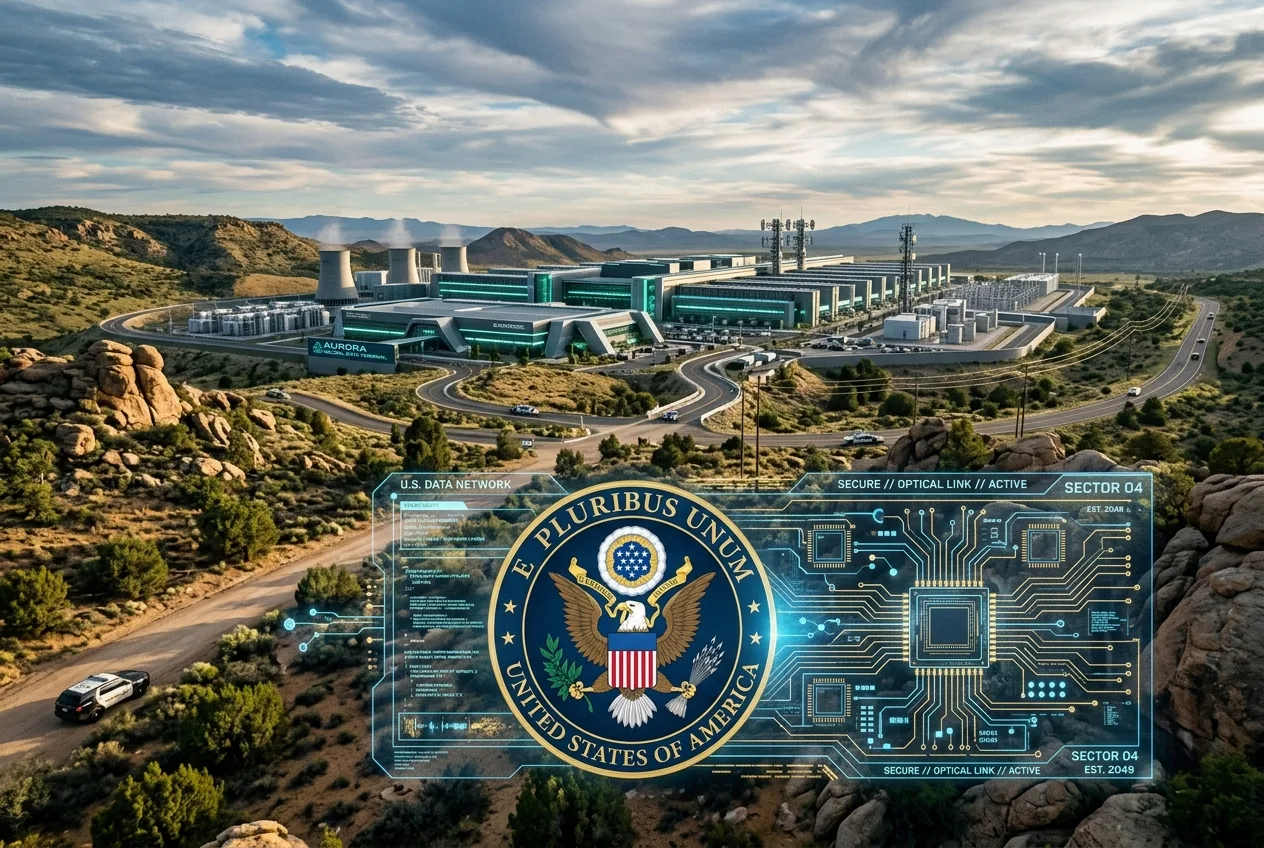
In a move that could redefine the relationship between the federal government and the private technology sector, the Trump administration has entered formal discussions regarding a U.S. government financial stake in OpenAI. The proposal, which has reportedly been under development for over a year, involves the artificial intelligence startup donating approximately 5% of its equity to seed a newly conceived "Public Wealth Fund." This arrangement, confirmed by President Donald Trump during a recent press briefing aboard Air Force One, signals a shift toward a more interventionist industrial policy where the American public becomes a direct stakeholder in the country’s most critical technological assets.
The Mechanics of a Public Wealth Fund
To understand the implications of this deal, one must look at the technical and economic structure of a sovereign wealth fund. Unlike typical government spending, which is funded through taxation and debt, a wealth fund operates as an investment vehicle. By holding equity in a high-valuation firm like OpenAI—recently valued in the neighborhood of $150 billion—the U.S. government would essentially hold an asset that appreciates alongside the company’s success. If OpenAI achieves its goal of developing AGI, the valuation could theoretically reach the trillions, providing a massive, non-tax-based revenue stream for the federal treasury.
The proposal reportedly suggests that this 5% stake should not be limited to OpenAI alone. Instead, the administration is considering a framework where all major domestic AI players, including competitors like Anthropic or Google’s DeepMind, would contribute equity to the fund in exchange for streamlined regulatory environments and access to national-scale infrastructure. From a mechanical engineering and industrial perspective, this is a play for "Sovereign Silicon." It treats AI not as mere software, but as a primary industrial output on par with oil or steel, requiring a unique public-private partnership to sustain the staggering energy and cooling requirements of the next generation of data centers.
AI as a National Industrial Asset
The push for a government stake coincides with a new White House directive ordering national security agencies to accelerate the deployment of advanced, commercial AI models. This is where the pragmatic utility of the deal becomes clear. For years, the federal government has struggled to keep pace with the private sector’s rapid iteration cycles in machine learning. By becoming a partner in OpenAI, the government secures a "front-row seat" to the development of the most capable models, ensuring that the hardware and software stack remains optimized for American interests.
As a journalist focused on the bridge between hardware and the market, I see this as an infrastructure play. OpenAI is currently scouting locations for massive 5-gigawatt data centers—projects that require unprecedented coordination with the power grid and regional water supplies for cooling. If the government is a 5% shareholder, the bureaucratic friction associated with these industrial-scale projects could vanish. The government isn’t just a regulator in this scenario; it is an owner with a vested interest in ensuring OpenAI has the physical capacity to out-compute rivals in the East.
Will Other AI Firms Follow Suit?
There is also the question of regulatory capture. Critics argue that if the government owns a piece of OpenAI, it will have a financial incentive to shield the company from antitrust actions or rigorous safety regulations that might dampen its valuation. For the administration, this is likely seen as a feature rather than a bug. In the current geopolitical climate, the goal is to produce a "national champion" that can set global standards. If the American public is a partner, the administration can argue that protecting OpenAI is equivalent to protecting the American taxpayer’s portfolio.
The Real-World Utility of Sovereign Stakeholding
From an engineering standpoint, the integration of AI into the physical economy—robotics, autonomous logistics, and smart manufacturing—is the true endgame. A Public Wealth Fund could potentially reinvest its dividends back into the very infrastructure that sustains AI. We are talking about the refurbishment of the U.S. electrical grid, the construction of modular nuclear reactors (SMRs) dedicated to compute clusters, and the expansion of domestic semiconductor fabrication. This creates a feedback loop: the government provides the industrial foundation for AI, the AI generates profit, and that profit funds further industrial expansion.
President Trump’s confirmation that the public would become a "partner" in this growth suggests a populist framing for what is essentially a high-tech version of the Tennessee Valley Authority or the expansion of the railroads. It is a recognition that the most valuable commodity of the 21st century is no longer just labor or capital, but the compute power required to automate both. By taking an equity stake early, the administration is betting that OpenAI’s trajectory is upwards and that the American public shouldn't just be consumers of this technology, but the ultimate beneficiaries of its capital appreciation.
Challenges of Valuation and Governance
How does a democracy manage a 5% stake in a volatile, private technology firm? This is perhaps the most complex technical hurdle of the proposal. Typically, government ownership in the U.S. has been a last resort, such as the auto industry bailouts of 2008 or the takeover of AIG. In those cases, the goal was to stabilize the market and exit as quickly as possible. The OpenAI proposal is fundamentally different; it is a long-term investment in a growth sector.
Managing this stake would require a new kind of federal agency or a quasi-independent investment board capable of navigating the nuances of the tech market without being subject to the whims of every election cycle. Furthermore, if OpenAI remains private, the government’s stake is illiquid. It only becomes "money for the public" upon an IPO or a secondary sale. The administration and OpenAI must also determine whether this equity comes with voting rights. If the U.S. government can vote on the board of directors, it effectively turns OpenAI into a state-owned enterprise, a move that could spook international customers and partners who fear government surveillance or interference.
Despite these hurdles, the momentum behind the deal reflects a growing consensus that the "hands-off" approach to AI development is over. Whether it is through the CHIPS Act or direct equity stakes, the government is moving back into the business of industrial development. For OpenAI, the 5% gift is a small price to pay for the ultimate insurance policy: being too integrated into the federal government to ever be allowed to fail.




Comments
No comments yet. Be the first!