The rapid-fire cadence of model iteration at OpenAI has reached a new milestone with the release of the GPT-5.6 series. In an industry where “frontier” models are often gated behind steep subscription tiers, the introduction of GPT-5.6 Luna and GPT-5.6 Sol represents a tactical shift in how compute resources are allocated to the masses. By offering unlimited text conversations to free users via the Luna model, OpenAI is not just expanding accessibility; it is effectively commoditizing high-level conversational AI to maintain market dominance in an increasingly crowded field.
From an engineering perspective, the transition from the previous GPT-5.5 Instant to the 5.6 series suggests a refinement in the underlying weights and the post-training optimization processes rather than a ground-up architectural overhaul. However, the performance metrics reported by OpenAI indicate that these incremental updates yield significant real-world utility, particularly in the realms of factual reliability and user-controlled reasoning depth. As a mechanical engineer and observer of industrial automation, I see this as the move toward a “control panel” approach to AI—giving users the ability to tune the engine depending on the complexity of the task at hand.
The Dual-Model Architecture: Sol vs. Luna
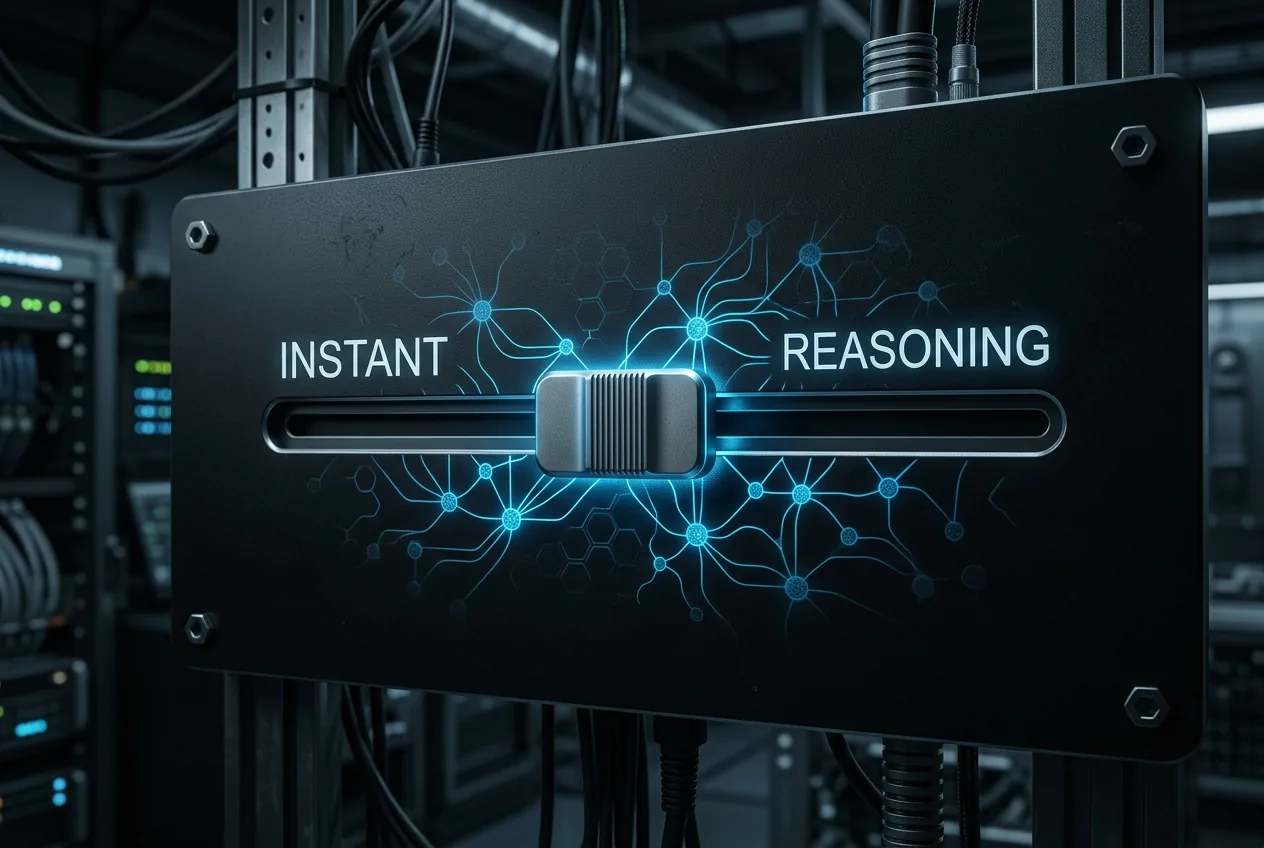
OpenAI is bifurcating the user experience with two distinct variants: GPT-5.6 Sol and GPT-5.6 Luna. GPT-5.6 Sol is now the default for Plus and Pro subscribers. It is optimized for what the company calls the “Chat experience,” focusing on reduced verbosity and higher factual density. The most striking technical addition for Sol users is the inclusion of a reasoning slider. This interface element allows users to manually dictate the depth of the model's Chain of Thought (CoT) processing.
This slider is a pragmatic solution to the “compute-latency trade-off.” In industrial applications, you don't always need a high-torque motor for a low-load task; similarly, you don't always need a deep reasoning cycle for a simple scheduling query. By allowing users to dial the reasoning up or down, OpenAI is effectively offloading the resource management decision to the end-user. For complex troubleshooting or code debugging, the slider can be pushed to its maximum, engaging more intensive inference cycles. For rapid-fire brainstorming, it can be dialed back to ensure low latency.
Conversely, GPT-5.6 Luna is designed for the high-volume environment of the free tier. While it lacks the granular slider found in Sol, it introduces a “Think” button for complex queries. This suggests that Luna operates on a more efficient, perhaps quantized, version of the 5.6 architecture, with the “Think” function triggering a separate, more robust reasoning pathway when requested. The most significant news for the average user, however, is the removal of text-chat limits for Luna, signaling that OpenAI’s infrastructure has reached a level of efficiency where the marginal cost of a text token is nearing zero.
Engineering for Factual Reliability
One of the most persistent criticisms of large language models (LLMs) in professional environments is their tendency toward “hallucinations,” or factual errors. In technical sectors like legal, medical, and financial services, a single error can invalidate the entire utility of a tool. OpenAI claims that GPT-5.6 Sol addresses this through enhanced tuning, stating that in internal tests involving high-precision prompts, factual errors were reduced by 68 percent compared to the previous GPT-5.5 Instant model.
While internal figures should always be approached with a degree of skepticism, a 68 percent reduction in error rates suggests a significant improvement in the model's ability to cross-reference its internal training data before generating a response. This is likely achieved through better grounding and perhaps a more sophisticated “self-correction” mechanism during the reasoning phase. For those of us in robotics and manufacturing, where precision is the only currency that matters, this move toward reliability is more important than any increase in conversational “fluidity.”
The Economic Viability of Unlimited Free Tiers
The decision to grant unlimited text chats to free users is a bold move in the context of global compute shortages and the high costs of H100 and B200 GPU clusters. How can OpenAI afford to provide “unlimited” access to a frontier-class model? The answer likely lies in the efficiency of the Luna model. By distilling the knowledge of the larger models into a more streamlined architecture, OpenAI can serve millions of requests at a fraction of the power consumption required by the full Sol or o1-class models.
The Significance of the Think Button
The introduction of the “Think” button for free users is a notable departure from the previous “black box” approach to AI responses. It forces a distinction between two types of machine intelligence: generative fluency and logical reasoning. In the past, these two were often muddled, with users unsure if the model was actually “reasoning” or simply predicting the next most likely word in a sequence.
Market Dynamics and the Iteration Cycle
However, this rapid naming convention carries the risk of user fatigue and confusion. For enterprise users and developers building on top of these models, the constant shifting of the “default” can create challenges in maintaining consistent output quality. OpenAI has mitigated this somewhat by specifying that GPT-5.6 Sol will not immediately alter the versions used in ChatGPT Work or Codex, providing a layer of stability for professional workflows.
Will GPT-5.6 Change Professional Workflows?
The ultimate question for any technology is whether it enhances productivity in a measurable way. For a mechanical engineer, the value of GPT-5.6 Luna and Sol lies in their ability to act as a reliable reference and reasoning partner. If the factual error reduction holds true in field conditions, these models become viable for summarizing technical specifications, checking for errors in logic within complex systems, and drafting documentation that requires high accuracy.
The unlimited text for free users ensures that the barrier to entry for this tool is essentially non-existent, which will likely lead to a surge in AI adoption in small-scale manufacturing and independent engineering firms that may have been hesitant to commit to a monthly subscription. By making the “low-load” version free and unlimited, OpenAI is ensuring that their ecosystem becomes the default operating system for human-AI collaboration.
As we look forward, the arrival of Luna and Sol marks the end of the “limited tokens” era for text and the beginning of the “controlled reasoning” era. The focus is no longer on whether the AI can talk, but on how precisely it can think and how reliably it can deliver the truth. For the industrial world, that is the only metric that truly matters.




Comments
No comments yet. Be the first!