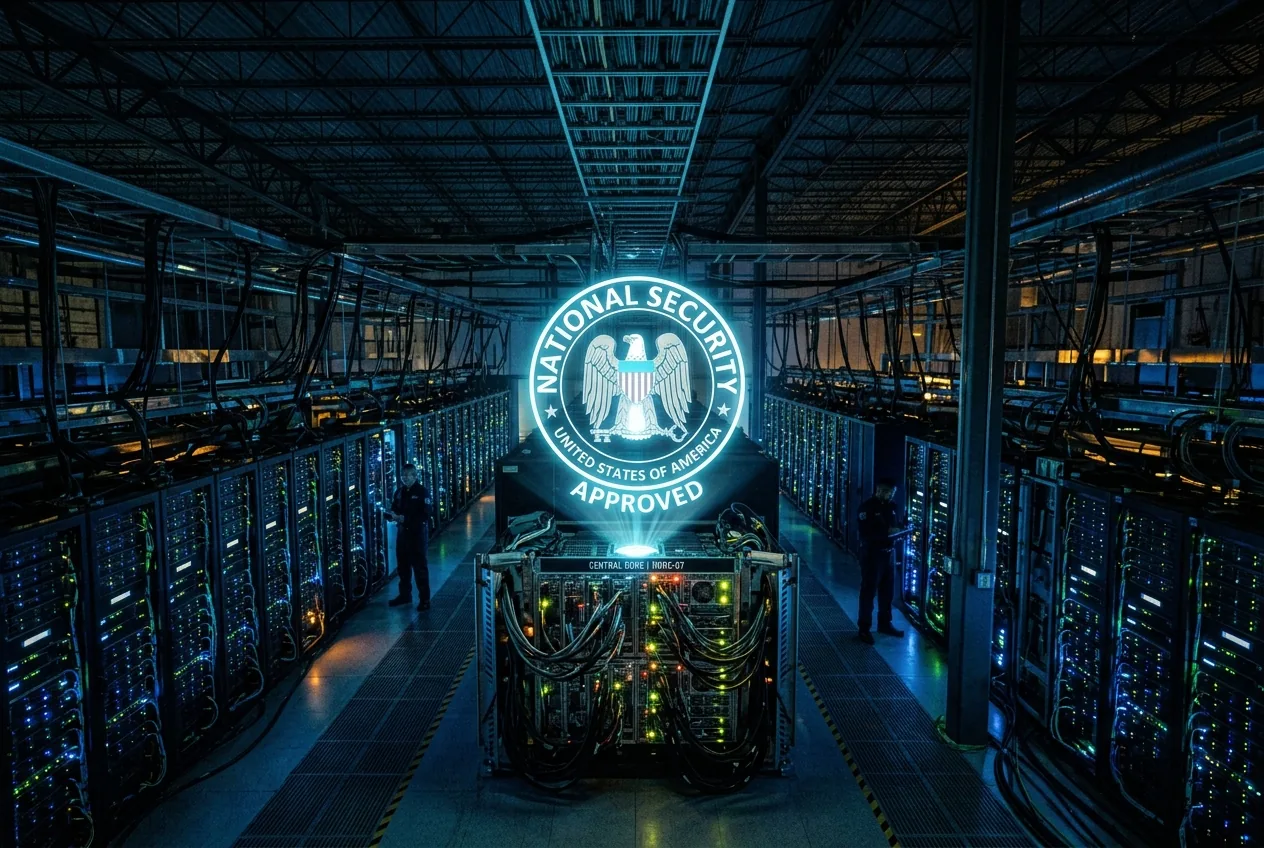
The arrival of OpenAI’s GPT-5.6 Sol represents more than a leap in natural language processing; it is the first major indicator of how geopolitical friction will dictate the deployment of frontier artificial intelligence. After a month-long delay mandated by the U.S. government, OpenAI has officially released its latest family of models—Sol, Terra, and Luna—following a rigorous review process designed to assess national security risks. The rollout signals a new era for the technology industry, where the velocity of software innovation is now officially tethered to federal oversight.
For those of us tracking the intersection of mechanical engineering and industrial automation, the significance of GPT-5.6 lies not in its ability to write poetry, but in its underlying architecture and its capacity for complex, real-world task management. The delay, reportedly sparked by concerns within the Trump administration regarding dual-use capabilities, suggests that the model’s reasoning abilities have reached a threshold where they could potentially be leveraged in sensitive sectors, from cybersecurity to biological engineering. The subsequent approval for release came only after additional testing and high-level meetings between OpenAI leadership and government officials.
The Architecture of the Sol-Terra-Luna Triad
OpenAI has structured this release into a three-tiered hierarchy, a move that reflects the economic and computational realities of modern AI deployment. At the top sits Sol, the most capable and resource-intensive model. While technical specifications remain closely guarded, the performance metrics suggested by the company indicate a significant reduction in hallucination rates and a heightened ability to navigate multi-step logical chains. From an industrial perspective, Sol is designed for high-stakes environments where precision is paramount and the cost of inference is secondary to the accuracy of the output.
Below Sol are the Terra and Luna models. Terra is positioned as the workhorse for enterprise-level automation, balancing performance with operational cost. Luna, the most efficient of the three, appears to be an optimization play for edge computing and high-volume, low-latency applications. This tiered strategy is a pragmatic response to the staggering energy and hardware requirements of frontier models. By segmenting the capabilities, OpenAI allows companies to match the intelligence of the model to the specific requirements of the task, thereby optimizing the return on investment for compute resources.
GPT-Live and the Mechanics of Full-Duplex Interaction
One of the most technically interesting features introduced alongside GPT-5.6 is GPT-Live, a voice interface built on what the company describes as a full-duplex architecture. In traditional human-computer interaction, systems typically operate on a half-duplex basis: the user speaks, the system processes, and then the system responds. This creates a cognitive lag that prevents natural collaboration. GPT-Live breaks this paradigm by allowing the model to listen and speak simultaneously.
This full-duplex capability is not merely a novelty; it is a sophisticated engineering achievement in latency management. The system uses a continuous feedback loop to process incoming audio while generating outbound tokens in real-time. This allows the AI to handle interjections, recognize pauses for thought, and provide verbal cues like "mhmm" or "yeah" without breaking the processing stream. In an industrial or collaborative engineering setting, this reduces the friction of hands-free operation, allowing a technician to receive real-time guidance while performing complex assembly or diagnostic tasks without the staccato rhythm of traditional voice assistants.
National Security as a Regulatory Barrier
The intervention of federal authorities in the GPT-5.6 rollout is a watershed moment for the AI industry. Previously, the release of large language models (LLMs) was largely at the discretion of the developers. The month-long hold indicates that the U.S. government now views frontier AI through the same lens as advanced semiconductor manufacturing or nuclear technology—as a strategic asset with significant national security implications.
The specific nature of the government’s concerns likely centers on the model’s “emergent properties”—capabilities that appear only at certain scales of compute and data. If a model can assist in the creation of novel chemical compounds or provide actionable intelligence on bypassing critical infrastructure security, it ceases to be a mere productivity tool. The fact that the release was eventually cleared suggests that OpenAI has implemented robust safety guardrails, but the precedent of the delay itself creates a new regulatory hurdle for all future “frontier” models. We are moving toward a world where a “Security Clearance for Software” may become a standard phase of the development lifecycle.
The Industrial Pivot: Automation and Workforce Calibration
GPT-5.6 is designed to fit into this new landscape. The "office tool" features released with Sol are aimed at taking over the mechanical, repetitive aspects of professional work—scheduling, data synthesis, and document drafting—while leaving high-level decision-making to the user. For the engineering sector, this could mean an AI that handles the grunt work of compliance documentation and CAD data management, freeing engineers to focus on design and physical testing. The economic viability of these models will depend on whether they can truly reduce the cognitive load on skilled workers without introducing new types of errors that require human remediation.
The Hardware Arms Race and Global Compute
Behind the software launch is an escalating battle for the physical infrastructure required to run these models. Reports that Anthropic is negotiating a $10 billion deal with Meta to lease computing power—specifically to secure access to Nvidia hardware—underscore the scarcity of high-end GPUs. OpenAI’s decision to release three versions of GPT-5.6 is partially a response to this hardware bottleneck. Efficient models like Luna allow the company to serve a larger user base without overextending its most advanced server clusters.
This hardware constraint is the ultimate limiting factor for AI growth. As models become more complex, the energy requirements for training and inference are hitting the limits of existing power grids. We are seeing a convergence of AI development and energy infrastructure, with tech giants increasingly investing in modular nuclear reactors and advanced cooling systems. The release of Sol is a triumph of software engineering, but the long-term sustainability of such models depends on solving the underlying mechanical and electrical challenges of the data center.
How GPT-5.6 Sol Will Reshape the Market
As GPT-5.6 Sol begins its phased rollout, the market will quickly determine if the model’s performance justifies its cost and the regulatory scrutiny it endured. For individual users, the shift may feel incremental—a faster response here, a more natural conversation there. But for the industrial and tech sectors, the implications are profound. We are seeing the crystallization of a two-tier AI ecosystem: highly regulated, massive-scale frontier models controlled by a few giants, and smaller, open-source models that prioritize accessibility over raw power.
The delay of GPT-5.6 Sol proves that the “move fast and break things” era of AI is effectively over for frontier models. As these systems become more integrated into the backbone of national economies and defense, the hand of the state will only become more visible. For engineers and tech leaders, the challenge now is to build systems that are not only technologically advanced but also resilient enough to withstand the shifting sands of global policy and the physical realities of the compute market.




Comments
No comments yet. Be the first!