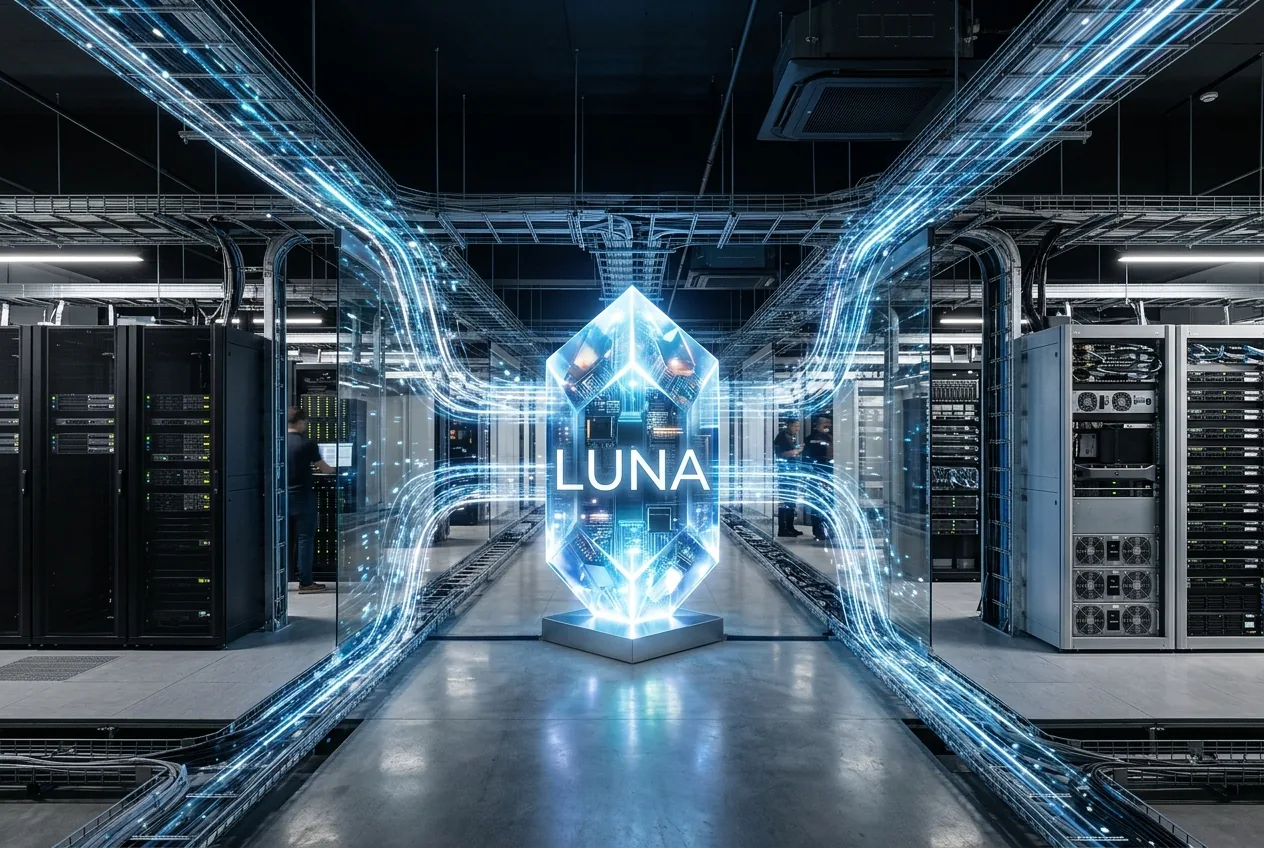
From a mechanical and systems engineering perspective, the removal of rate limits suggests a massive leap in hardware efficiency or a breakthrough in model distillation. Serving a global user base of over one billion people without capping interactions requires an infrastructure capable of handling unprecedented token throughput. The introduction of the GPT-5.6 architecture, bifurcated into the 'Luna' and 'Sol' variants, provides the technical framework for this expansion. While Luna becomes the workhorse for the free tier, the more robust Sol variant remains the cornerstone for Plus and Pro subscribers, offering deeper reasoning capabilities and higher-order logic processing.
The Architecture of GPT-5.6 Luna
GPT-5.6 Luna is designed to solve the two primary friction points of modern LLMs: latency and factual drift. In industrial and technical applications, the primary barrier to AI adoption has often been the 'hallucination' rate—the tendency for models to generate plausible but incorrect data. OpenAI reports that GPT-5.6 Luna produces 62% fewer factual errors than its predecessors. This is not merely a result of more data; it is an architectural refinement in how the model cross-references its internal weights with its retrieval-augmented generation (RAG) systems.
The Luna model appears to be an optimized 'small-large' model. It maintains the broad knowledge base of the GPT-5 family but utilizes a more efficient attention mechanism that reduces the compute cost per token. For the average user, this translates to faster response times without the traditional drop-off in quality that usually accompanies 'lighter' models. In professional contexts, particularly in engineering and supply chain management, this reliability is critical. When a user asks for a specific material tolerance or a regulatory requirement, the margin for error is non-existent. The 62% improvement in factual accuracy suggests that OpenAI has prioritized groundedness over creative flexibility in this iteration.
Reasoning on Demand and the Think Button
One of the most significant UI and functional changes accompanying this update is the introduction of the 'Think' button for free users. This feature allows users to manually trigger higher-level reasoning for complex queries. Technically, this represents a shift from 'always-on' reasoning—which is computationally expensive—to a user-directed inference model. When the 'Think' button is activated, the model likely engages a chain-of-thought (CoT) process or a secondary verification pass that requires more time and compute but yields a more logical, multi-step output.
For the engineering community, this is a pragmatic solution to the resource-allocation problem. Not every query requires a deep dive into first principles. A request for a Python script to automate a simple file transfer does not need the same cognitive load as a request to troubleshoot a complex mechanical failure in a robotic assembly line. By giving the user control over when the model 'thinks,' OpenAI is effectively load-balancing its servers while providing users with a clear distinction between 'Instant' responses and 'Deep' reasoning. This transparency in processing allows users to manage their own expectations regarding latency and answer depth.
Sol vs. Luna: The Tiered Capability Gap
While free users gain unlimited access to Luna, paying subscribers (Plus and Pro) are being moved to GPT-5.6 Sol. The Sol variant represents the peak of OpenAI’s current capability, boasting a 68% reduction in factual errors. The technical distinction between Luna and Sol lies in the depth of the reasoning tokens and the precision of the output. Sol is designed to be more direct, avoiding the 'vague-booking' and unnecessary formatting that often plagued earlier models. It identifies the core intent of a prompt and delivers a focused, high-density response.
A key feature for Sol users is the 'Thought Slider,' which allows for granular control over the model's reasoning intensity. In an industrial setting, this is a powerful tool. An engineer might set the slider to a lower setting for routine documentation tasks to ensure speed, but ramp it up to maximum when performing a root-cause analysis on a failed component. This control over the 'compute budget' of a single interaction is a sophisticated evolution in user interface design for AI, acknowledging that different tasks have different optimal levels of analytical depth.
Economic Viability of Unlimited Free Tiers
The decision to offer unlimited chats to free users raises questions about the economic and technical sustainability of OpenAI's operations. The cost of running inference at this scale is astronomical. However, several factors likely make this viable. First, the efficiency gains in the GPT-5.6 architecture, particularly in the Luna variant, may have brought the cost-per-interaction down to a level where it serves as a loss leader for data collection and ecosystem lock-in. Every interaction provides valuable feedback data that can be used to further refine the models, especially regarding factual accuracy.
The Impact on Technical and Industrial Workflows
For those in robotics and automation, the democratization of GPT-5.6 Luna changes the baseline for integrated AI. With no limits on text-based chats, developers can more freely integrate ChatGPT into their diagnostic and planning workflows without worrying about hitting a wall mid-shift. The model’s improved ability to handle dates, numbers, and rules makes it a more viable assistant for managing inventory logs, scheduling maintenance, and interpreting complex technical manuals.
Will Reliability Finally End the Hallucination Era?
The central question remaining is whether a 62% to 68% reduction in factual errors is enough to gain the full trust of the industrial sector. While a significant improvement, it still implies a margin of error that could be problematic in high-stakes environments. However, the trajectory is clear: OpenAI is no longer just optimizing for conversational fluency; they are optimizing for truth. The use of financial, medical, and legal prompts as the benchmarks for these updates suggests a pivot toward 'high-consequence' AI usage.




Comments
No comments yet. Be the first!