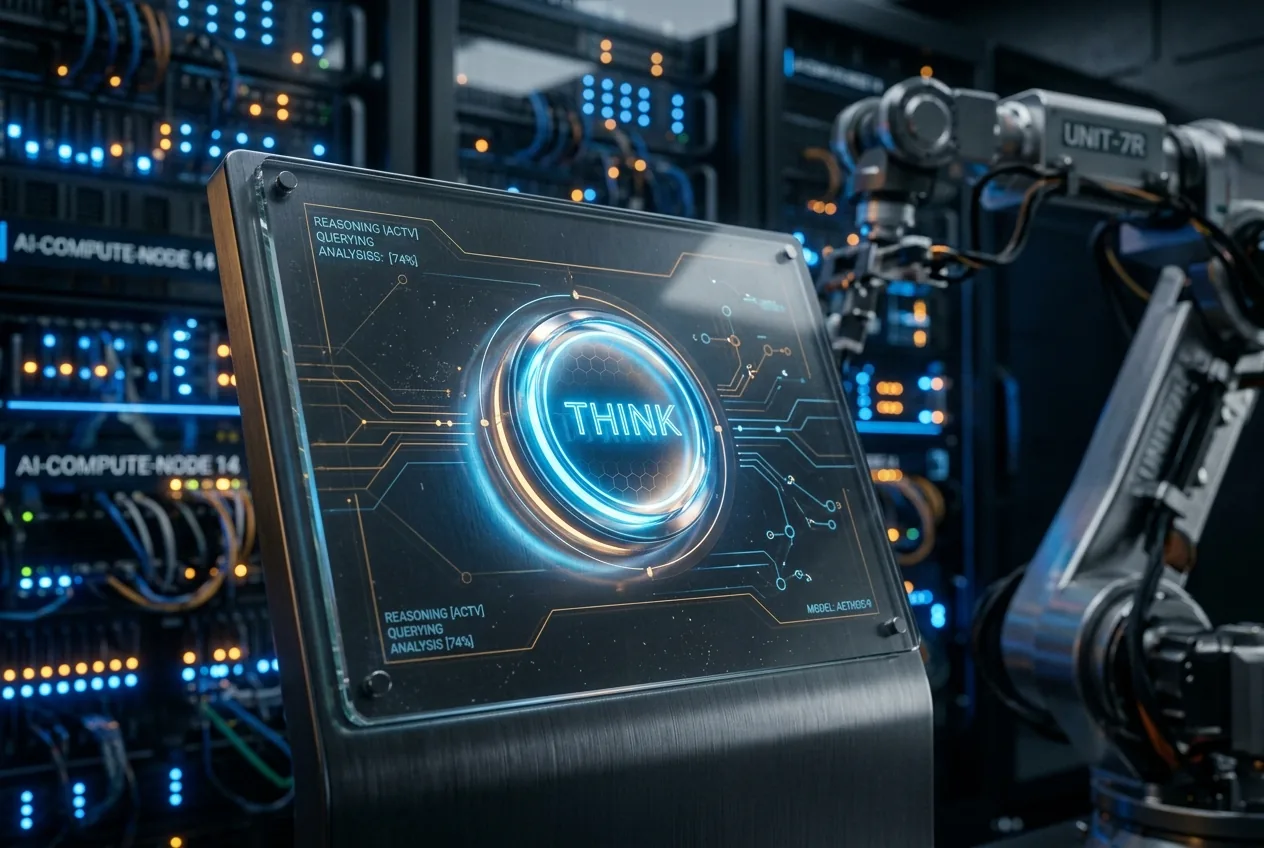
In the high-stakes theater of Large Language Model (LLM) development, the transition from raw generative capability to precision reasoning is the new frontline. OpenAI has officially signaled the next phase of this evolution with the rollout of GPT-5.6, a model update that targets two of the most persistent criticisms of the platform: verbosity and factual reliability. While the headlines focus on the removal of text-chat limits for free users and the milestone of one billion weekly active users, the real story for those of us tracking the mechanics of AI lies in the introduction of the “Think” button and the technical bifurcation of the model into “Luna” and “Sol” variants.
As a mechanical engineer, I view these software updates through the lens of efficiency and resource allocation. For years, ChatGPT has operated as a somewhat monolithic black box; you provided an input, and the server-side architecture decided how much compute to throw at it. With GPT-5.6, OpenAI is handing the throttle to the user. This isn’t just a user interface tweak; it is a fundamental shift in how inference costs are managed and how the user interfaces with the underlying logic engine.
The bifurcation of Luna and Sol
The rollout introduces a tiered nomenclature that clarifies the model's intent. GPT-5.6 Luna has become the default for the free tier, replacing previous iterations with a model optimized for speed and succinctness. Meanwhile, GPT-5.6 Sol is the powerhouse reserved for Plus and Pro subscribers. The technical distinction between the two appears to be a matter of parameter density and the depth of the reasoning chains the models are permitted to engage in before producing an output.
In industrial terms, Luna is the “edge” model—lean, fast, and designed for high-throughput, low-latency interactions. Sol is the heavy machinery. OpenAI claims that Sol provides more focused answers and, crucially, avoids “unnecessary formatting.” This is a direct response to a phenomenon often dubbed “GPT-speak,” where models would pad answers with polite filler and redundant bullet points to meet a perceived length requirement. By stripping away this token bloat, OpenAI isn't just improving the user experience; they are optimizing their own token-out costs, which, at a scale of one billion users, represents a massive operational saving.
What does the Think button actually toggle?
In standard mode, the model is reflexive. In “Think” mode, the model is reflective. It allocates more computational cycles to verify its own logic before outputting a response. This allows the model to catch errors in multi-step math problems, identify logic traps, or realize when it is about to provide a “hallucination” based on common but incorrect internet data. The “thought slider” effectively allows a user to determine the depth of this verification process. For a simple query about the weather, lower compute (and faster response) is logical. For debugging a complex piece of C++ or calculating the torque requirements for a robotic actuator, the user can now specify that the model should “think” harder, even if it takes longer to reach the result.
The war on hallucinations and the 'Caveman' prompt
One of the more interesting technical notes in the GPT-5.6 release is the promise of “more reliable facts.” Factual accuracy has always been the Achilles' heel of probabilistic models. Because LLMs operate on the likelihood of the next token rather than a hard database of truth, they are prone to confident errors. OpenAI appears to be mitigating this by training GPT-5.6 to be more self-correcting. Rather than simply agreeing with a user’s leading question—a bias known as sycophancy—the new model is programmed to offer a “helpful correction when simply agreeing wouldn't be useful.”
This is a significant pivot. Previously, users had to employ sophisticated prompting techniques, such as the “Caveman” skill, to force the AI to be direct and stop the sycophantic fluff. The fact that OpenAI is now baking this succinctness and skepticism into the model's default behavior suggests a maturing of the technology. We are moving away from AI as a conversational toy and toward AI as a reliable industrial tool. For professionals in fields like law or engineering, where a “confident wrong answer” can have catastrophic consequences, these guardrails are the bare minimum required for trust.
Does the math work for OpenAI's bottom line?
Despite the technical triumphs, the economic viability of giving away GPT-5.6 Luna for free remains a point of intense debate. OpenAI is currently valued at astronomical levels, yet reports suggest the company is burning through billions of dollars in compute costs and R&D. By removing the text-chat limits for free users, OpenAI is doubling down on a growth-first strategy. The goal is clearly to maintain market dominance and a massive data moat, even if it means operating at a loss in the short term.
The hardware connection and the Apple rivalry
The timing of this rollout is also significant given the reported friction between OpenAI and Apple. While ChatGPT is currently integrated as an extension of Siri, there are rumors that this partnership may be nearing its expiration date as Apple continues to develop its own on-device “Apple Intelligence.” Apple’s approach has been conservative, focusing on small, on-device models that prioritize privacy and low power consumption over sheer reasoning power. OpenAI’s GPT-5.6 is a clear attempt to show that the cloud-based model still reigns supreme in terms of raw capability.
Furthermore, leaks regarding OpenAI’s own hardware development—including a device similar in size to an Alexa Dot—suggest the company is looking to bypass the smartphone entirely. A dedicated “reasoning device” powered by GPT-5.6 could provide a level of interaction that a background service on an iPhone simply cannot match. If the “Think” mode becomes efficient enough to run with minimal latency, the move from a chatbot to a true digital assistant becomes much more plausible.
Is the AI bubble finally meeting reality?
As we see these incremental upgrades, we have to ask: are we hitting a plateau, or is this the calm before a revolutionary storm? The move from GPT-4o to GPT-5.6 feels more like a refinement than a paradigm shift. However, for those of us in the industrial and robotics sectors, refinement is exactly what we need. We don't need a robot that can write a poem; we need a robot that can analyze a sensor feedback loop and determine with 99.9% accuracy why a joint is overheating.




Comments
No comments yet. Be the first!