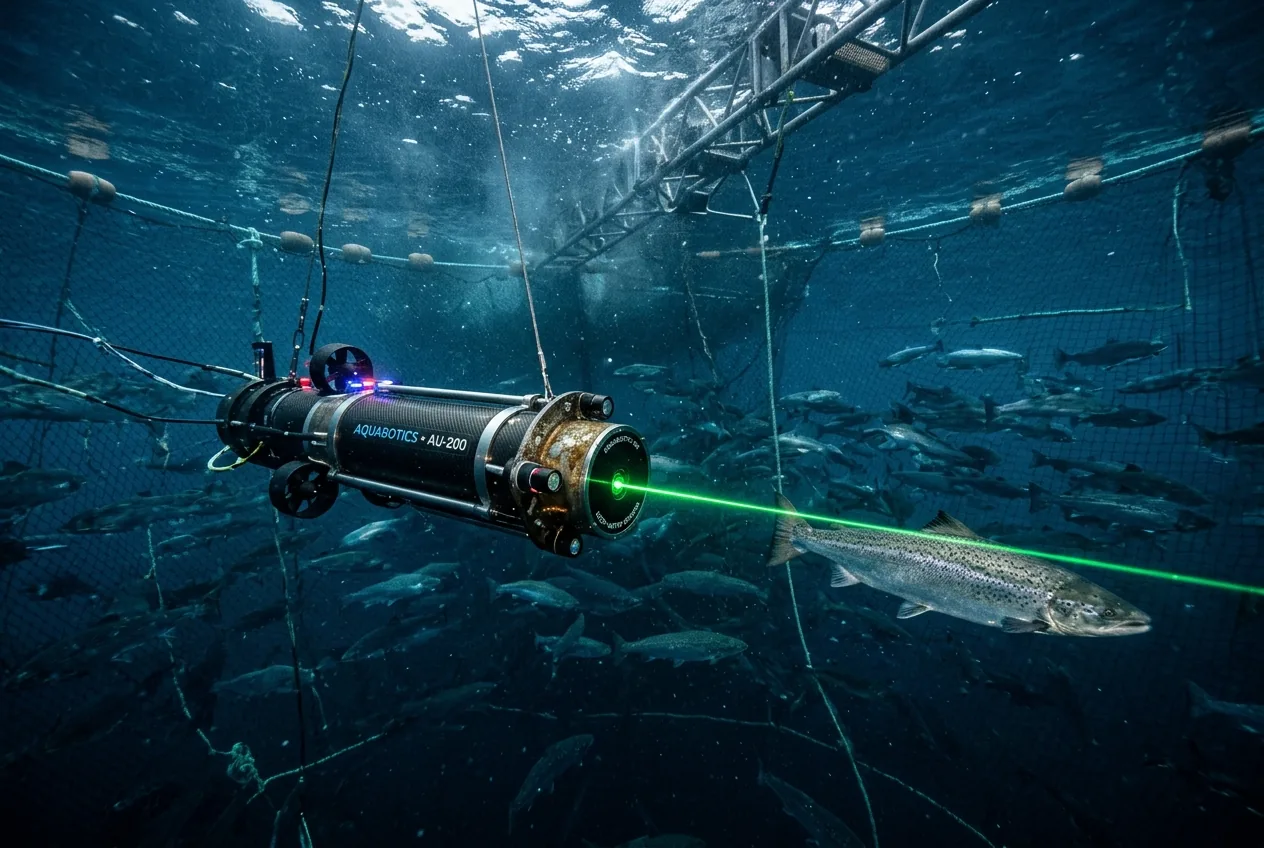
At the center of this industrial intervention is Lepeophtheirus salmonis, commonly known as the sea louse. The marine parasite attaches itself to the exterior of host fish, consuming mucus, epidermal tissue, and blood. Left unchecked, infestations compromise the fish’s osmoregulation, induce chronic physiological stress, and expose the population to secondary bacterial infections. In severe cases, infestations render entire stocks unmarketable or trigger widespread mortality. For an industry that supplies a significant portion of the world's farmed salmon, sea lice represent both a persistent biological vulnerability and a multibillion-dollar operational friction point.
The Engineering Failure of Chemical and Thermal Delousing
For decades, commercial operators have relied on brute-force methodologies to suppress parasite populations. The primary vector for remediation historically centered on chemical baths using hydrogen peroxide, organophosphates, or synthetic pyrethroids. Beyond the environmental degradation caused by discharging active pharmaceutical ingredients into coastal fjords, continuous chemical exposure exerted severe evolutionary pressure, resulting in widespread pesticide resistance across wild and farmed parasite populations.
As the efficacy of chemical agents declined, commercial farms pivoted toward mechanical and thermal intervention. These techniques require crowding tens of thousands of fish into nets, pumping them through specialized workboats, and washing them in warm water or passing them through hydro-mechanical scrubbers to strip the lice physically. While these interventions avoid chemical contamination, the physical stress is catastrophic. The mechanical friction often damages the salmon's protective mucus layer and causes scale loss. The rapid temperature fluctuations of thermal delousing frequently trigger high rates of immediate and delayed mortality, creating significant margin erosion for farm operators.
The core mechanical problem lies in treating delousing as an episodic crisis response rather than an ongoing maintenance task. Crowding and pumping livestock fundamentally disrupts the biomass, suppresses feed conversion ratios, and introduces handling-induced trauma. To build an economically resilient aquaculture model, engineers needed an in-situ solution capable of continuous, non-contact eradication that operates entirely within the ambient swimming environment of the fish.
Machine Vision at Five Pulses Per Second
Stingray’s subsea installation—often deployed as buoy-tethered nodes suspended directly inside the net pen—combines high-frame-rate stereoscopic cameras, targeted LED lighting arrays, and steerable laser optics. The units remain submerged around the clock, continuously monitoring the ambient volume as fish navigate through the pen. Rather than requiring the fish to be funneled into single-file raceways, the platform relies on low-latency neural networks running on local hardware to process visual feeds in real time.
When an Atlantic salmon passes the optical path, the system’s edge computer executes real-time semantic segmentation to distinguish the host fish from the parasitic crustacean. The computer-vision pipeline isolates the millimeter-scale morphology of the louse against the reflective, moving scales of the host. The tracking pipeline must account for light refraction through fluctuating marine currents, suspended organic particulate, and the non-linear kinematics of the swimming salmon.
Once coordinates are locked, a high-precision optical mirror galvanic system directs a short-duration laser pulse directly at the parasite. The wavelength and exposure duration are calibrated to vaporize or mortally disrupt the cellular structure of the sea louse. Because the salmon's silver scales possess high reflectivity and the burst duration is measured in milliseconds, the beam delivers minimal thermal energy to the host tissue, neutralizing the parasite without triggering skin lesions or flight responses in the fish. The optical unit can re-acquire targets and fire up to five discrete pulses per second, maintaining continuous operational suppression.
Autonomous Telemetry and Biological Diagnostics
While the kinetic function of the robot is parasite elimination, the steady-state value of the platform is rooted in computational telemetry. Commercial aquaculture has historically operated with low optical visibility into net pens, relying on manual dip-net sampling of small cohorts to extrapolate overall herd health. By placing high-resolution machine-vision sensors permanently inside the biomass, the units convert the fish pen into an active data collection platform.
The same vision models that detect sea lice simultaneously profile morphological metrics across millions of swimming fish. Neural networks calculate individual biomass, track weight gain curves, identify external skin lesions, and monitor sexual maturation across the population. This algorithmic data pipeline allows operators to detect early-stage pathogen outbreaks, adjust automated pellet feeding systems based on real-time consumption rates, and predict harvest dates with statistical accuracy unattainable through periodic manual sampling.
Economic Viability and Operational Scaling
The operational expansion of this photonic architecture reflects a shift in industrial capital expenditure. Field reports show the deployment scale moving rapidly from early commercial trials to widespread adoption. Over 3,500 active laser nodes are now patrolling marine pens along the Norwegian coastline, deployed across more than 170 commercial sites. The systems actively monitor and protect upwards of 112 million fish, representing roughly a quarter of Norway’s entire farmed salmon inventory.
The operational returns are visible in treatment frequency metrics. Across industrial operations, farms employing continuous photonic eradication reported that lice-related delousing weeks dropped to 9.4%, compared to 16.3% in operations relying exclusively on traditional episodic treatments. By reducing the absolute population of adult female lice before exponential breeding cycles occur, the autonomous nodes lower the ambient reproductive baseline inside the enclosed pen.
High capital expenditure remains a constraint on universal adoption. Subsea robotics deployed in high-salinity marine environments face rapid biofouling, mechanical wear from tidal currents, and intense physical stress on optical viewports. Deploying dozens of networked units across offshore concessions requires capital outlays that smaller, independent aquaculture operators struggle to amortize compared to hiring third-party delousing vessels on demand.
Nevertheless, the intersection of tightening environmental regulations on chemical discharge and the direct financial losses associated with handling-induced fish mortality is altering the economics. As industrial hardware matures, the integration of autonomous directed-energy systems into aquaculture demonstrates that precision automation can replace brute-force chemical protocols, transforming one of the world's most physically punishing marine environments into a controlled, digitized production line.



Comments
No comments yet. Be the first!