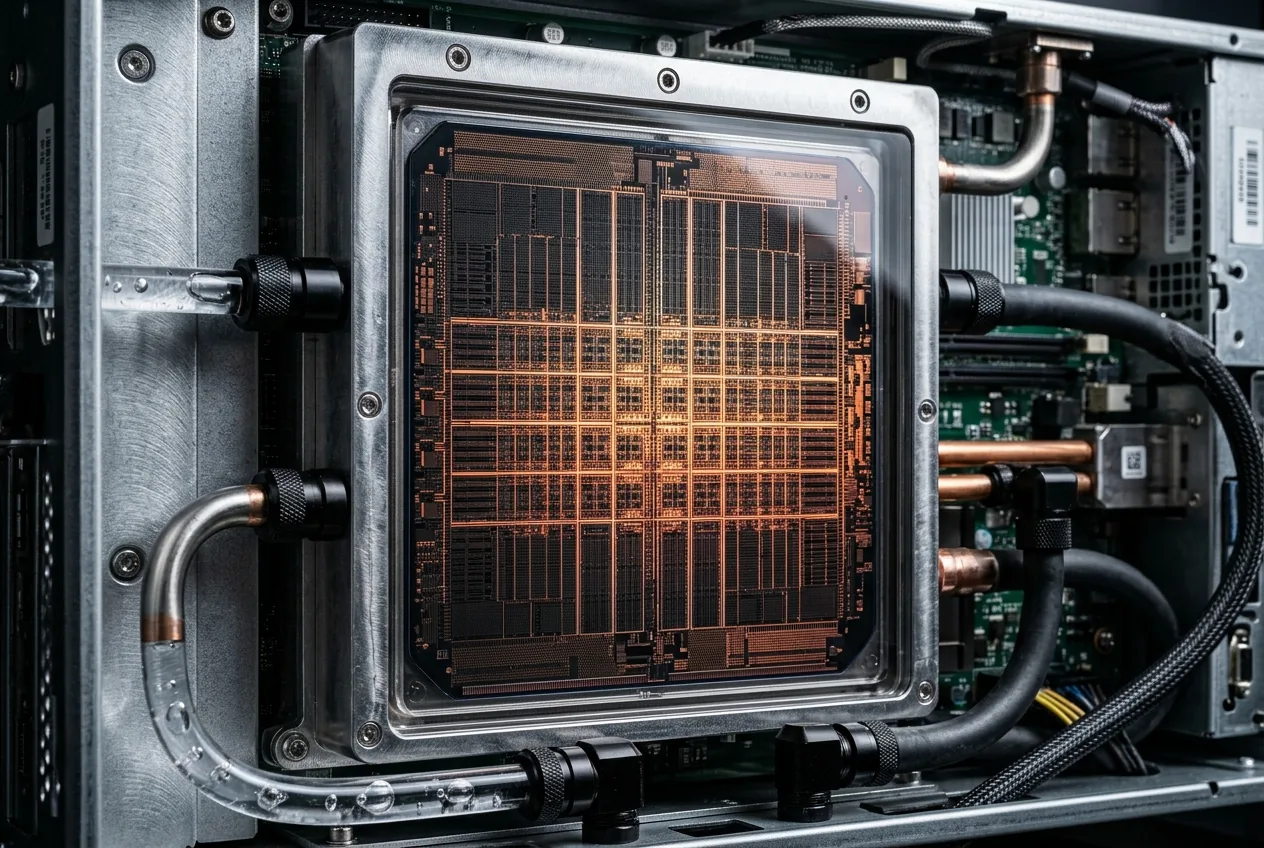
In machine learning infrastructure, the tension between model reasoning capacity and operational latency has long functioned like a conservation law: if you needed real-time deterministic responses, you compressed, quantized, or distilled down to lightweight architectures. If you required frontier-level reasoning, you accepted the latency tax imposed by memory-bound GPU clusters. OpenAI’s preview of Ultrafast mode for its flagship GPT-5.6 Sol model systematically attacks that compromise. Running at up to 14 times the speed of standard production deployments, the new tier generates up to 750 output tokens per second, bridging the gap between frontier intelligence and synchronous, machine-speed execution.
The announcement shifts the technical debate from raw parameter scale to the mechanics of inference throughput. Rather than relying on incremental optimizations of existing tensor-parallel server racks, the speed class is powered through a direct hardware integration with chipmaker Cerebras. Delivering 750 tokens per second transforms generative models from contemplative, turn-based systems into continuous data pipelines capable of keeping pace with high-bandwidth human dialogue, quantitative trading environments, and autonomous industrial control loops.
Overcoming the Autoregressive Memory Wall
To understand why a 14-fold speed jump matters, one must dissect the engineering bottleneck of autoregressive token generation. Large language model inference is notoriously memory-bandwidth bound rather than compute-bound during the generation phase. While initial prompt ingestion can parallelize matrix multiplications across thousands of tensor cores, generating output tokens happens sequentially: each new token requires reading the entire model’s weights and the key-value (KV) cache out of memory. On conventional clusters composed of discrete GPUs linked across PCIe buses and NVLink switches, the physical transit time between high-bandwidth memory (HBM) stacks and compute logic creates an unyielding latency floor.
For a model with the complexity of GPT-5.6 Sol, executing across this wafer-scale fabric eliminates serialization overhead. The result is an inference environment where memory transfer speeds match arithmetic execution rates. This structural shift allows OpenAI to deliver 750 tokens per second without pruning model layers, degrading floating-point precision to unworkable levels, or sacrificing contextual comprehension.
Closing the Control Loop in Industrial and Digital Systems
In mechanical engineering and industrial systems, latency dictates control fidelity. A system that takes five seconds to analyze telemetry cannot participate in closed-loop supervisory control; it is relegated to passive post-mortem logging. By driving latency down to near-instantaneous output, OpenAI demonstrated Ultrafast mode generating functional, interactive 3D warehouse simulations directly from descriptive text prompts in real time. Standard inference tiers build environments incrementally, stuttering through spatial calculations and asset declarations; Ultrafast renders the programmatic logic and spatial geometries at speeds comparable to a native graphics pipeline compiling code.
This velocity alters how autonomous software interacts with physical and digital assets. Inside OpenAI, engineering teams have deployed Ultrafast within automated incident response workflows. During complex production outages, when distributed telemetry, memory traces, and error logs are shifting dynamically, seconds determine the blast radius. Instead of an engineer waiting through a prolonged diagnostic inference cycle, the Ultrafast engine ingests multi-source telemetry, formulates hypotheses, executes verification scripts, and drafts corrective patches while the anomaly is still actively propagating.
The same mechanics apply to physical supply chains and automated facilities. When robotic fleets encounter edge-case pick failures or spatial deadlocks, resolving the trajectory conflict requires synthesizing sensor inputs, kinematic constraints, and warehouse state tables. A model operating at 750 tokens per second can parse the unstructured failure mode, calculate viable recalculations, and issue corrective commands well within the standard operational timing thresholds of industrial programmable logic controllers.
Enterprise Stress Tests and Latency Elimination
Early access testing among external enterprise partners demonstrates how high-throughput inference shifts commercial software design. Quantitative trading firm Jane Street has integrated the Ultrafast tier into developer-facing programming environments, collapsing the latency barrier that traditionally breaks programmer focus during complex, multi-file code transformations. When code completions and full architectural refactorings generate faster than an engineer can scan them, the cognitive loop remains unbroken.
In voice applications, the latency improvements resolve an even harsher structural constraint. Communication platform Podium integrated GPT-5.6 Sol Ultrafast into their production voice stack. Historically, conversational voice agents had to rely on tiny, highly specialized models to keep round-trip response latencies under 500 milliseconds—the threshold beyond which human conversation feels broken and unnatural. Ultrafast allows developers to run deep, full-parameter reasoning models inside the audio streaming loop without conversational jitter, enabling agents to parse intricate queries, cross-reference external databases, and synthesize spoken responses without awkward pauses.
Financial research platforms like Rogo and workflow automation companies like Basis report similar structural shifts. Complex multi-step document aggregation, financial modeling, and deterministic tool use typically compound latency across each sub-agent invocation. When an analytical agent must call half a dozen tools sequentially, a 10-second delay per step makes interactive research unviable. At 750 tokens per second, multi-agent orchestrations complete their end-to-end reasoning chains in fractions of a second, converting batch-style data extraction into continuous analytical dialogue.
The Economic Calculus of Bespoke Wafer-Scale Inference
While the performance figures of Ultrafast mode represent an undeniable technical leap, they also introduce complex infrastructural and economic questions. The hyperscale AI market has largely consolidated around standard modular rack architectures populated by commodity GPUs. Deploying wafer-scale silicon requires bespoke power distribution, custom liquid cooling loops, and dedicated compiler toolchains capable of mapping massive computational graphs across an entire silicon wafer without standard cluster routing.
The capital expenditure equation for running frontier models at 14x speed hinges entirely on utilization density. Wafer-scale engines carry steep packaging and manufacturing complexity compared to individual modular dies cut from standard 300mm ingots. However, because each wafer can replace dozens of discrete server nodes while consuming fewer total watts per delivered token, the operational expenditure of high-density inference can flip favorably at scale. If an enterprise pays a premium API tier price for Ultrafast, but that tier eliminates worker idle time, consolidates compute infrastructure, and enables previously impossible real-time products, the total cost of ownership swings sharply toward high-throughput silicon.
Capacity constraints will dictate the rollout speed. OpenAI is launching Ultrafast in a restricted preview tier precisely because wafer-scale capacity cannot be spun up overnight in generic colocation facilities. As Cerebras manufacturing scales and OpenAI builds out dedicated low-latency clusters, the availability of 750-token-per-second frontier models will test whether the wider tech ecosystem is prepared to rebuild its software architectures around instantaneous generative intelligence.
The Shift to Synchronous Machine Intelligence
The transition from standard inference speeds to Ultrafast marks the end of an era where machine intelligence was treated as an asynchronous consulting layer. For the first decade of commercial deep learning, software engineers treated neural networks like remote database queries: submit a prompt, await serialization, and structure the rest of the application around the inevitable latency penalty. System designs were optimized to hide that delay through loading indicators, progressive rendering, and speculative pre-fetching.
At 750 tokens per second, that entire design paradigm becomes obsolete. Frontier models are no longer distant batch processors; they are synchronous computational primitives capable of executing complex symbolic reasoning within the operational clock cycles of contemporary business and industrial software. As OpenAI and Cerebras expand access beyond the initial preview group, the competitive advantage will shift from who has access to the most intelligent weights, to who can engineer systems that fully exploit raw, unmitigated computational velocity.



Comments
No comments yet. Be the first!