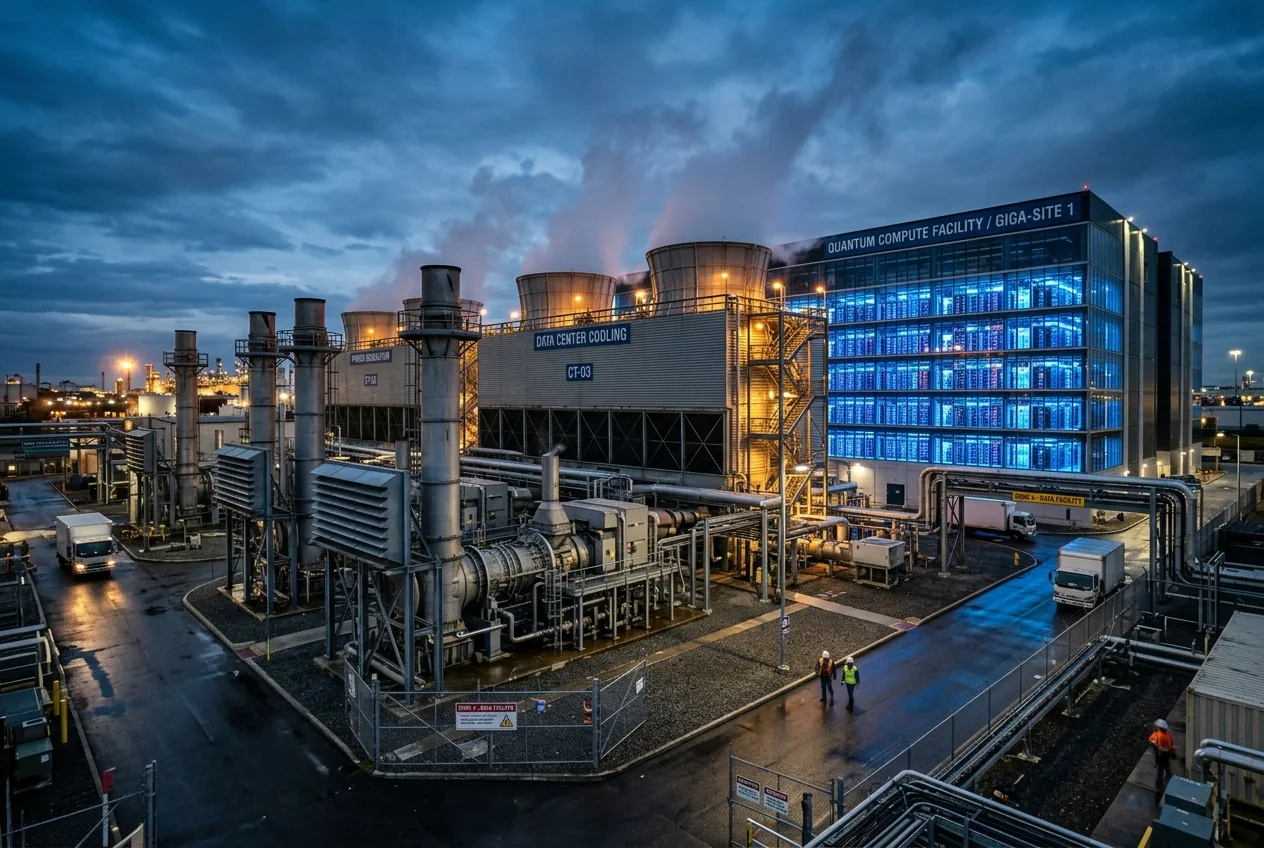
In the industrial outskirts of Memphis, Tennessee, a massive engineering project has moved from conception to operation at a speed that has caught both local utilities and environmental regulators off guard. This is the home of “Colossus,” a supercomputing cluster owned by xAI, Elon Musk’s artificial intelligence venture. While headlines often focus on the capabilities of the Grok large language model, the true story for mechanical engineers and industrial analysts lies in the physical infrastructure required to sustain 100,000 Nvidia H100 GPUs. The facility represents a collision between the hyper-accelerated timelines of Silicon Valley and the rigid, often aging infrastructure of the American South.
The Technical Scale of Colossus
To understand the controversy surrounding xAI’s Memphis facility, one must first grasp the sheer scale of the power demand. A single Nvidia H100 Tensor Core GPU has a peak power consumption of approximately 700 watts. When deployed in a cluster of 100,000 units, the baseline power requirement for the chips alone nears 70 megawatts. However, when factoring in the networking hardware, storage arrays, and the massive cooling infrastructure required to manage the thermal output of these high-density racks, the total draw for the facility is estimated to exceed 150 megawatts. This is not merely a data center; it is a heavy industrial load comparable to a mid-sized smelting plant or a major automotive manufacturing hub.
The engineering challenge xAI faced was one of timing. Standard utility interconnection processes for a load of this magnitude typically take years, involving grid impact studies, transformer procurement, and substation upgrades. For a company aiming to train the next iteration of Grok in months rather than years, the local utility—Memphis Light, Gas and Water (MLGW)—could not initially provide the necessary capacity from the existing grid. This created a technical bottleneck that xAI chose to solve through decentralized power generation, a move that has sparked significant local and national debate regarding environmental justice and regulatory compliance.
The Gas Turbine Solution and Its Emissions Profile
To bridge the gap between their immediate power needs and the grid’s eventual capacity, xAI deployed at least 18 mobile gas turbines on-site. From a purely mechanical perspective, these turbines—often aero-derivative units designed for rapid deployment—are efficient tools for peak shaving or emergency backup. However, using them as a primary, 24/7 power source for a massive data center presents a different set of challenges. These turbines burn natural gas to generate electricity, a process that inherently produces nitrogen oxides (NOx), carbon monoxide, and various volatile organic compounds.
The use of these turbines has drawn sharp criticism from groups like the Southern Environmental Law Center (SELC). The primary technical concern is the lack of permitted emissions controls. In a standard industrial setting, turbines of this capacity would require Title V operating permits under the Clean Air Act, necessitating the use of Selective Catalytic Reduction (SCR) systems to mitigate NOx emissions. NOx is a primary precursor to ground-level ozone and smog, which are linked to respiratory issues. The Memphis facility is situated in a region that has historically struggled with industrial pollution, and the addition of high-capacity gas turbines without advanced filtration systems represents a significant setback for local air quality management.
Environmental Justice in the Shadow of AI
Geopolitics and the Grok Mission
While the physical reality of Colossus is rooted in Memphis soil, its digital output is intended for a global stage. Sensationalist reports have occasionally linked Musk’s AI ambitions to geopolitical maneuvers, suggesting Grok is being positioned as a tool for ideological or even kinetic conflicts. While such claims are often hyperbolic, the strategic importance of high-end AI cannot be overstated. The ability to process vast quantities of data, simulate complex systems, and generate human-like synthesis is a dual-use technology. Whether Grok is used to analyze global supply chains or to influence social media discourse in sensitive regions, the hardware in Memphis provides the underlying “horsepower” for that influence.
The technical reality is that xAI is competing in an arms race with entities like OpenAI, Google, and Meta. In this race, the victor is often the one who can provide the most parameters and the most training data to the largest compute cluster. If xAI can achieve a technological leap by operating Colossus at full capacity, the company gains a significant market advantage. However, as an engineer, one must ask if the “war machine” of the 21st century is built not on munitions, but on the ability to monopolize energy and compute resources at the expense of local environments.
Grid Reliability and the Future of Data Center Power
The Memphis situation is a canary in the coal mine for the broader tech industry. As AI models continue to scale, the traditional power grid is proving inadequate. We are seeing a shift where data center operators are becoming their own utility providers. This trend is not limited to xAI; Microsoft, Amazon, and Google are all exploring small modular reactors (SMRs) and direct power purchase agreements with nuclear and hydroelectric plants. The xAI approach in Memphis is the most aggressive version of this trend: rapid, fossil-fuel-driven independence.
The long-term viability of this model is questionable. The Tennessee Valley Authority (TVA) and MLGW are working to increase the grid capacity to the xAI site, which would eventually allow for the decommissioning of the gas turbines. However, the precedent has been set. If a company can deploy hundreds of megawatts of unpermitted generation with minimal immediate consequence, it shifts the power dynamic between private industry and public utilities. From a systems engineering perspective, this creates a fragmented, less efficient energy landscape where individual high-demand nodes operate outside the optimized planning of the regional grid.
Ultimately, the Colossus supercluster is a testament to what is possible when capital and engineering talent are applied to a single goal with singular focus. It is a marvel of high-density computing and rapid industrial deployment. Yet, it also serves as a stark reminder that the “cloud” is not an ethereal space; it is a physical entity with a massive footprint, requiring real-world energy and producing real-world waste. For the people of Memphis, the roar of the turbines is a constant reminder that the progress of AI comes with a localized cost that is often omitted from the press releases.




Comments
No comments yet. Be the first!